Map Snapshot


19 Records
Citations
No citations linked for this taxon yet.
Source: Wikipedia
| Leptodictyum riparium | |
|---|---|

| |
Scientific classification 
| |
| Kingdom: | Plantae |
| Division: | Bryophyta |
| Class: | Bryopsida |
| Subclass: | Bryidae |
| Order: | Hypnales |
| Family: | Amblystegiaceae |
| Genus: | Leptodictyum |
| Species: | L. riparium
|
| Binomial name | |
| Leptodictyum riparium (Hedw.) Warnst.
| |
| Synonyms | |
| |
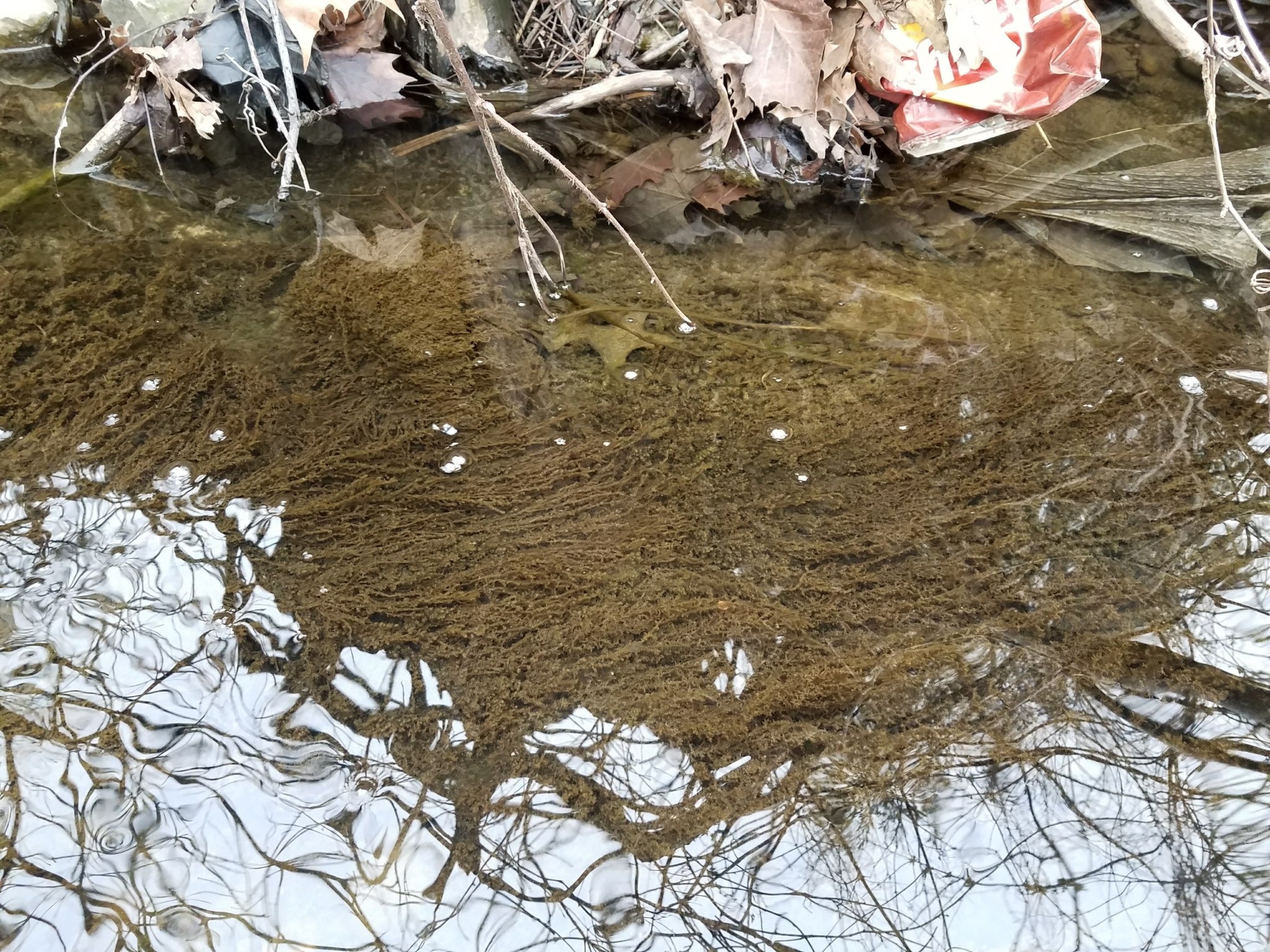
Leptodictyum riparium, commonly known as Kneiff's feathermoss,[2] streamside leptodictyum moss,[3], stringy moss, [4], or knapwort,[5] is a species of moss[6] of cosmopolitan distribution. The only places it is not found are the Pacific Islands and Australia.[5] It is commonly found growing in the lakes and rivers of Minnesota[7] and is also present in Mexico, Guatemala, the Bahamas, Cuba, Jamaica, Haiti, the Dominican Republic, Venezuela, Peru and Brazil.[8]
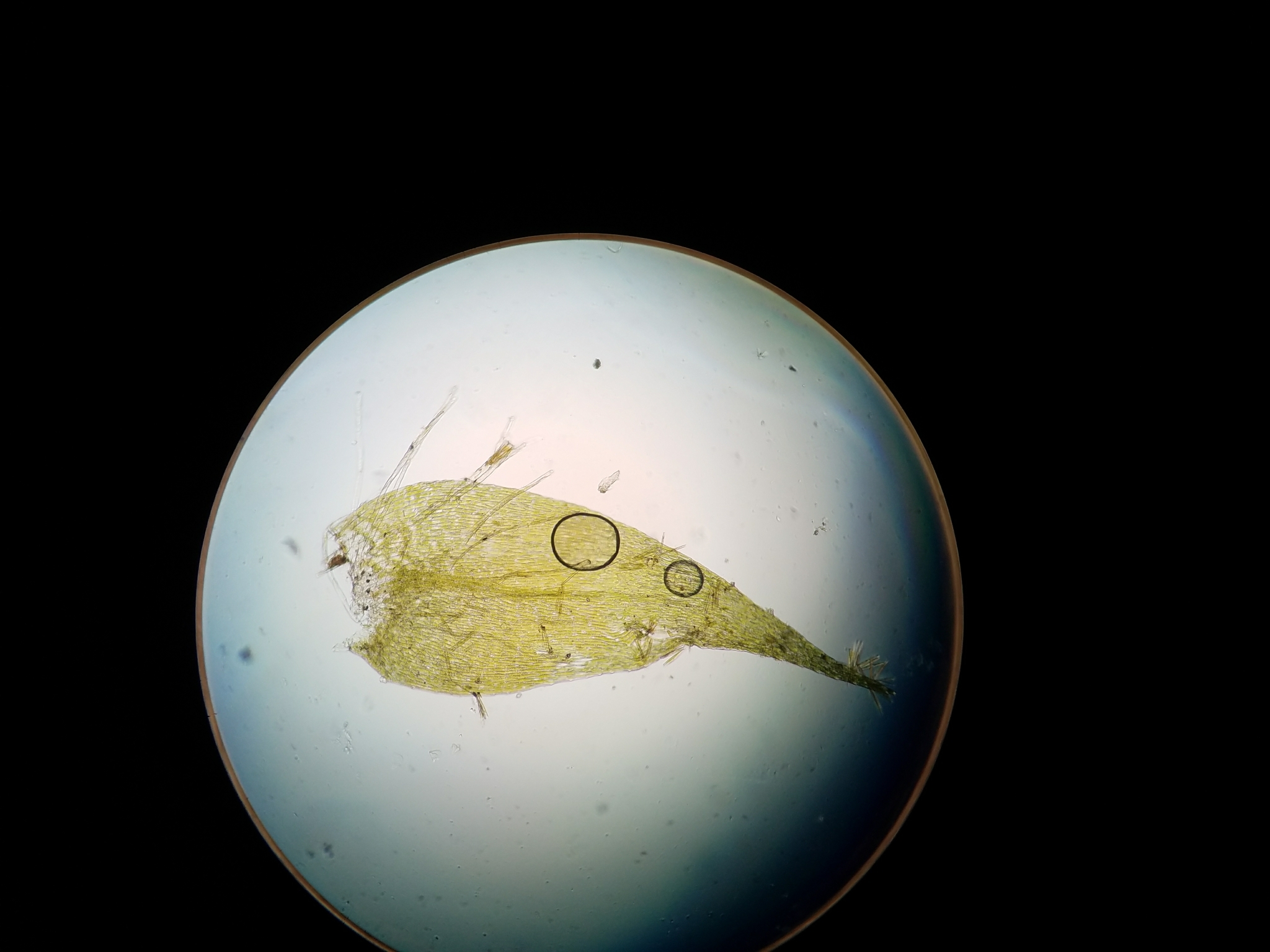
This moss has several different forms and can grow up to 30 cm. Its ovate leaves, which are in two rows, are often pointed at their apex.[5] Leptodictyum riparium has been found in an acidic mining lake and can live at a pH down to 1.6 in volcanic craters. It was once found with Eleocharis acicularis at a Canadian mining lake.[9] It is known to contain high levels of phosphate[10]. It has been reported that L. riparium tolerates a wide range of nutrient conditions and its population increases as ammonia increases.[11]
Leptodictyum riparium is known to be able to use artificial light to grow in places which are otherwise devoid of natural light, such as Crystal Cave in Wisconsin.[12]
It is an easy to grow moss that is also used in aquariums. In the aquarium trade it is one of at least two species traded under the common name "Stringy Moss", another being Drepanocladus aduncus.
References
[edit]- ^ "Amblystegium riparium". Global Biodiversity Information Facility. Retrieved 16 April 2026.
- ^ Edwards, Sean R. (2012). English Names for British Bryophytes. British Bryological Society Special Volume. Vol. 5 (4 ed.). Wootton, Northampton: British Bryological Society. ISBN 978-0-9561310-2-7. ISSN 0268-8034.
- ^ NRCS. "Leptodictyum riparium". PLANTS Database. United States Department of Agriculture (USDA). Retrieved 4 February 2016.
- ^ "Leptodictyum riparium, Tropico.com (archived)". Retrieved 2025-12-09.
- ^ a b c De Thabrew, Vivian (2014). A Manual of Water Plants. AuthorHouse. p. 129. ISBN 978-1491889282. Retrieved October 11, 2015.
- ^ Whittaker, R. H. (2012). Classification of Plant Communities. Springer Publishing. p. 140. ISBN 978-9400991835. Retrieved October 11, 2015.
- ^ Acton, Q. Ashton (2013). Issues in Global Environment—Biodiversity, Resources, and Conservation: 2013 Edition. ScholarlyEditions. p. 269. ISBN 978-1490109633. Retrieved October 11, 2015.
- ^ Flora Neotropica, The New York Botanical Garden, 2003, pages 40-43
- ^ Geller, Walter; Scultze, Martin; Kleinmann, Bob; Wolkersdorfer, Christian (2012). Acidic Pit Lakes: The Legacy of Coal and Metal Surface Mines. Springer Publishing. p. 151. ISBN 978-3642293849. Retrieved October 11, 2015.
- ^ Lichtfouse, Eric; Schwarzbauer, Jan; Didier, Robert (2013). Green Materials for Energy, Products and Depollution. Springer Publishing. pp. 424–435. ISBN 978-9400768369. Retrieved October 11, 2015.
- ^ Hanson, David T.; Rice, Steven K. (2013). Photosynthesis in Bryophytes and Early Land Plants. Springer Publishing. pp. 211–213. ISBN 978-9400769885. Retrieved October 11, 2015.
- ^ Thatcher, Edward P. (1949). "Bryophytes of an Artificially Illuminated Cave". The Bryologist. 52 (4): 212–214. doi:10.2307/3239480. JSTOR 3239480.