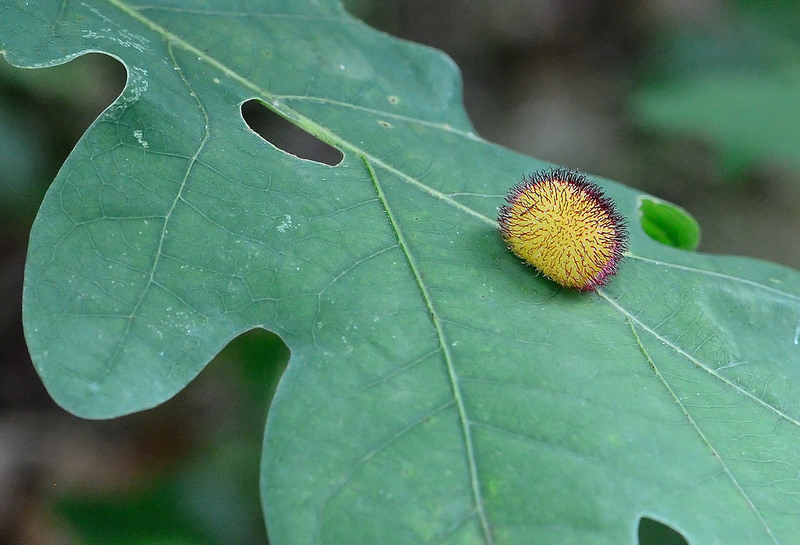
Bur Oak leaf hosting a Hedgehog Gall Wasp (Acraspis villosa) in Frederick Co., Maryland (7/8/2014).

The acorn of a Bur Oak, the upper scales of the cup bearing the fringe typical of the species, in Marion Co., Ohio (9/4/2007).
Photo by
Robert Klips
MBP List
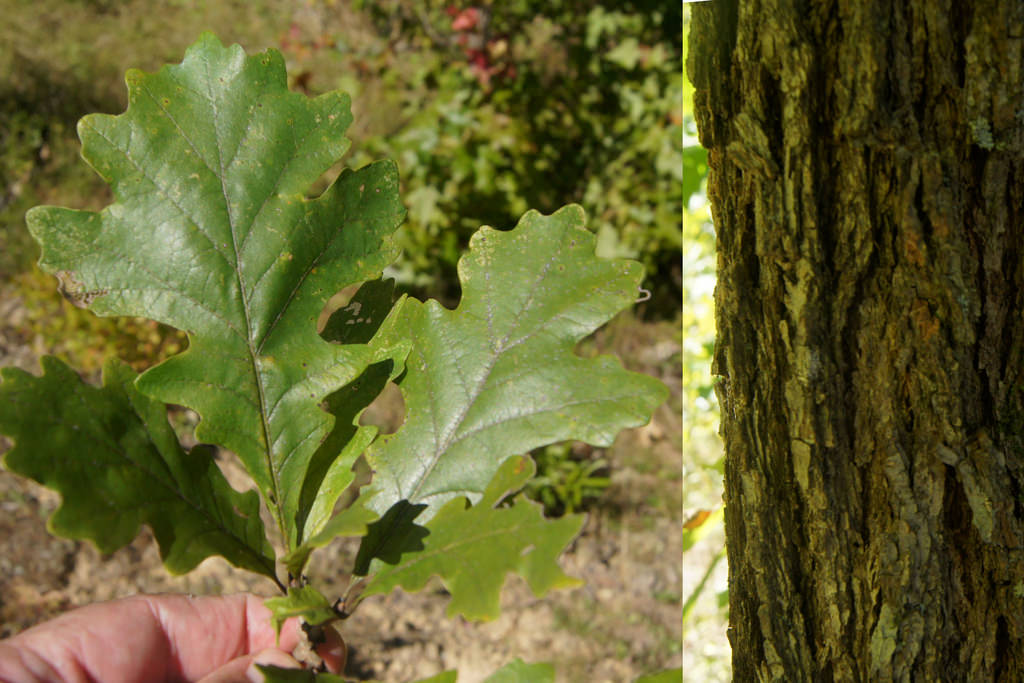
Bur Oak leaves, showing typical deep middle sinuses, and trunk in Anne Arundel Co., Maryland (9/11/2012).
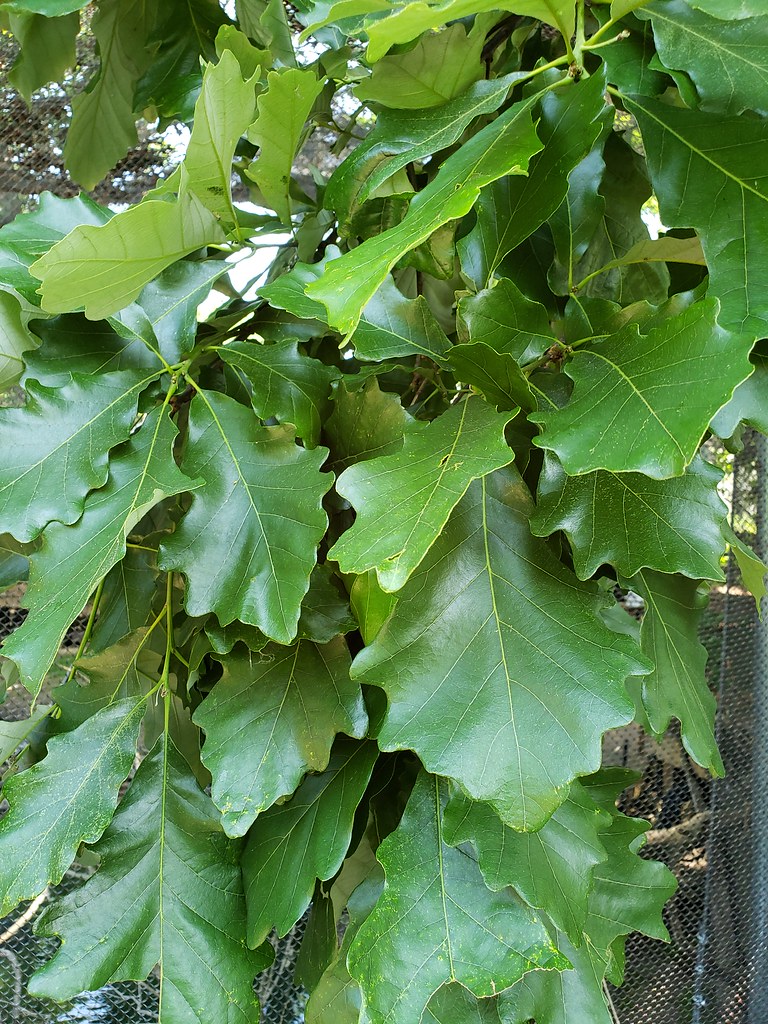
Bur Oak (leaves) in Baltimore City, Maryland (5/25/2019).

Bur Oak (underside of leaf) in Baltimore City, Maryland (5/25/2019).
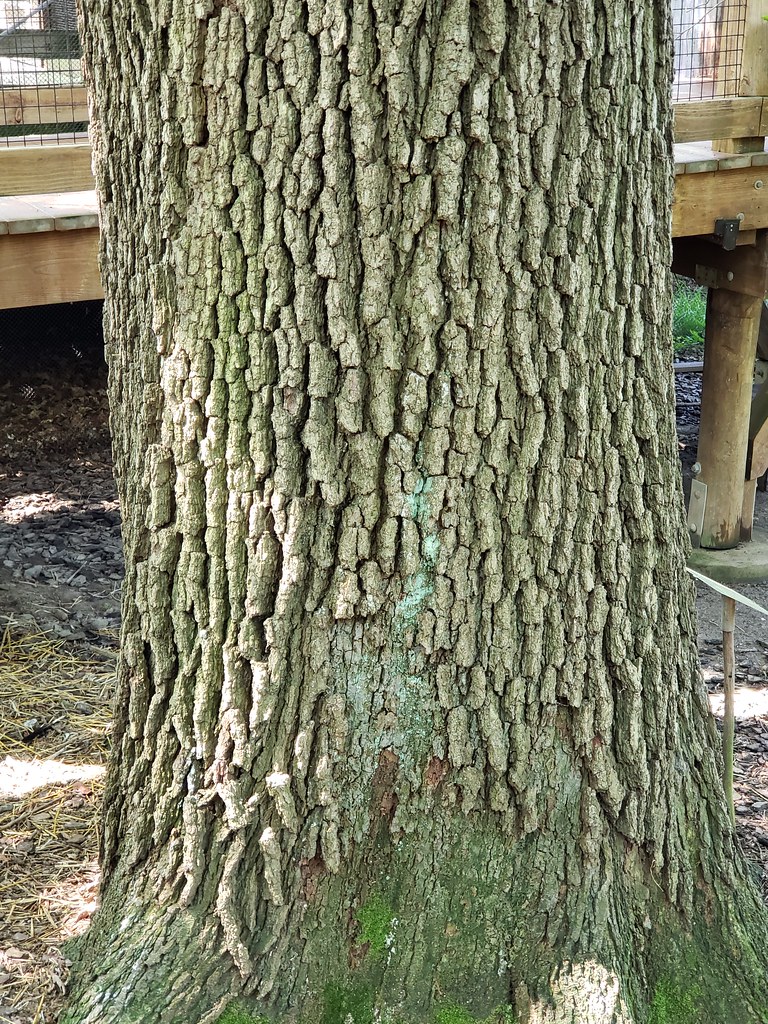
Bur Oak trunk in Baltimore City, Maryland (5/25/2019).
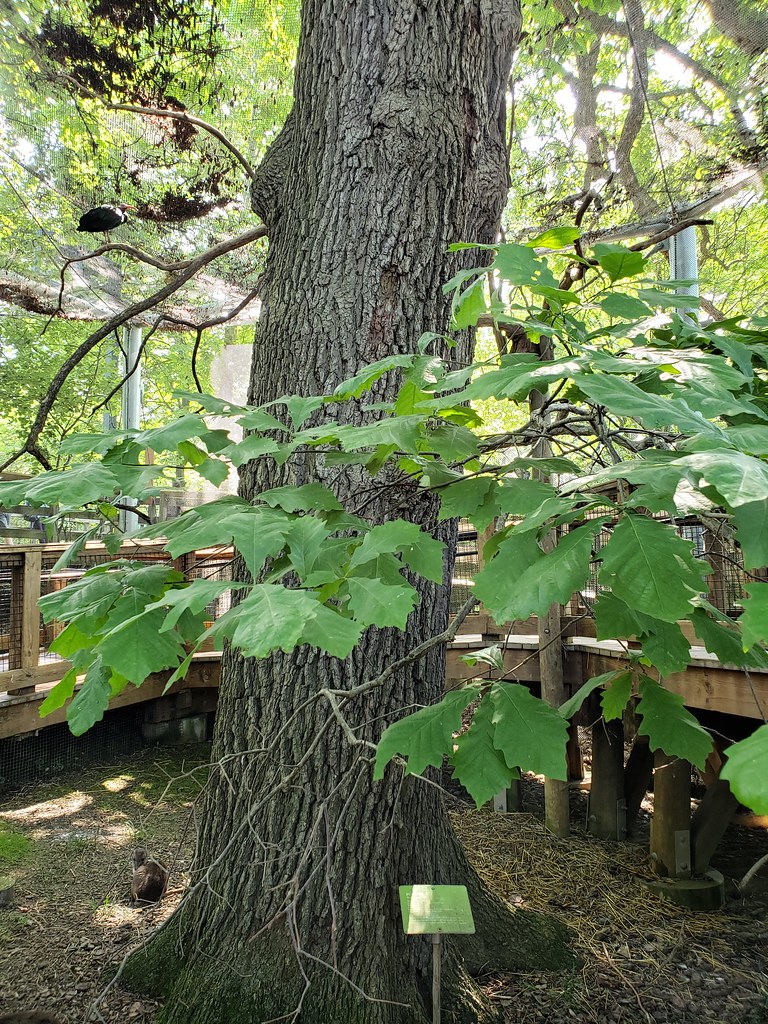
The state champion Bur Oak at the Maryland Zoo in Baltimore City Co., Maryland (5/25/2019).
Map Snapshot


19 Records
Status
Bur Oak is rare in Maryland. Bur Oak grows in bottom lands, in rich, moist woods, and on floodplains (Brown and Brown, 1982), and also occurs on very dry sites (Stein et al., 2003).
Bur Oak is more common in the midwestern and plains states than in the East. It grows farther north than any other oak (Stein et al., 2003).
Bur Oak is more common in the midwestern and plains states than in the East. It grows farther north than any other oak (Stein et al., 2003).
Description
The features most salient for identification purposes are the leaves, which have "5-7 pairs of blunt or rounded lobes separated by deep, rounded sinuses, the middle pair of sinuses the deepest, the upper ones more shallow, the broader terminal portion of the blade with a rounded or 3-lobed apex...."; and the acorn cup, which is "composed of large, tomentose [hairy], imbricated [shingle-like] scales covering one-third to nearly all of the nut, the upper scales tapering to long, awn-like tips, forming a fringe from whence the word Bur Oak is derived" (Brown and Brown, 1972). The leaves have a fine, dense hairiness below.
Where To Find
The state champion Bur Oak can be found at the Baltimore Zoo.
Relationships
Host plant for various butterfly species including Banded Hairstreak.
Host plant for various moth species including Banded Tussock Moth (Database of World's Lepidopteran Host Plants).
Host plant for various moth species including Banded Tussock Moth (Database of World's Lepidopteran Host Plants).
Citations
No citations linked for this taxon yet.
Use of media featured on Maryland
Biodiversity Project is only permitted with express permission of the
photographer.
Bur Oak leaf hosting a Hedgehog Gall Wasp (Acraspis villosa) in Frederick Co., Maryland (7/8/2014).
View Record Details
Media by
Richard Orr.
The acorn of a Bur Oak, the upper scales of the cup bearing the fringe typical of the species, in Marion Co., Ohio (9/4/2007).
Media by
Robert Klips.
Bur Oak leaves, showing typical deep middle sinuses, and trunk in Anne Arundel Co., Maryland (9/11/2012).
View Record Details
Media by
Bill Harms.
Bur Oak (leaves) in Baltimore City, Maryland (5/25/2019).
View Record Details
Media by
Bill Hubick.
Bur Oak (underside of leaf) in Baltimore City, Maryland (5/25/2019).
View Record Details
Media by
Bill Hubick.
Bur Oak trunk in Baltimore City, Maryland (5/25/2019).
View Record Details
Media by
Bill Hubick.
The state champion Bur Oak at the Maryland Zoo in Baltimore City Co., Maryland (5/25/2019).
View Record Details
Media by
Bill Hubick.