
Map Snapshot


12 Records
Citations
No citations linked for this taxon yet.
Source: Wikipedia
| Botrychium matricariifolium | |
|---|---|

| |
| Botrychium matricariifolium[1] | |
Scientific classification 
| |
| Kingdom: | Plantae |
| Clade: | Tracheophytes |
| Division: | Polypodiophyta |
| Class: | Polypodiopsida |
| Order: | Ophioglossales |
| Family: | Ophioglossaceae |
| Genus: | Botrychium |
| Species: | B. matricariifolium
|
| Binomial name | |
| Botrychium matricariifolium (Retz.) A.Braun ex W.D.J.Koch
| |
| Synonymsref name=KewPOWO/> | |
| |

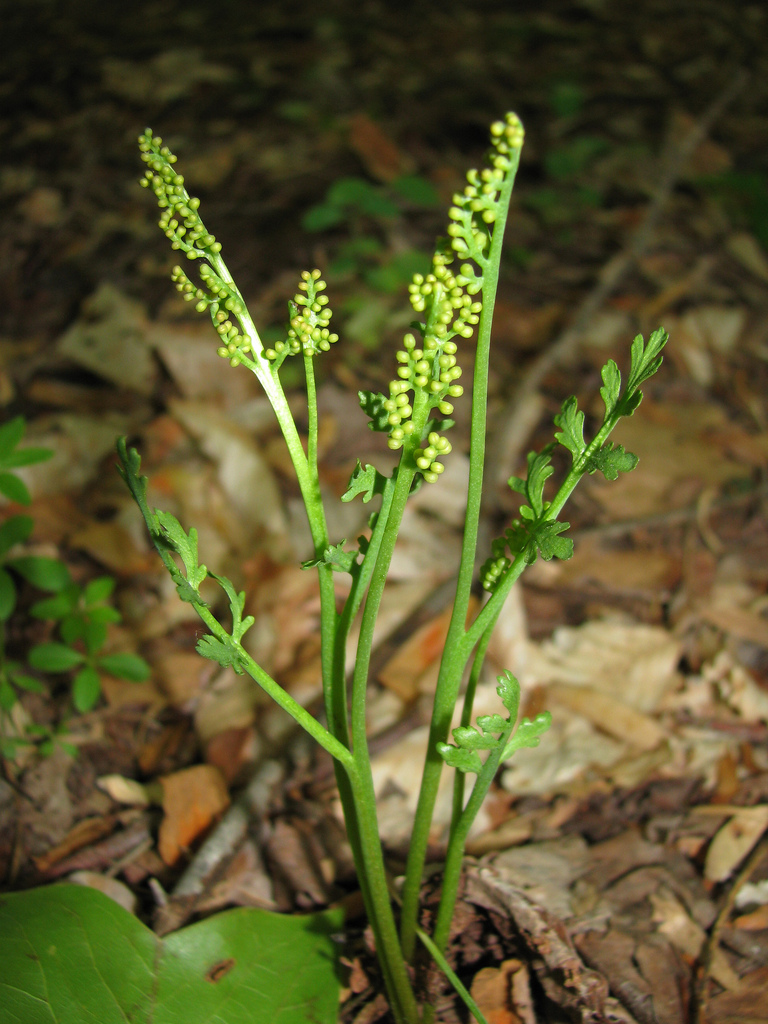
Botrychium matricariifolium (orth.var. B. matricariaefolium) is a species of fern in the Ophioglossaceae family.[3] It is referred to by the common names chamomile grape-fern, daisyleaf grape-fern, and matricary grape-fern. It is native to Europe and parts of eastern North America, including eastern Canada and parts of the United States.[4]
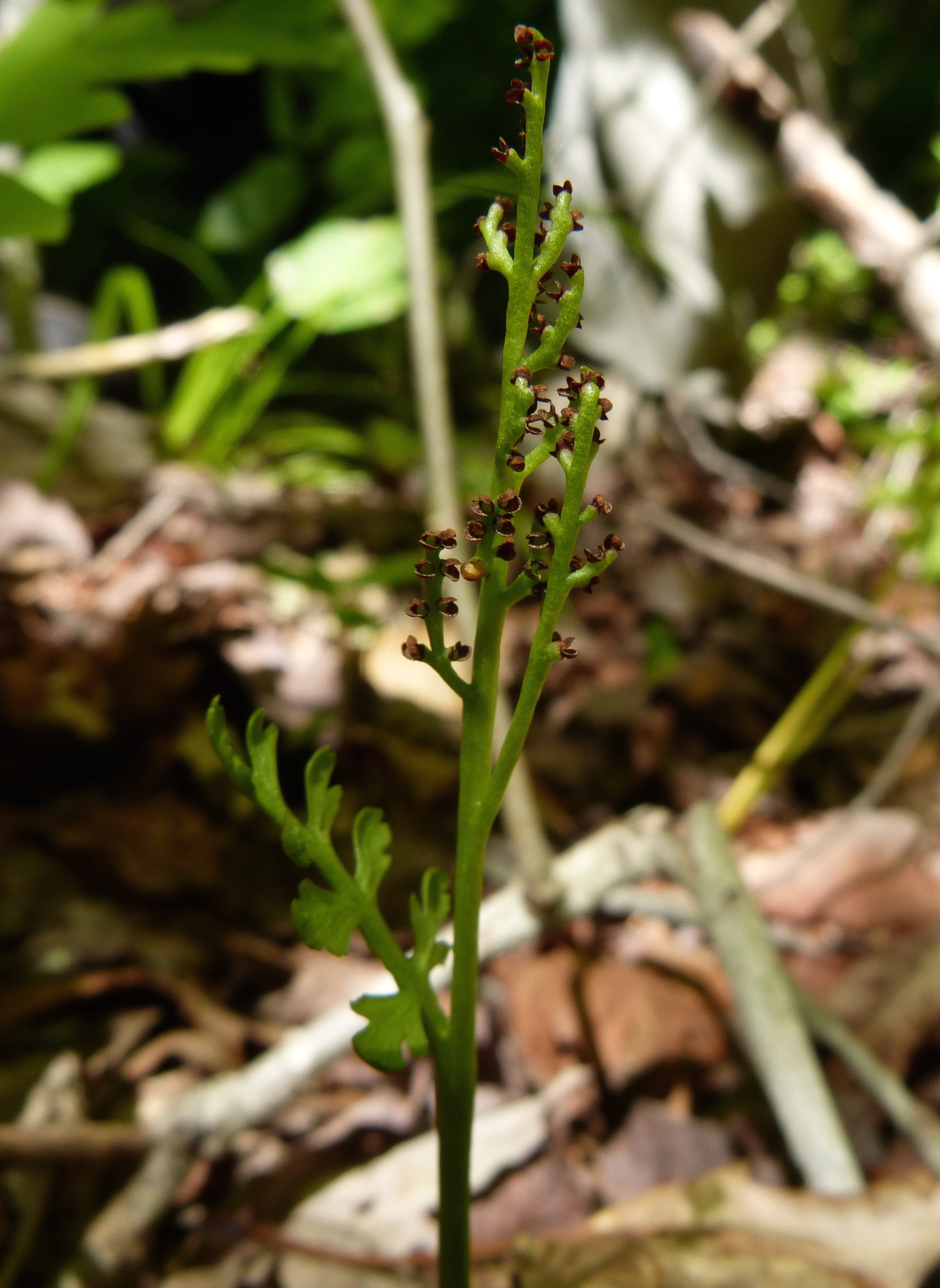
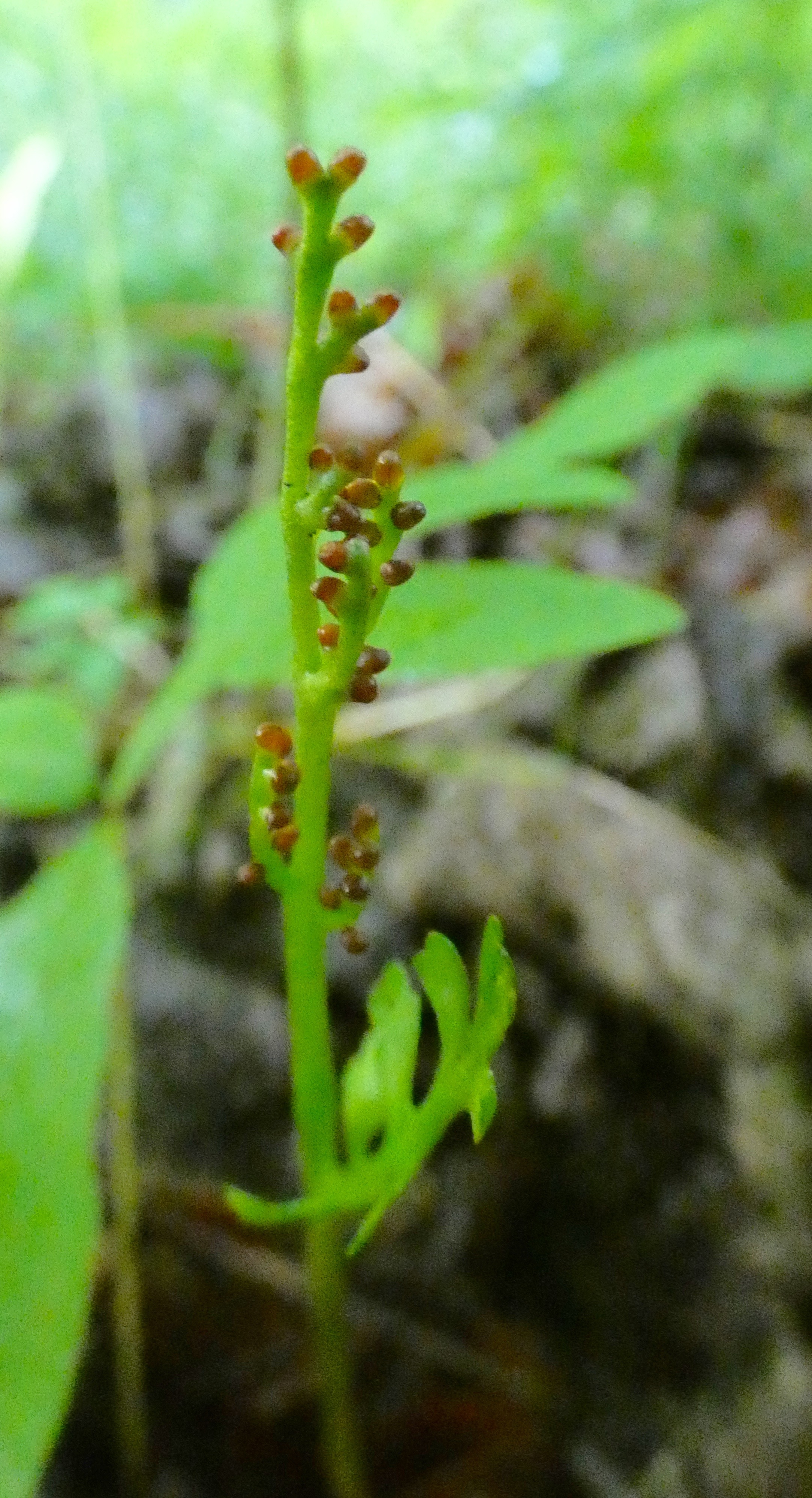
This fleshy fern grows up to 30 centimeters tall.[5] It produces dull green sterile leaf blades up to 10 centimeters long by 9 wide divided into a few pairs of segments. The fertile leaves are a bit longer and bear the spores.[4]
Rarity
[edit]This species is very rare in most European countries. In Ukraine in total, there were recorded 17 loci: 10 before 1980, after 1980 – 7, as before and after 1980 – 0 location.[6]
References
[edit]- ^ Illustration Botrychium maticariaefolium from Our Ferns in their Haunts: A Guide to all the Native Species by Willard Nelson Clute, 1901. Illustrated By William Walworth Stilson
- ^ "Botrychium matricariifolium". NatureServe Explorer. NatureServe: ELEMENT_GLOBAL.2.130567. 2015. Retrieved September 26, 2020.
- ^ "Botrychium matricariifolium (Retz.) A.Braun ex W.D.J.Koch". Plants of the World Online. The Trustees of the Royal Botanic Gardens, Kew. n.d. Retrieved September 26, 2020.
- ^ a b Botrychium matricariifolium. Flora of North America.
- ^ Williams, Tara Y. 1990. Botrychium matricariaefolium. Archived January 18, 2013, at the Wayback Machine In: Fire Effects Information System, [Online]. U.S. Department of Agriculture, Forest Service, Rocky Mountain Research Station, Fire Sciences Laboratory (Producer).
- ^ Parnikoza, Ivan; Celka, Zbigniew (June 2018). "Archive of findings of representatives of Ophioglossaceae in Ukraine". myslenedrevo.com.ua/. Retrieved 27 August 2018.
External links
[edit]
 | This fern-related article is a stub. You can help Wikipedia by adding missing information. |