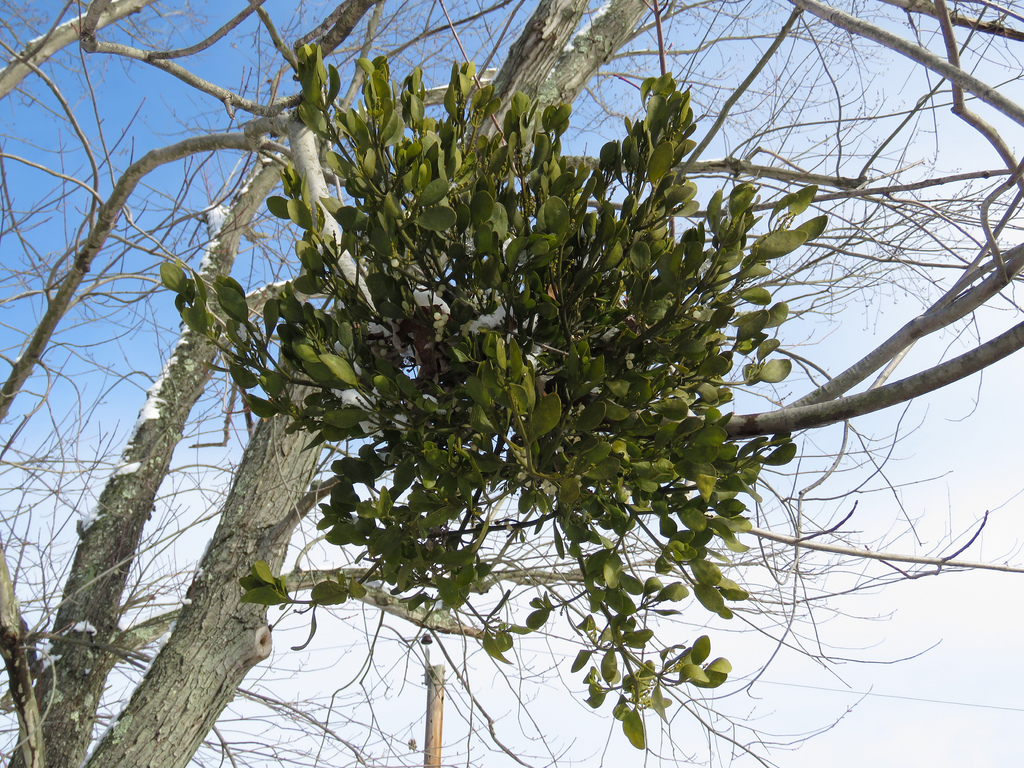
American Mistletoe in Harford Co., Maryland (12/16/2017).
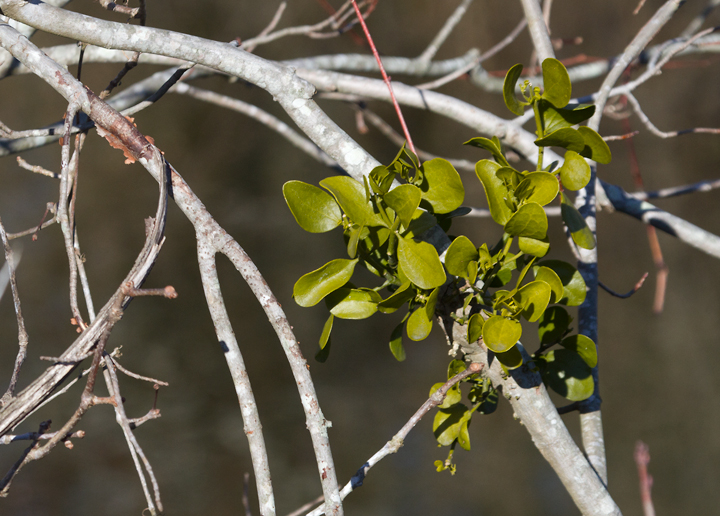
American Mistletoe growing on Red Maple in Somerset Co., Maryland (1/20/2013).
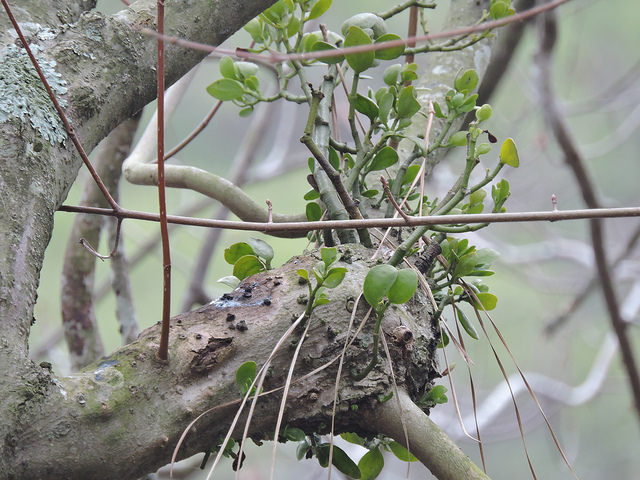
American Mistletoe growing in Worcester Co., Maryland (3/27/2016).
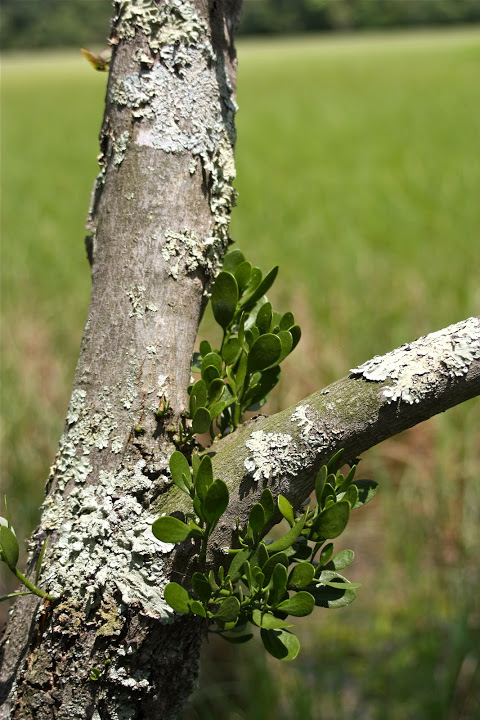
American Mistletoe growing in Caroline Co., Maryland (5/28/2012). Also called Oak Mistletoe, this plant is a hemi-parasite that grows on various tree species. It is the host plant of Great Purple Hairstreak.

Clumps of American Mistletoe in Worcester Co., Maryland (11/11/2012).
Photo by
Bill Hubick
MBP List
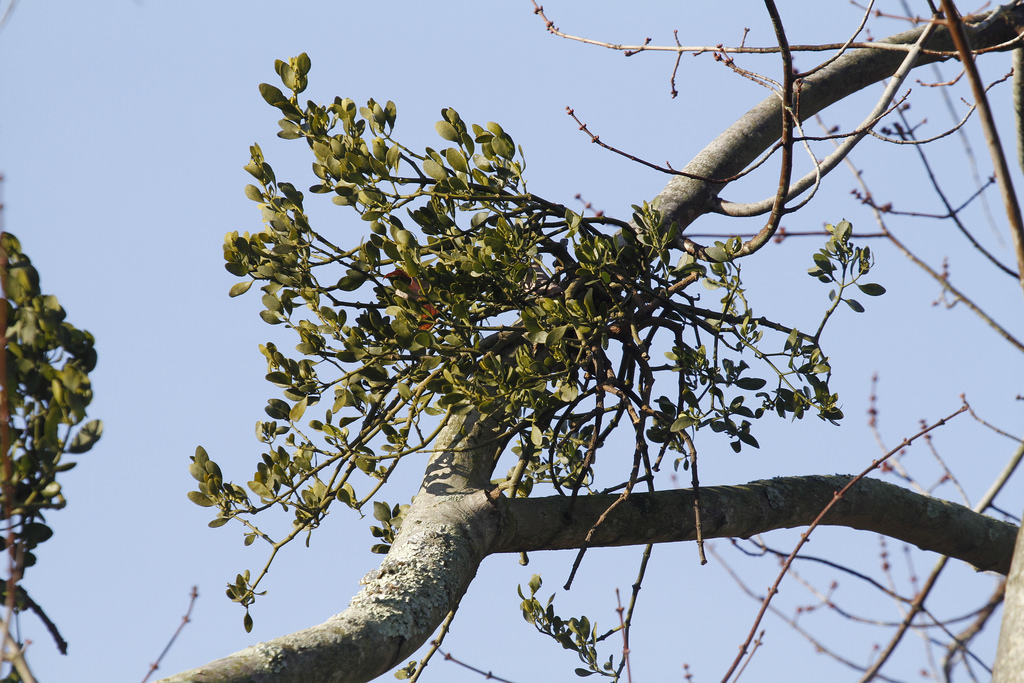
American Mistletoe in Harford Co., Maryland (12/6/2015).
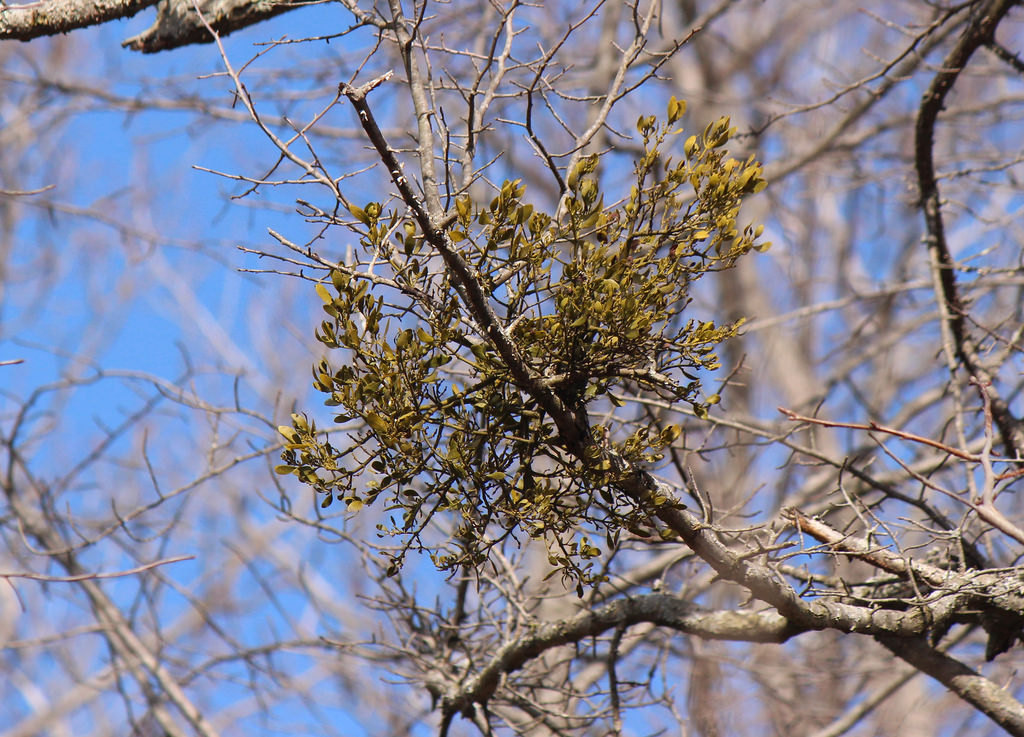
American Mistletoe growing in Harford Co., Maryland (3/16/2018).
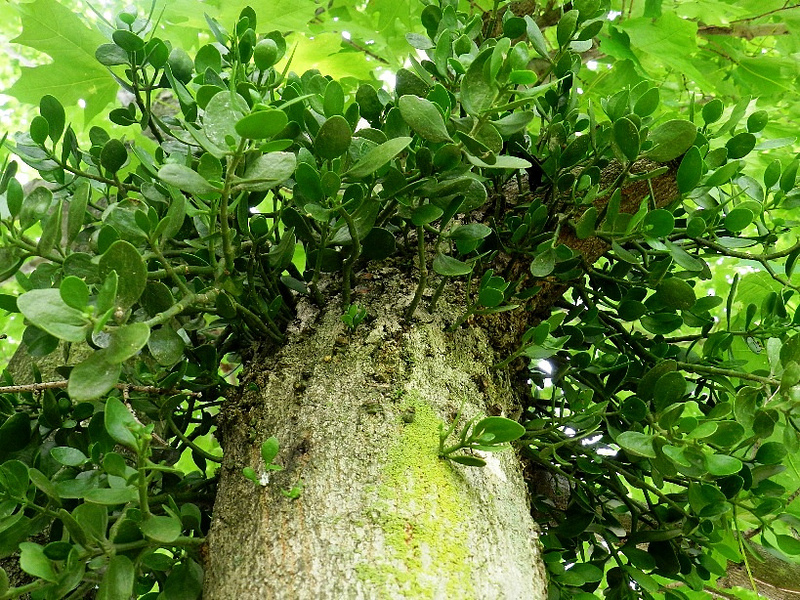
American Mistletoe in Howard Co., Maryland (6/17/2013).
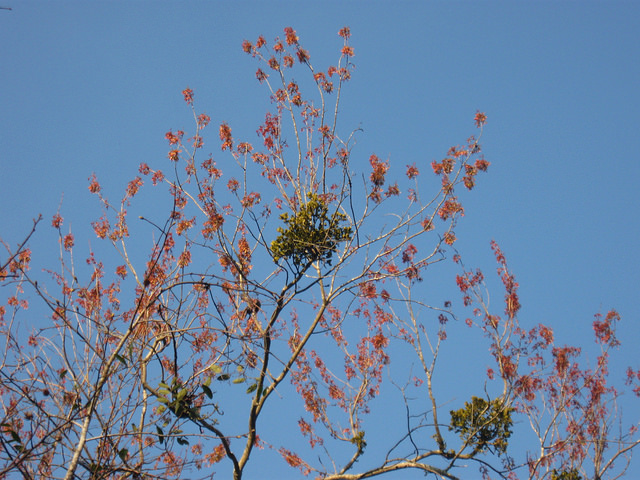
American Mistletoe growing on a blooming Red Maple in Dorchester Co., Maryland (3/26/2016).

American Mistletoe fruiting in Queen Anne's Co., Maryland (1/31/2017).
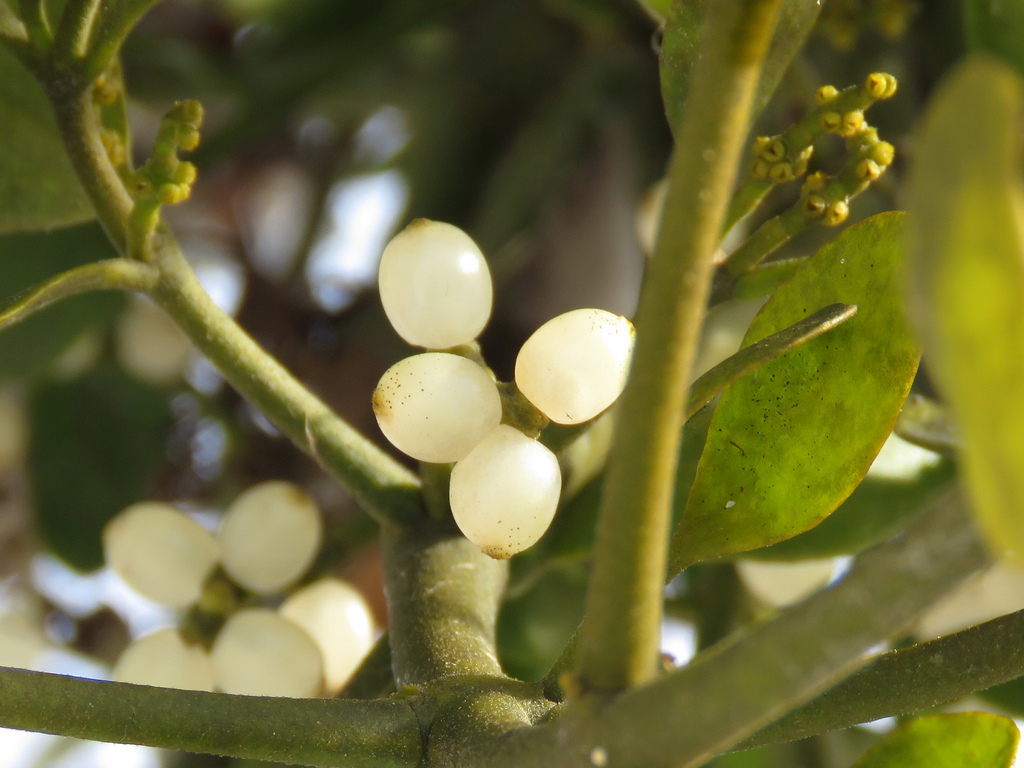
American Mistletoe fruiting in Harford Co., Maryland (12/16/2017).
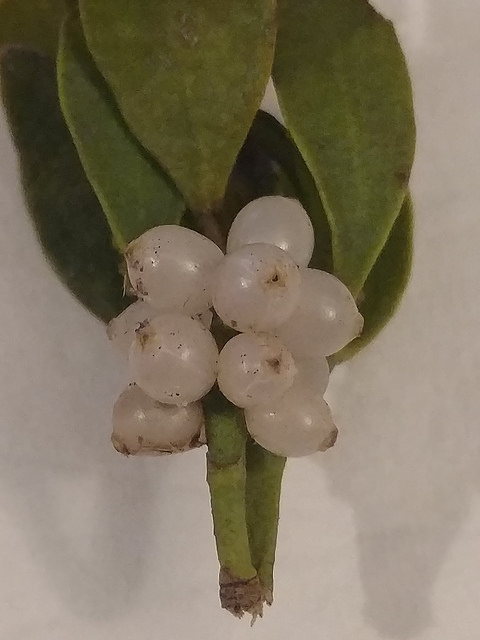
American Mistletoe with fruit in Caroline Co., Maryland (1/1/2018).
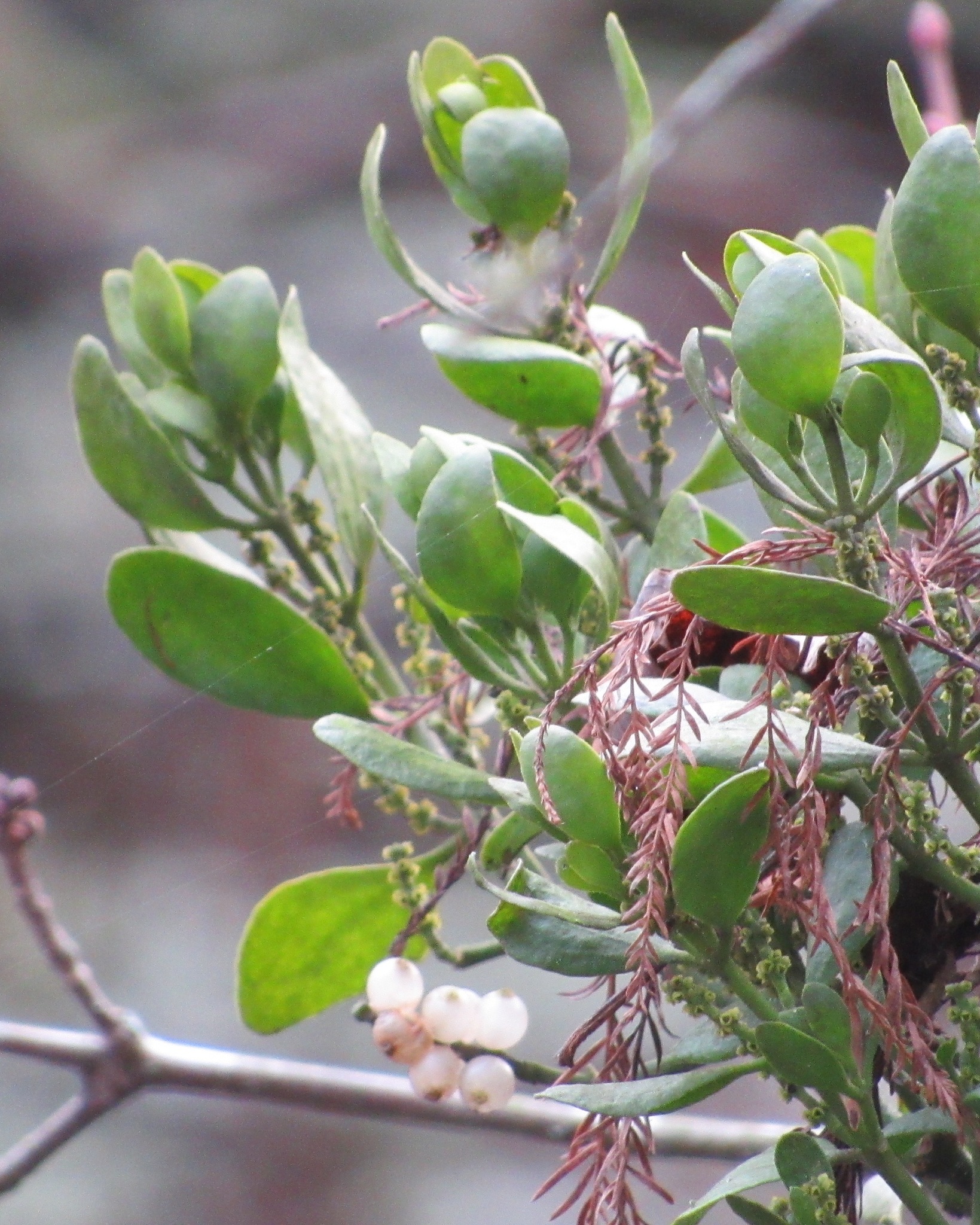
American Mistletoe fruiting in Wicomico Co., Maryland (11/22/2020). (c) Wayne Longbottom, some rights reserved (CC BY-NC).
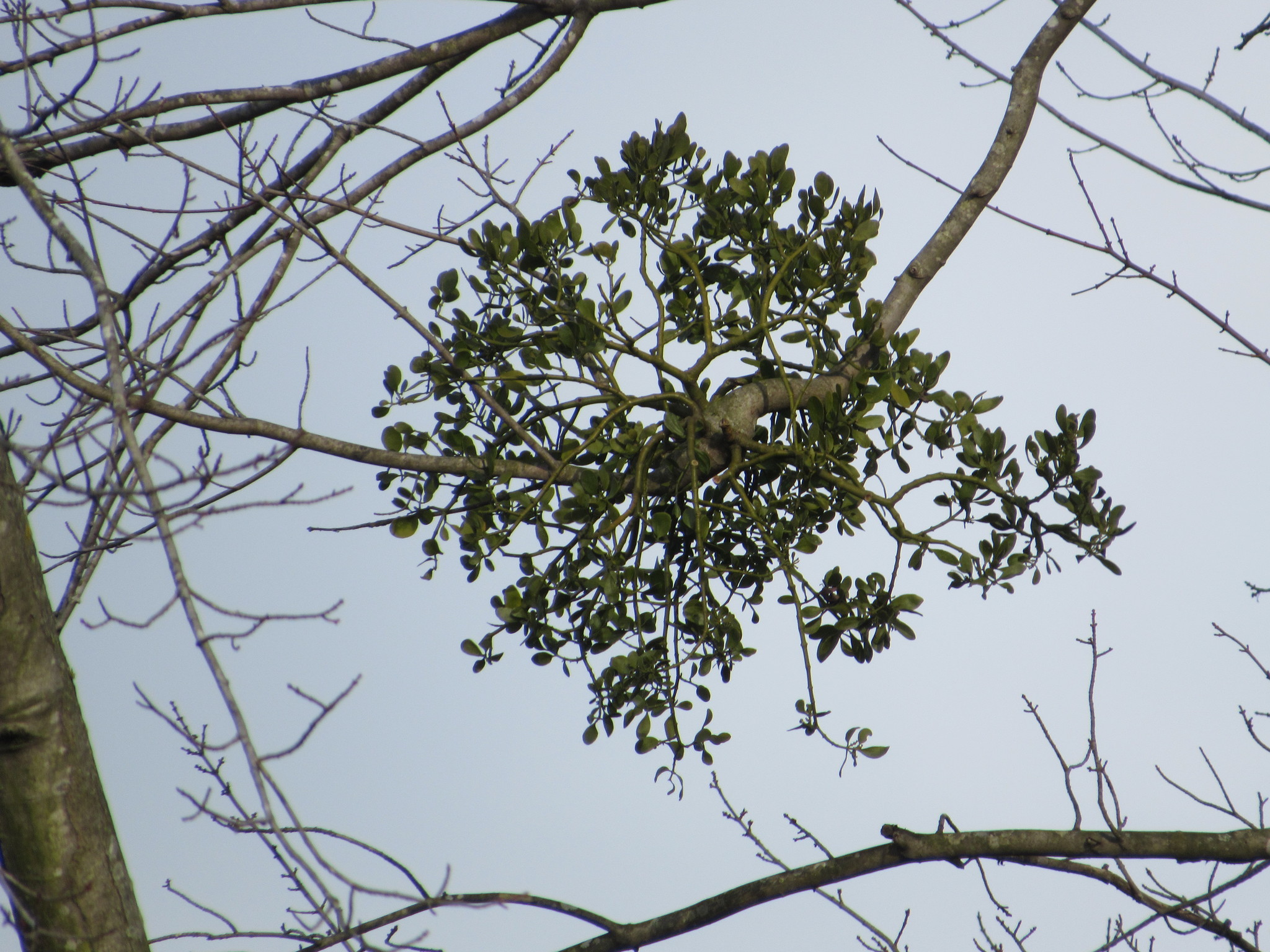
American Mistletoe in Caroline Co., Maryland (12/1/2020). (c) Wayne Longbottom, some rights reserved (CC BY-NC).
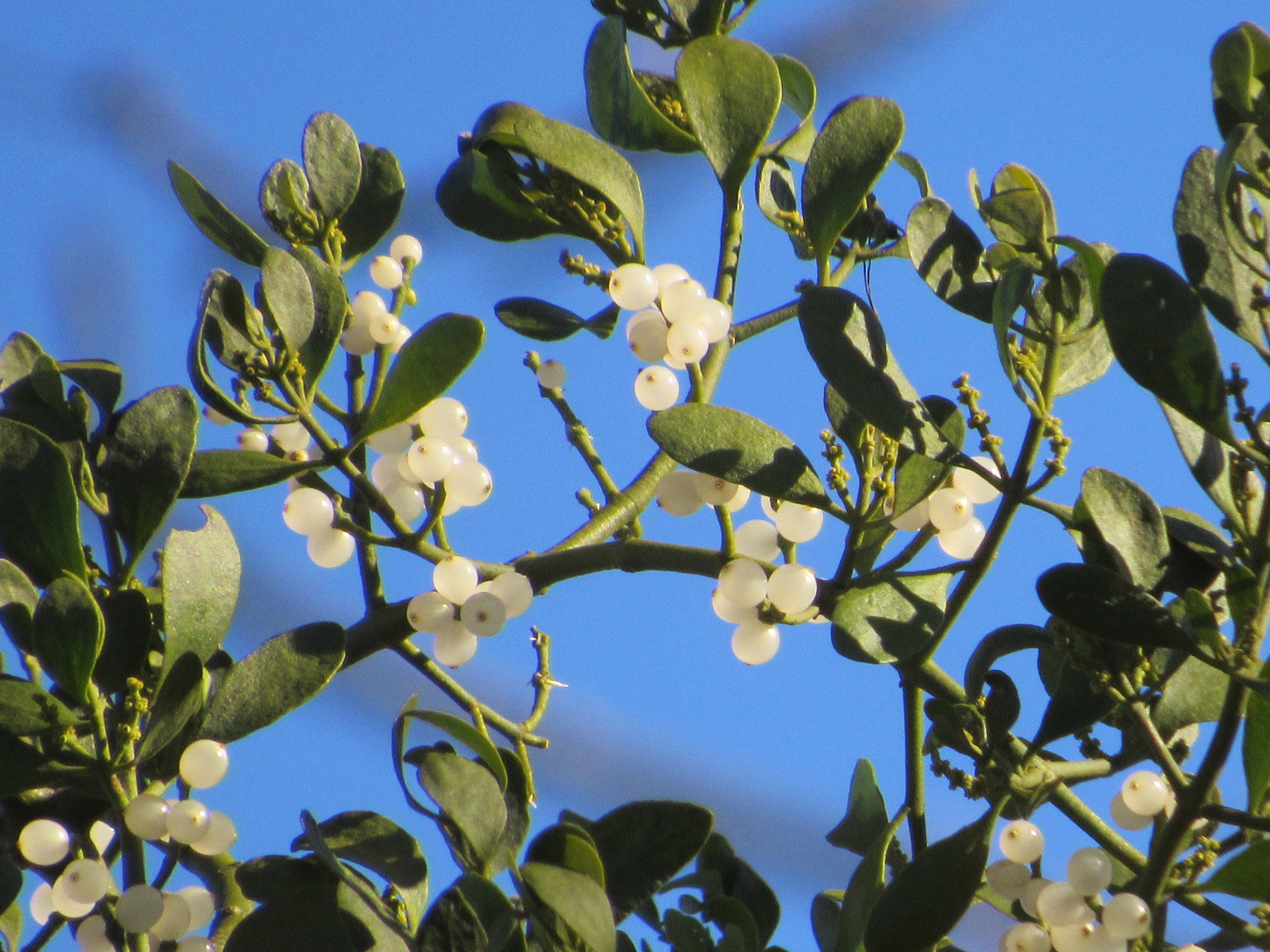
American Mistletoe in fruit in Queen Anne's Co., Maryland (12/6/2020). (c) Wayne Longbottom, some rights reserved (CC BY-NC).
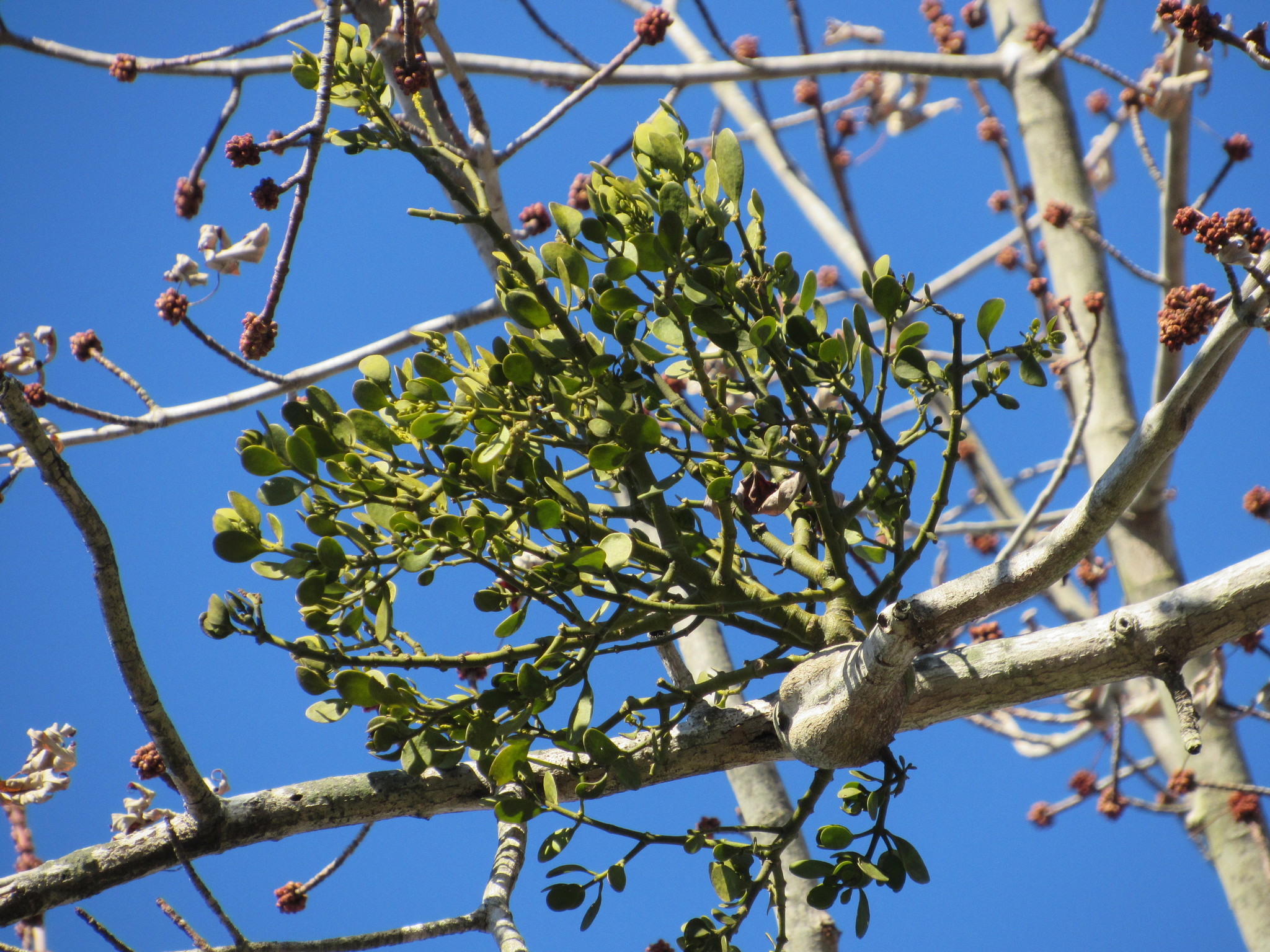
American Mistletoe in Queen Anne's Co., Maryland (12/6/2020). (c) Wayne Longbottom, some rights reserved (CC BY-NC).
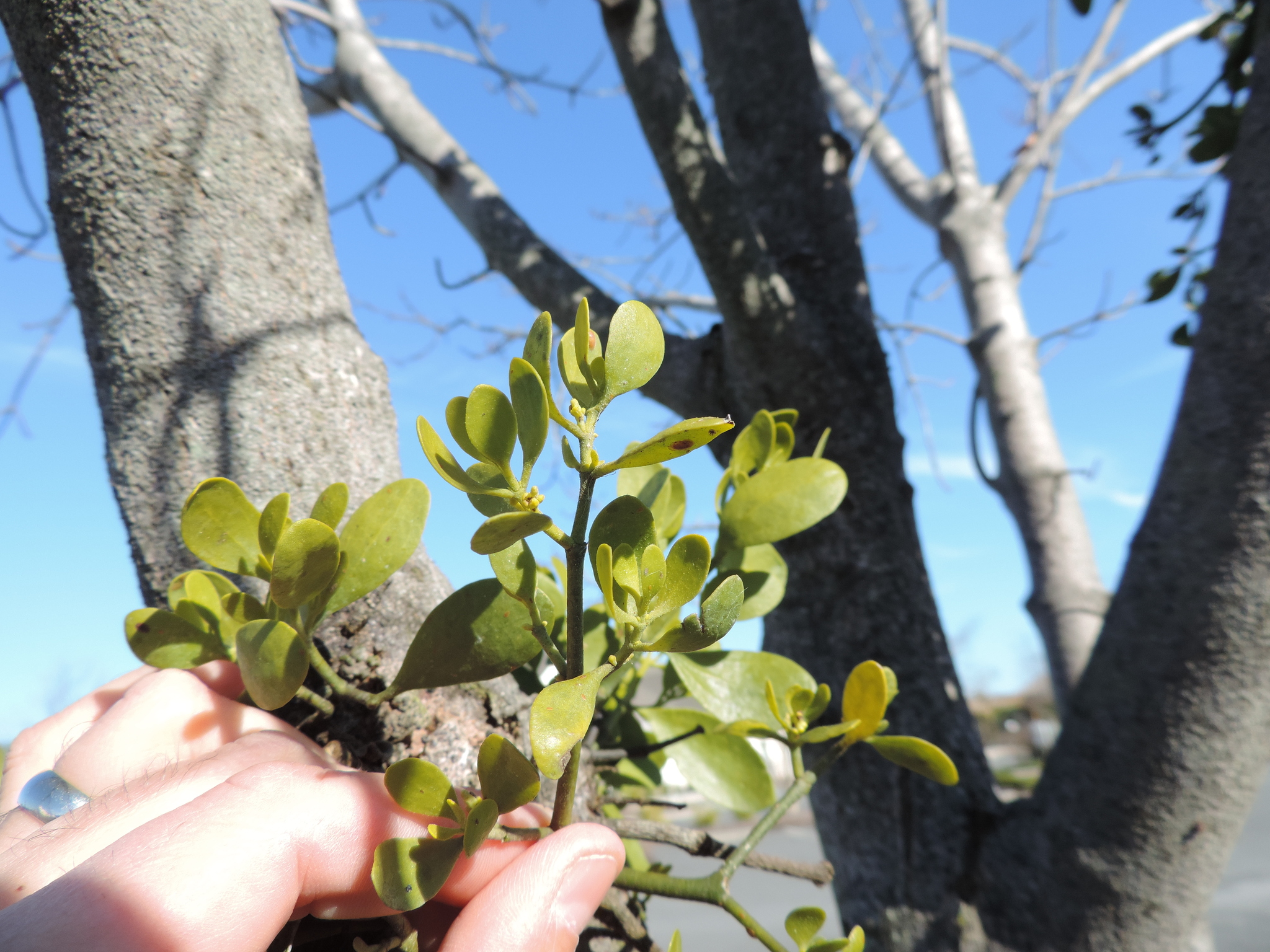
American Mistletoe in Worcester Co., Maryland (1/1/2014). (c) Bill Hubick, all rights reserved
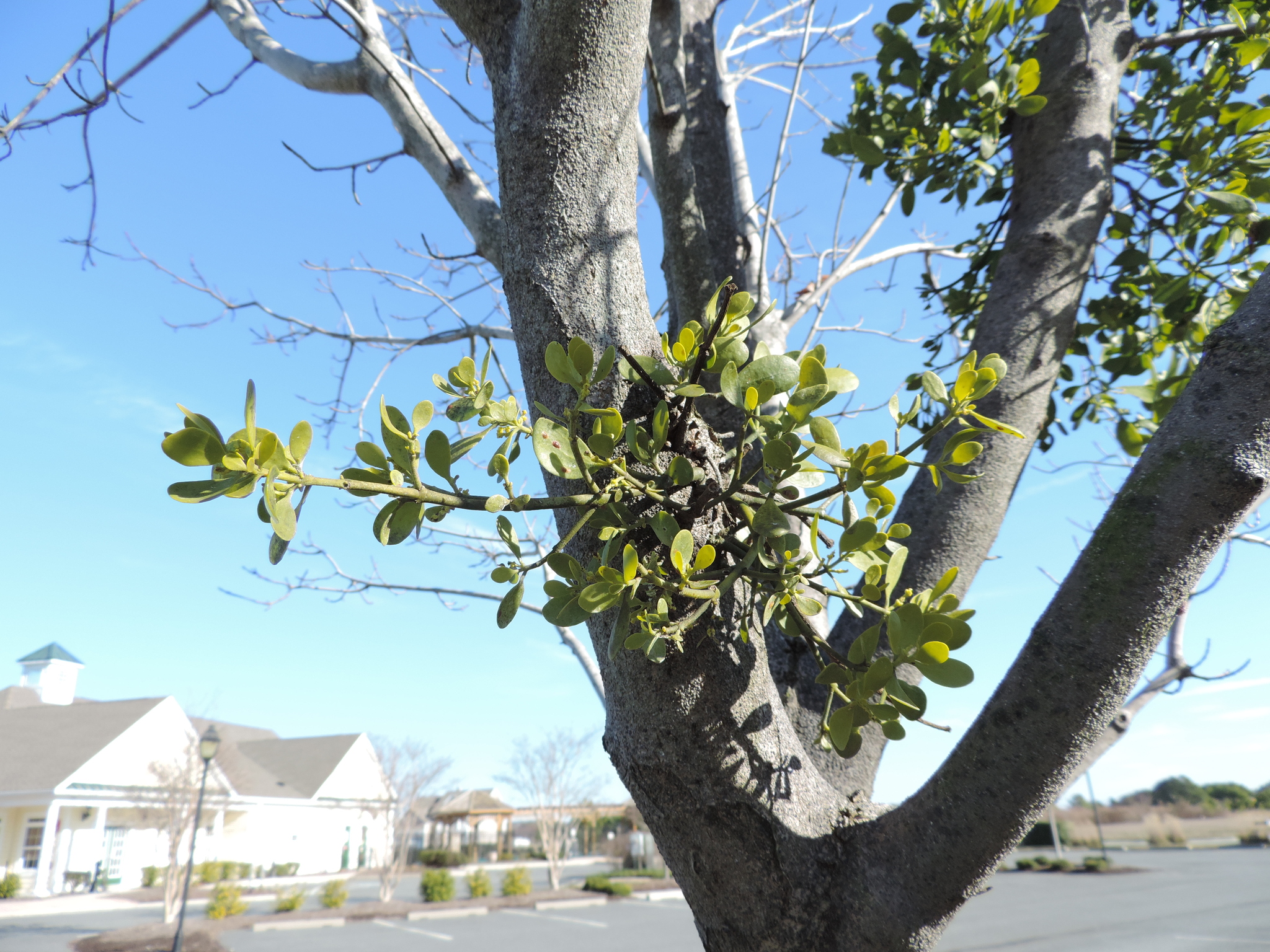
American Mistletoe in Worcester Co., Maryland (1/1/2014). (c) Bill Hubick, all rights reserved
Map Snapshot


508 Records
Status
American Mistletoe is an evergreen, hemi-parasitic sub-shrub that is native to the southeastern United States. It is typically found growing on Red Maple, but also occurs on oaks, gums (Nyssa spp.), and some other deciduous trees.
Description
American mistletoe has opposite, leathery, evergreen leaves and grows in ball-shaped clumps in tree canopies. Mistletoe produces white berries (technically, drupes) having sticky pulp. These are eaten by birds. As the berries pass through a bird's digestive tract, the pulp remains sticky, enabling the seeds to spread through bird droppings to the branches of trees that the bird lands on. Fruits also disperse by sticking to birds' bills and to their feathers. The seed sprouts where it lands, and small roots emerge. These penetrate the tree bark and develop into haustoria, or feeding organs that can absorb sugars and other foods from the host tree. The green color of the plant indicates that it contains chlorophyll and can obtain some of its food through photosynthesis.
Where To Find
Most common on the coastal plain but can also be found along the Fall Line. Usually occurs in mesic or wet habitats; often abundant in swamp forests (Weakley, et al., 2012). Clumps, or balls, of mistletoe are easy to spot in the winter, when deciduous trees are bare.
Relationships
Citations
No citations linked for this taxon yet.
Use of media featured on Maryland
Biodiversity Project is only permitted with express permission of the
photographer.
American Mistletoe in Harford Co., Maryland (12/16/2017).
View Record Details
Media by
Josh Emm.
American Mistletoe growing on Red Maple in Somerset Co., Maryland (1/20/2013).
View Record Details
Media by
Bill Hubick.
American Mistletoe growing in Worcester Co., Maryland (3/27/2016).
View Record Details
Media by
Dan Small.
American Mistletoe growing in Caroline Co., Maryland (5/28/2012). Also called Oak Mistletoe, this plant is a hemi-parasite that grows on various tree species. It is the host plant of Great Purple Hairstreak.
View Record Details
Media by
Jim Brighton.
Clumps of American Mistletoe in Worcester Co., Maryland (11/11/2012).
Media by
Bill Hubick.
American Mistletoe in Harford Co., Maryland (12/6/2015).
View Record Details
Media by
Bill Hubick.
American Mistletoe growing in Harford Co., Maryland (3/16/2018).
View Record Details
Media by
Dave Webb.
American Mistletoe in Howard Co., Maryland (6/17/2013).
View Record Details
Media by
Nancy Magnusson.
American Mistletoe growing on a blooming Red Maple in Dorchester Co., Maryland (3/26/2016).
View Record Details
Media by
Wayne Longbottom.
American Mistletoe fruiting in Queen Anne's Co., Maryland (1/31/2017).
View Record Details
Media by
Wayne Longbottom.
American Mistletoe fruiting in Harford Co., Maryland (12/16/2017).
View Record Details
Media by
Josh Emm.
American Mistletoe with fruit in Caroline Co., Maryland (1/1/2018).
View Record Details
Media by
Wayne Longbottom.
American Mistletoe fruiting in Wicomico Co., Maryland (11/22/2020). (c) Wayne Longbottom, some rights reserved (CC BY-NC).
View Record Details
Media by
Wayne Longbottom.
American Mistletoe in Caroline Co., Maryland (12/1/2020). (c) Wayne Longbottom, some rights reserved (CC BY-NC).
View Record Details
Media by
Wayne Longbottom.
American Mistletoe in fruit in Queen Anne's Co., Maryland (12/6/2020). (c) Wayne Longbottom, some rights reserved (CC BY-NC).
View Record Details
Media by
Wayne Longbottom.
American Mistletoe in Queen Anne's Co., Maryland (12/6/2020). (c) Wayne Longbottom, some rights reserved (CC BY-NC).
View Record Details
Media by
Wayne Longbottom.
American Mistletoe in Worcester Co., Maryland (1/1/2014). (c) Bill Hubick, all rights reserved
View Record Details
Media by
Bill Hubick.
American Mistletoe in Worcester Co., Maryland (1/1/2014). (c) Bill Hubick, all rights reserved
View Record Details
Media by
Bill Hubick.