

Map Snapshot


6 Records
Status
Description
Citations
No citations linked for this taxon yet.
Source: Wikipedia
| Retiboletus griseus | |
|---|---|

| |
Scientific classification 
| |
| Kingdom: | Fungi |
| Division: | Basidiomycota |
| Class: | Agaricomycetes |
| Order: | Boletales |
| Family: | Boletaceae |
| Genus: | Retiboletus |
| Species: | R. griseus
|
| Binomial name | |
| Retiboletus griseus (Frost) Manfr. Binder & Bresinsky (2002)
| |
| Synonyms[1] | |
| Retiboletus griseus[2] | |
|---|---|
| Mycological characteristics | |
 | Pores on hymenium |
 | Cap is convex |
 | Spore print is yellow-brown |
 | Ecology is mycorrhizal |
 | Edibility is edible |
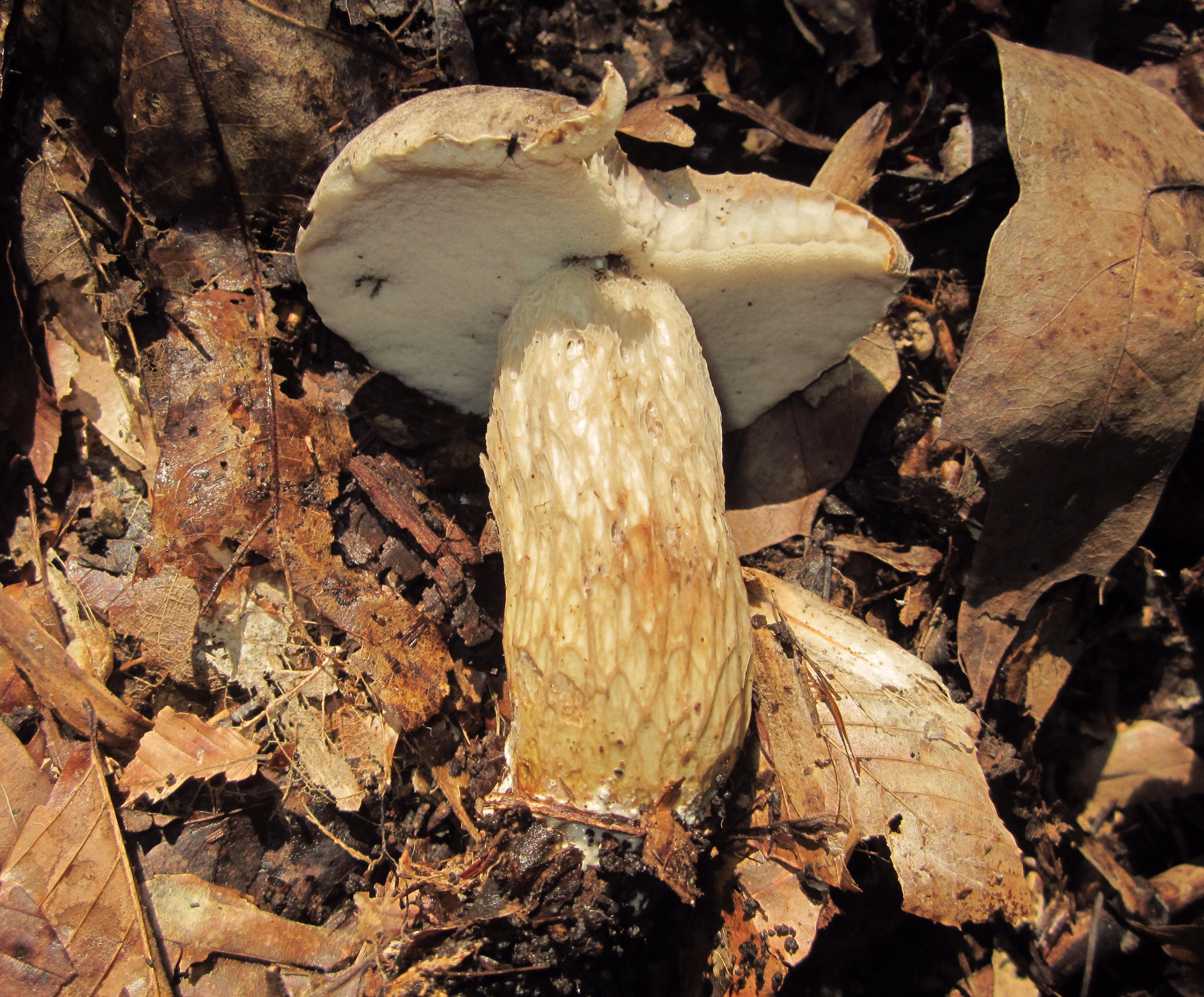
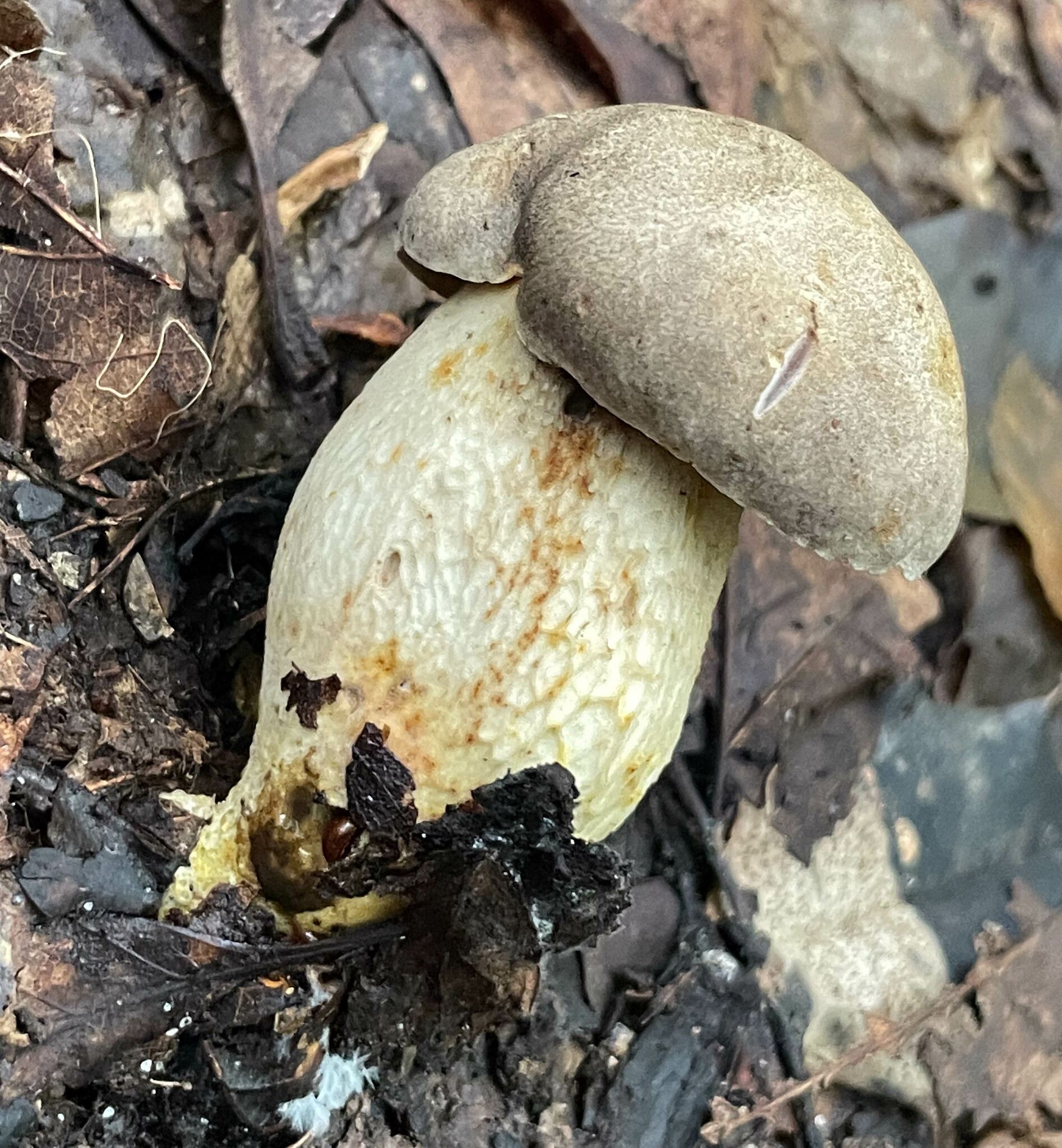
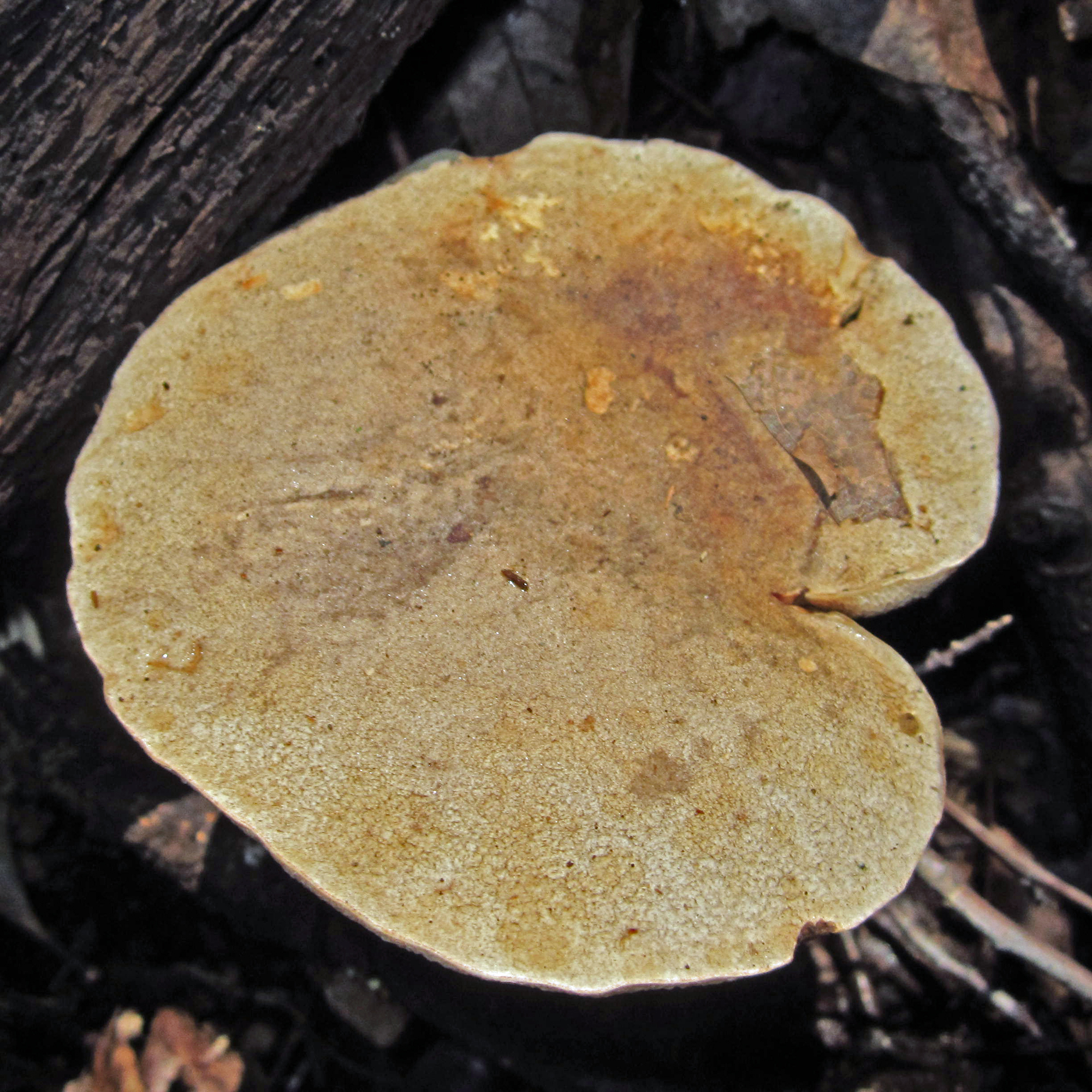
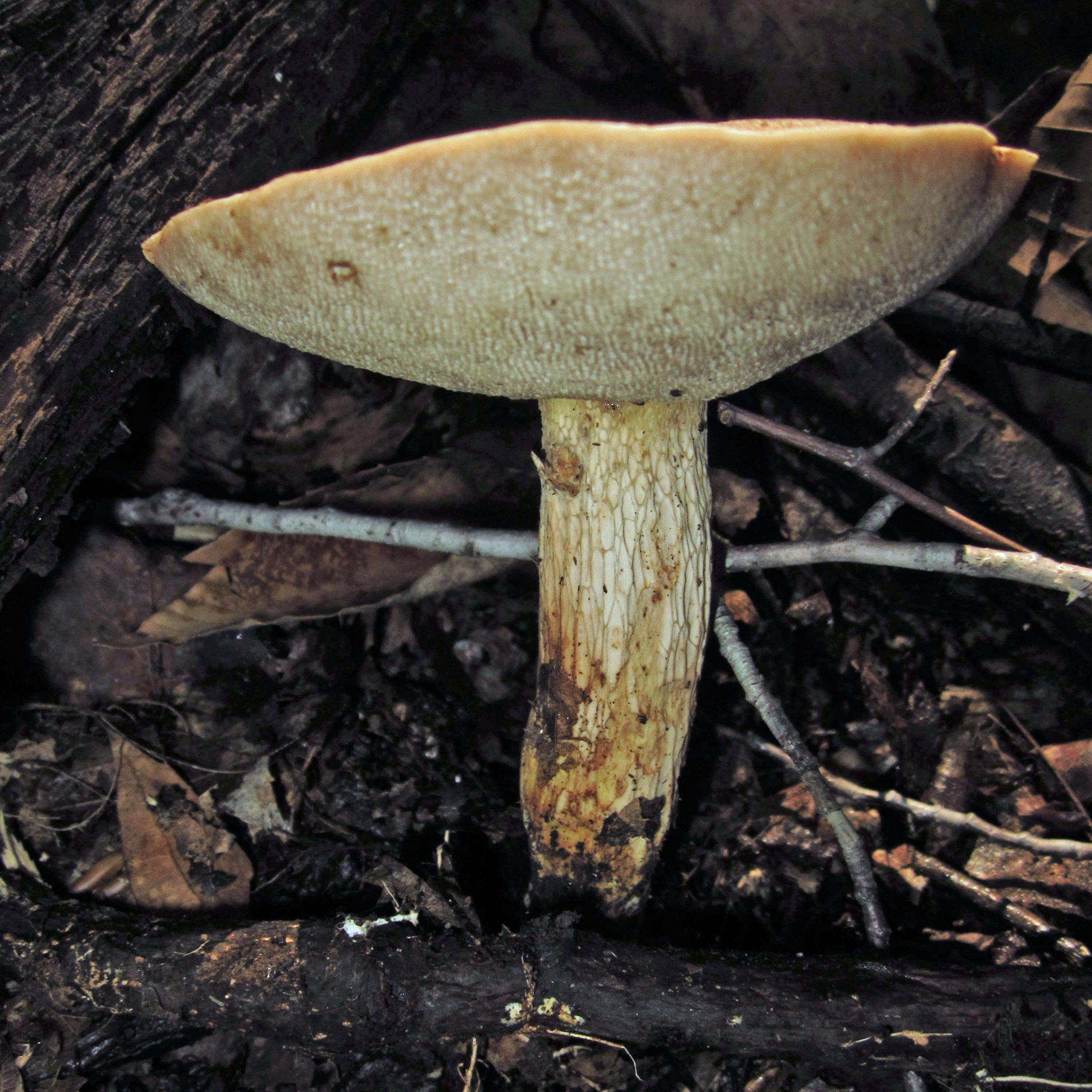
Retiboletus griseus, commonly known as the gray bolete, is a species of bolete fungus in the family Boletaceae.
Taxonomy
[edit]The species was first described scientifically in 1878 by American botanist Charles Christopher Frost.[3] It was transferred to Retiboletus in 2002.[4]
Description
[edit]The grayish cap is convex, 4–10 centimetres (1+1⁄2–4 in) wide, and soft or leathery.[5] The stem is yellowish, 4–10 cm tall and 1–3 cm (1⁄2–1+1⁄4 in) thick.[5] The flesh is whitish and can stain tannish. The spore print is olive brown.[5]
Similar species
[edit]Lookalikes include R. vinaceipes, Tylopilus griseocarneus, T. variobrunneus, and Leccinum albellum.[5]
Habitat and distribution
[edit]Retiboletus griseus can be found under oak trees in eastern North America from June to September.[5]
Uses
[edit]The species is edible but often infested with worms.[6]
References
[edit]- ^ "Retiboletus ornatipes (Frost) Manfr. Binder & Bresinsky 2002". MycoBank. International Mycological Association. Retrieved 2013-05-25.
- ^ Kuo, M. (2016, October). Retiboletus griseus. Retrieved from the MushroomExpert.Com Web site: http://www.mushroomexpert.com/retiboletus_griseus.html
- ^ Peck CH. (1878). "Report of the Botanist (1875)". Annual Report on the New York State Museum of Natural History. 29: 29–82.
- ^ Binder M, Bresinsky A. (2002). "Retiboletus, a new genus for a species-complex in the Boletaceae producing retipolides". Feddes Repertorium Specierum Novarum Regni Vegetabilis. 113 (1–2): 30–40. doi:10.1002/1522-239x(200205)113:1/2<30::aid-fedr30>3.0.co;2-d.
- ^ a b c d e Audubon (2023). Mushrooms of North America. Knopf. p. 355. ISBN 978-0-593-31998-7.
- ^ Arora, David (1986). Mushrooms Demystified. Berkeley, California: Ten Speed Press. p. 522. ISBN 978-0-89815-169-5.
External links
[edit]
 | This Boletales-related article is a stub. You can help Wikipedia by adding missing information. |