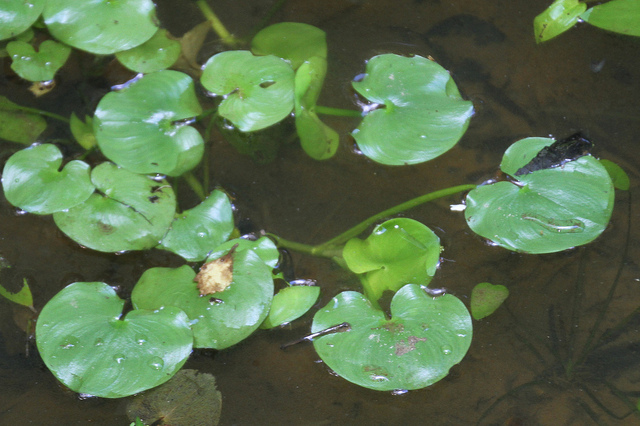
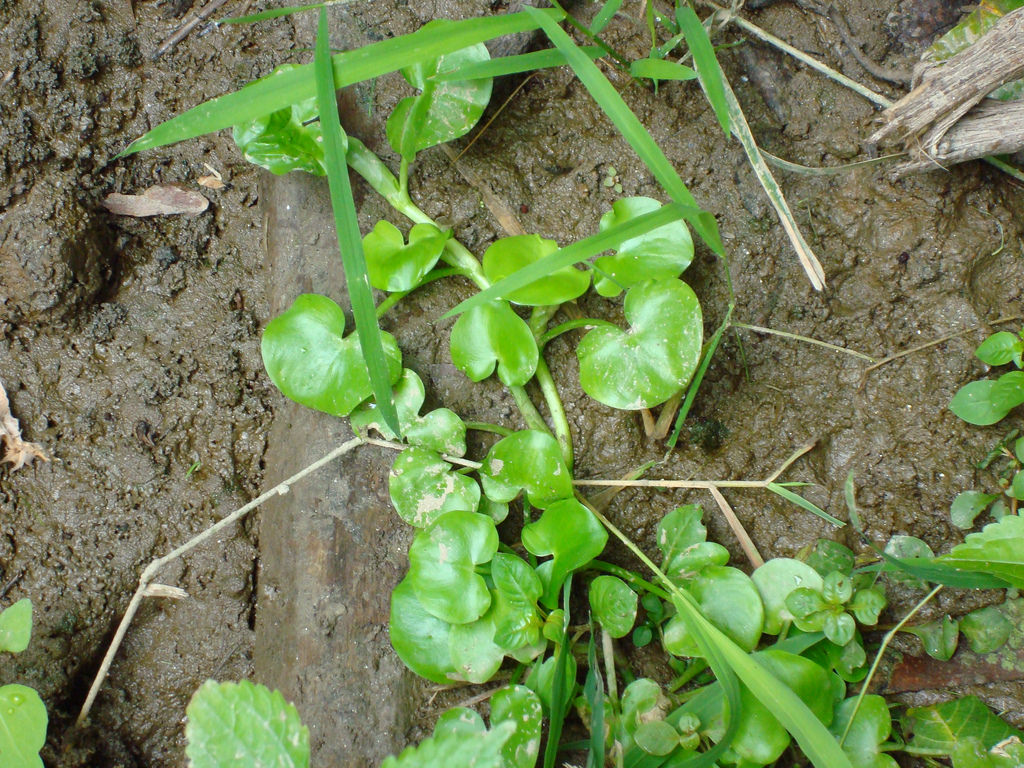
Kidney-leaved Mudplantain in Howard Co., Maryland (7/24/2007).
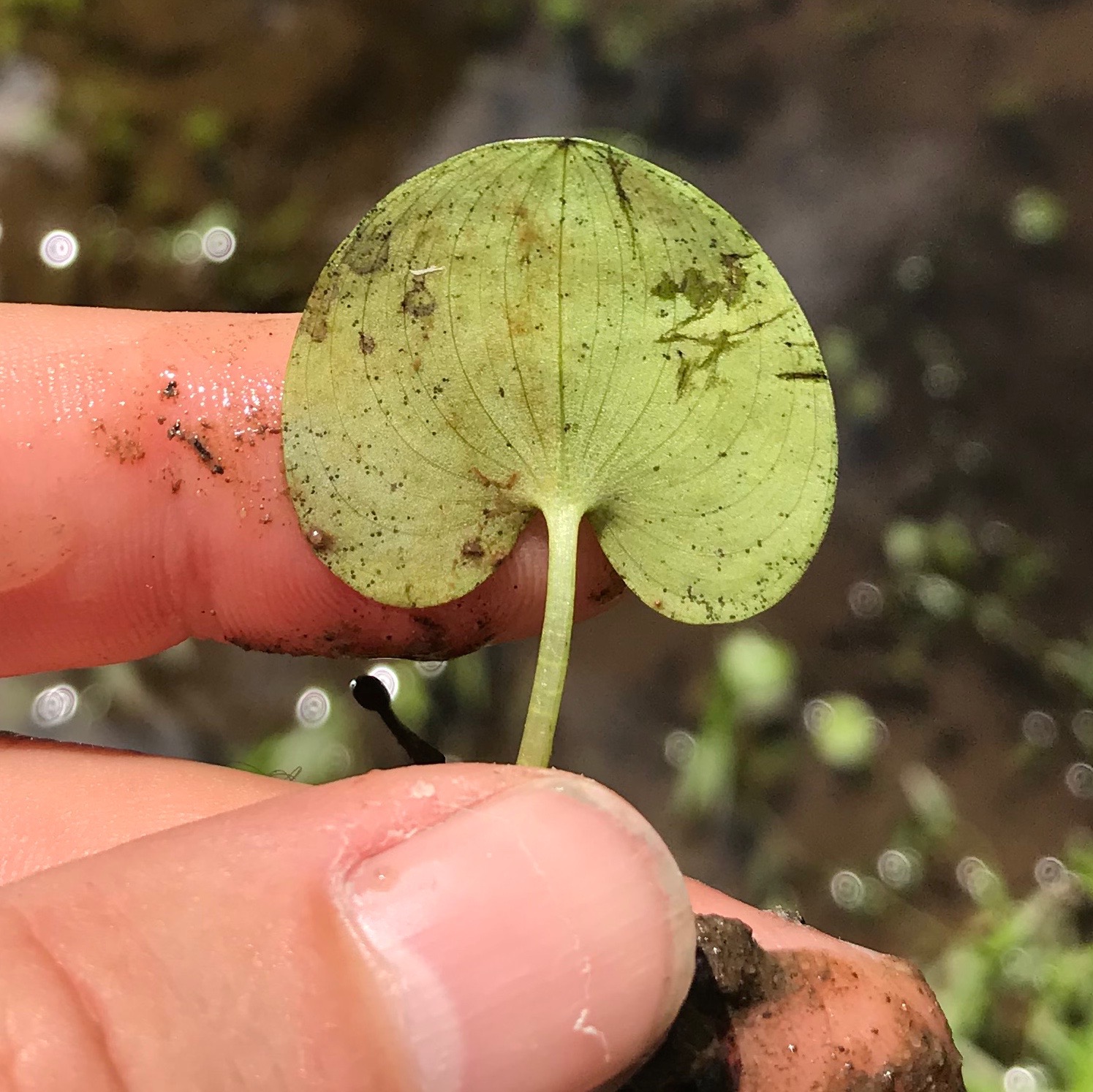
The underside of a Kidney-leaved Mudplantain leaf in Caroline Co., Maryland (8/4/2018).
Map Snapshot


30 Records
Citations
No citations linked for this taxon yet.
Use of media featured on Maryland
Biodiversity Project is only permitted with express permission of the
photographer.
Kidney-leaved Mudplantain from Anne Arundel Co., Maryland (8/4/2013).
Media by
Jim Stasz.
Kidney-leaved Mudplantain in Howard Co., Maryland (7/24/2007).
View Record Details
Media by
Sue Muller.
The underside of a Kidney-leaved Mudplantain leaf in Caroline Co., Maryland (8/4/2018).
View Record Details
Media by
Jim Brighton.
Source: Wikipedia
| Heteranthera reniformis | |
|---|---|

| |
Scientific classification 
| |
| Kingdom: | Plantae |
| Clade: | Tracheophytes |
| Clade: | Angiosperms |
| Clade: | Monocots |
| Clade: | Commelinids |
| Order: | Commelinales |
| Family: | Pontederiaceae |
| Genus: | Heteranthera |
| Species: | H. reniformis
|
| Binomial name | |
| Heteranthera reniformis | |
| Synonyms[1] | |
| |
Heteranthera reniformis common name kidneyleaf mud-plantain, and mud plantain; is a species of flowering plant in the family Pontederiaceae.[1][2] It is found in North America.[3] It is listed as a special concern and believed extirpated in Connecticut.[4] It listed as endangered in Illinois and Ohio.[3]
Native American ethnobotany
[edit]The Cherokee apply a hot poultice of the root to inflamed wounds and sores.[5]
References
[edit]- ^ a b "Heteranthera reniformis Ruiz & Pav". Plants of the World Online. The Trustees of the Royal Botanic Gardens, Kew. n.d. Retrieved January 26, 2025.
- ^ "Heteranthera reniformis Ruiz & Pav". Catalogue of Life. Species 2000. n.d. Retrieved January 26, 2025.
- ^ a b NRCS. "Heteranthera reniformis". PLANTS Database. United States Department of Agriculture (USDA). Retrieved 1 April 2021.
- ^ "Connecticut's Endangered, Threatened and Special Concern Species 2015". State of Connecticut Department of Energy and Environmental Protection Bureau of Natural Resources. Retrieved 17 January 2018. (Note: This list is newer than the one used by plants.usda.gov and is more up-to-date.)
- ^ Hamel, Paul B. and Mary U. Chiltoskey, 1975, Cherokee Plants and Their Uses -- A 400 Year History, Sylva, N.C. Herald Publishing Co., page 45
_at_Gandipet,_Hyderabad,_AP_W_IMG_9005.jpg) | This Commelinales-related article is a stub. You can help Wikipedia by adding missing information. |