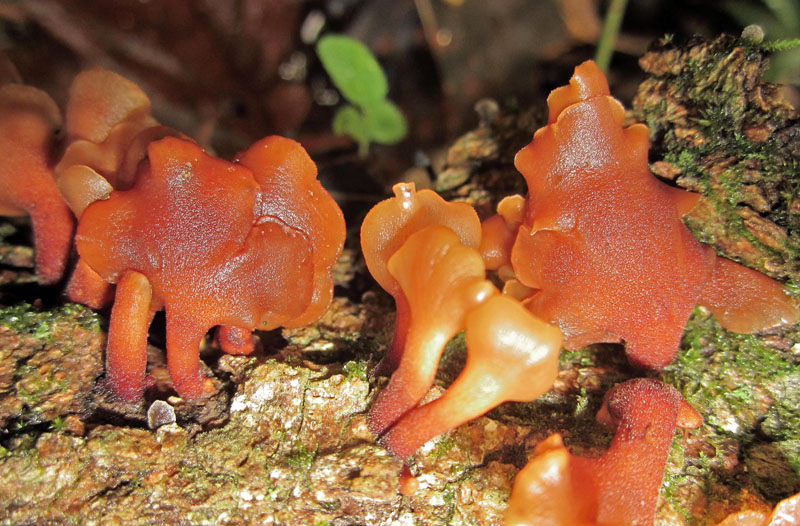
Dacryopinax elegans (infertile surface of fruiting bodies) in Howard Co., Maryland (10/2/2016). Determined by Michael Kuo/MushroomExpert.
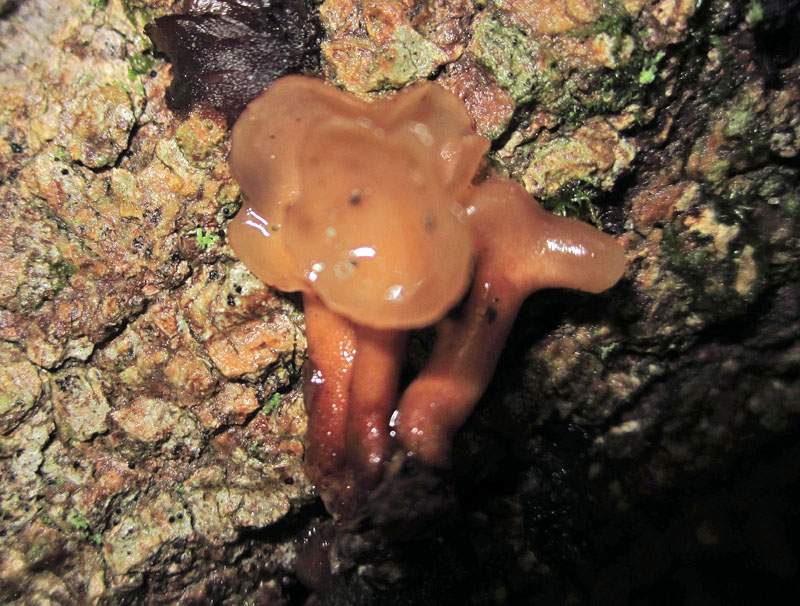
Dacryopinax elegans (fertile surface of fruiting bodies) in Howard Co., Maryland (10/2/2016). Determined by Michael Kuo/MushroomExpert.

Dacryopinax elegans in Frederick Co., Maryland (1/3/2021). (c) Emilio Concari, some rights reserved (CC BY-NC).
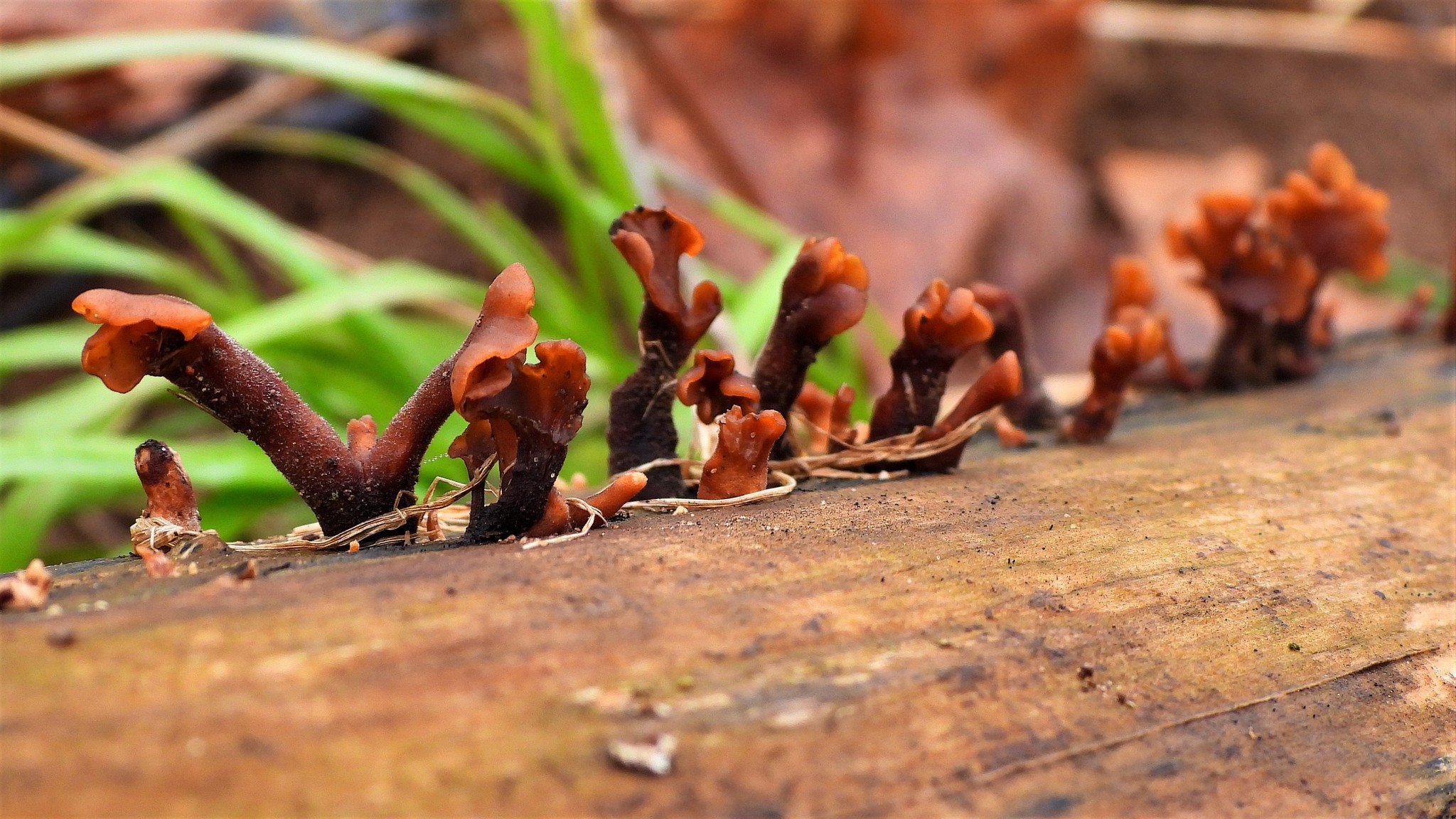
Dacryopinax elegans in Frederick Co., Maryland (1/3/2021). (c) Emilio Concari, some rights reserved (CC BY-NC).
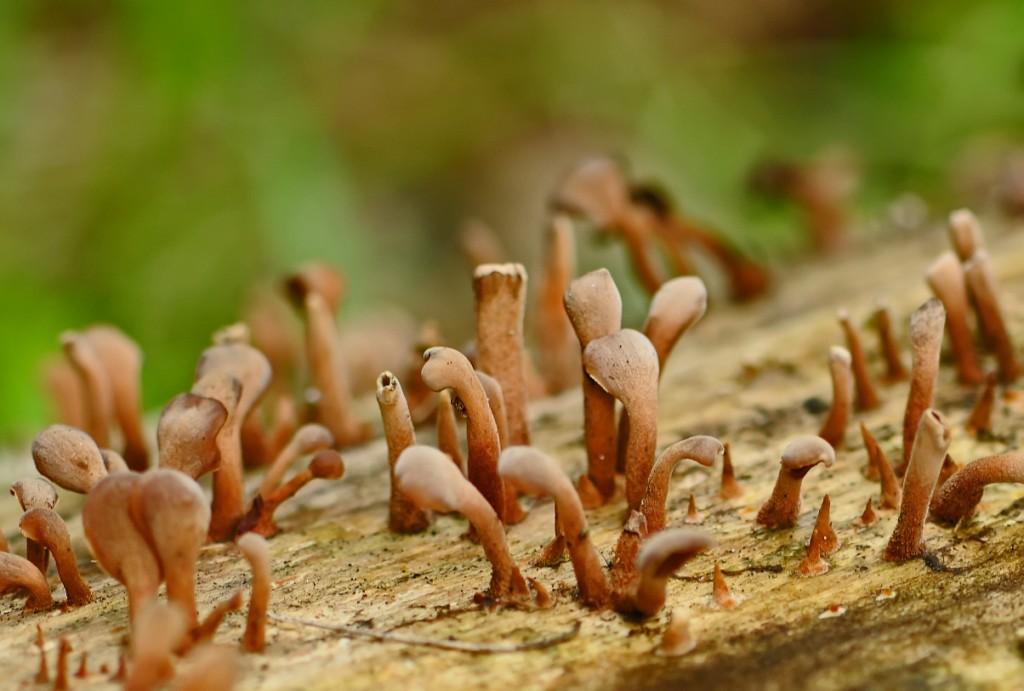
Dacryopinax elegans in Howard Co., Maryland (10/3/2009). Determined by Bob & Jo Solem.
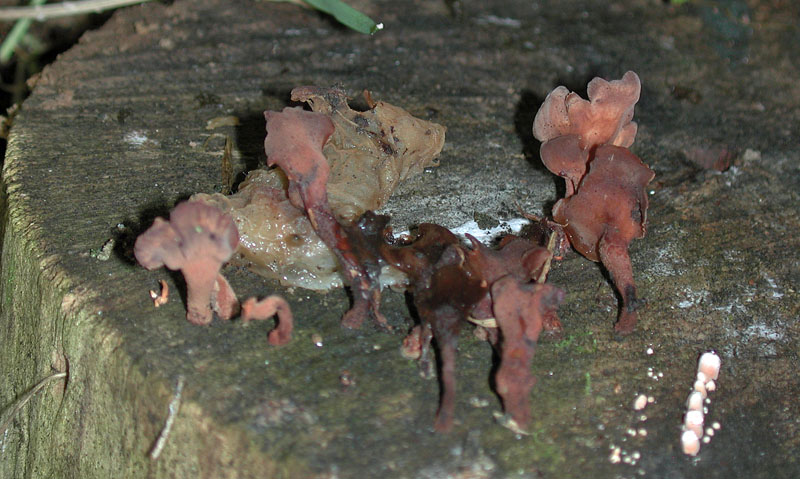
Dacryopinax elegans (fruiting bodies) in Howard Co., Maryland (9/22/2009).
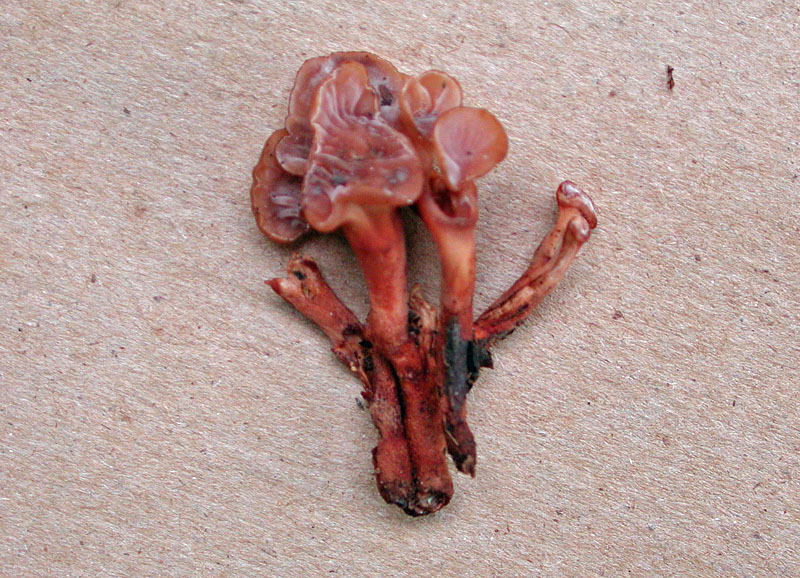
Dacryopinax elegans (fruiting bodies removed from substrate) in Howard Co., Maryland (9/22/2009).
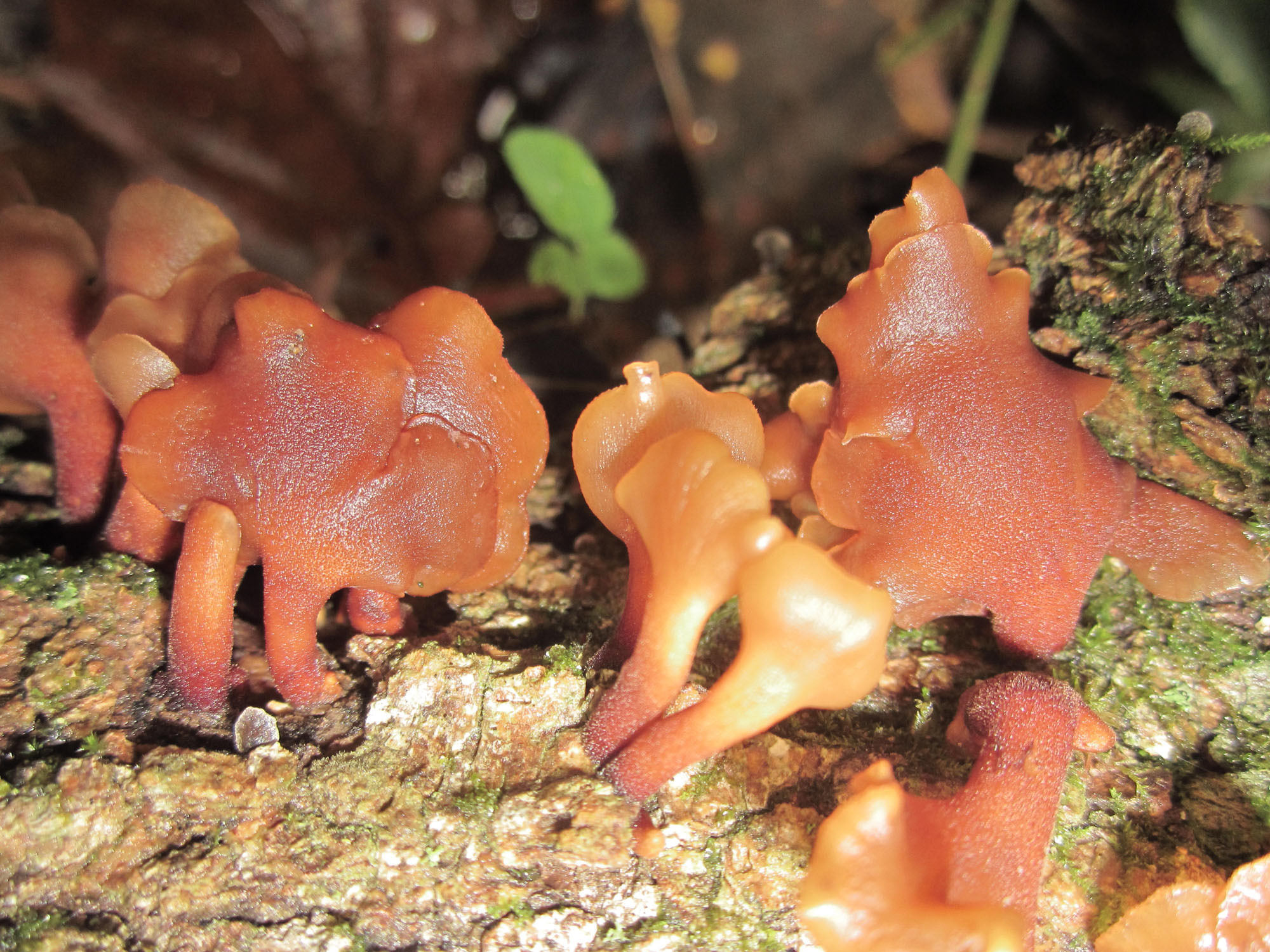
Dacryopinax elegans in Howard Co., Maryland (10/2/2016). (c) Joanne and Robert Solem, some rights reserved (CC BY-NC).
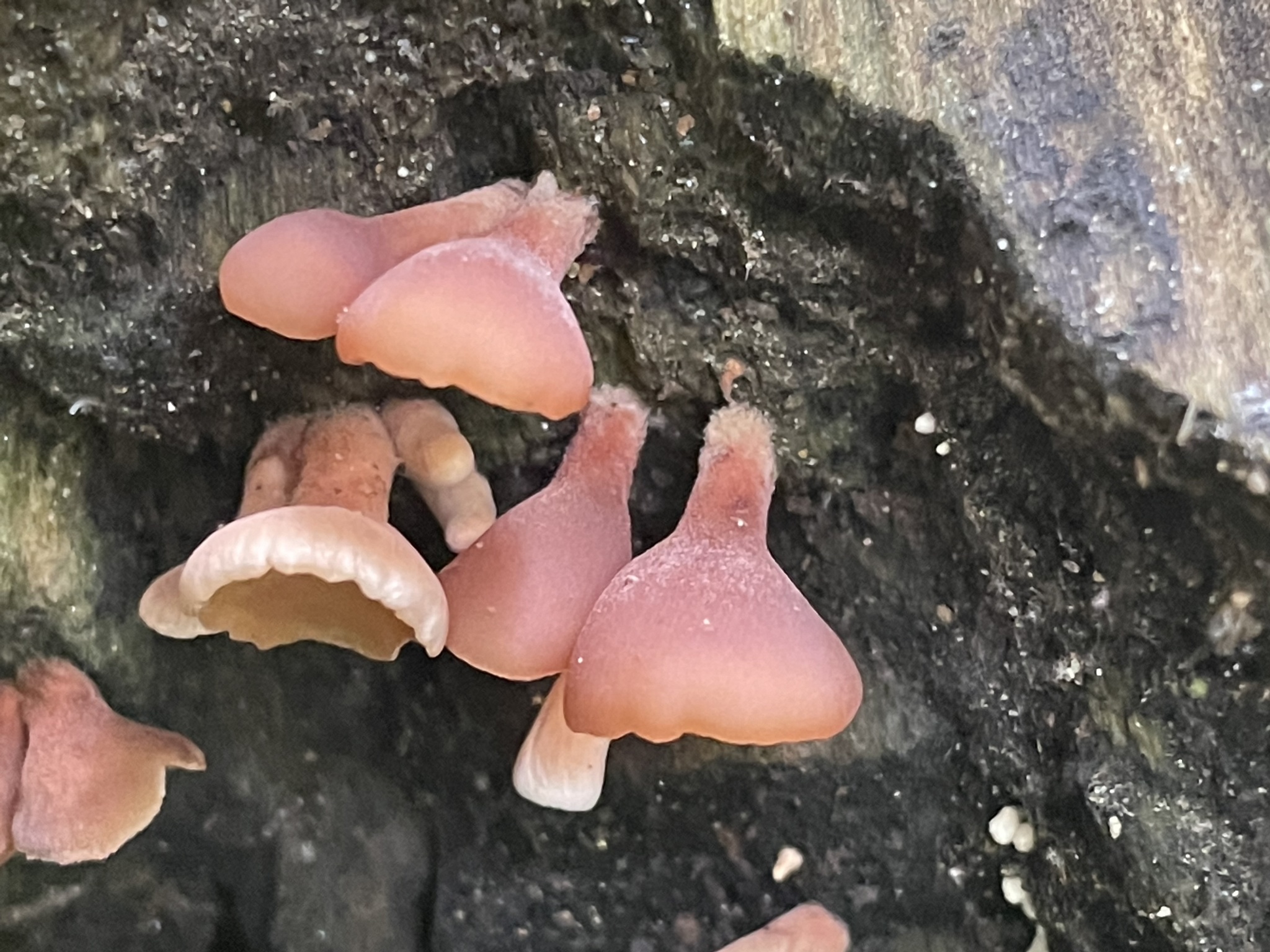
Dacryopinax elegans in Montgomery Co., Maryland (6/9/2021). (c) wearethechampignons, some rights reserved (CC BY).
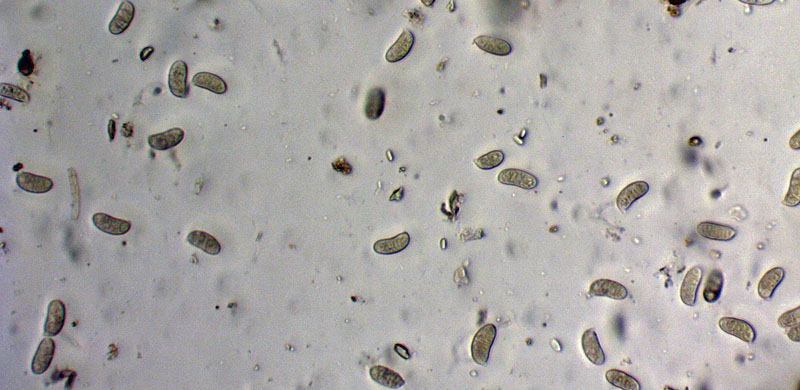
Dacryopinax elegans spores from a specimen collected in Howard Co., Maryland (10/2/2016). Determined by Michael Kuo/MushroomExpert. Sausage-shaped, smooth; measured 13.6-15.1 x 6.1-6.9 microns.
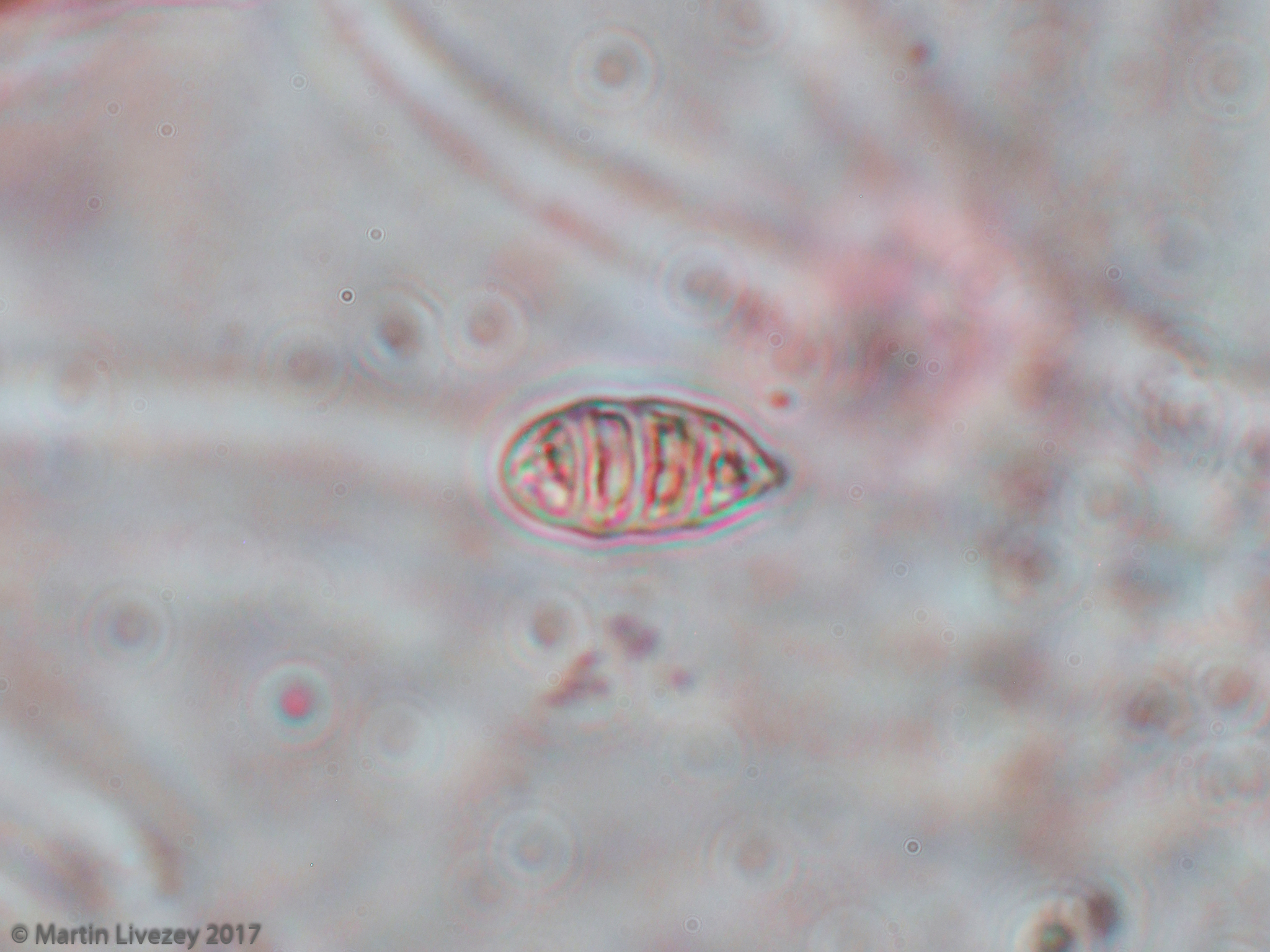
Spores of Dacryopinax elegans in Montgomery Co., Maryland (12/24/2016). (c) martin livezey, some rights reserved (CC BY)
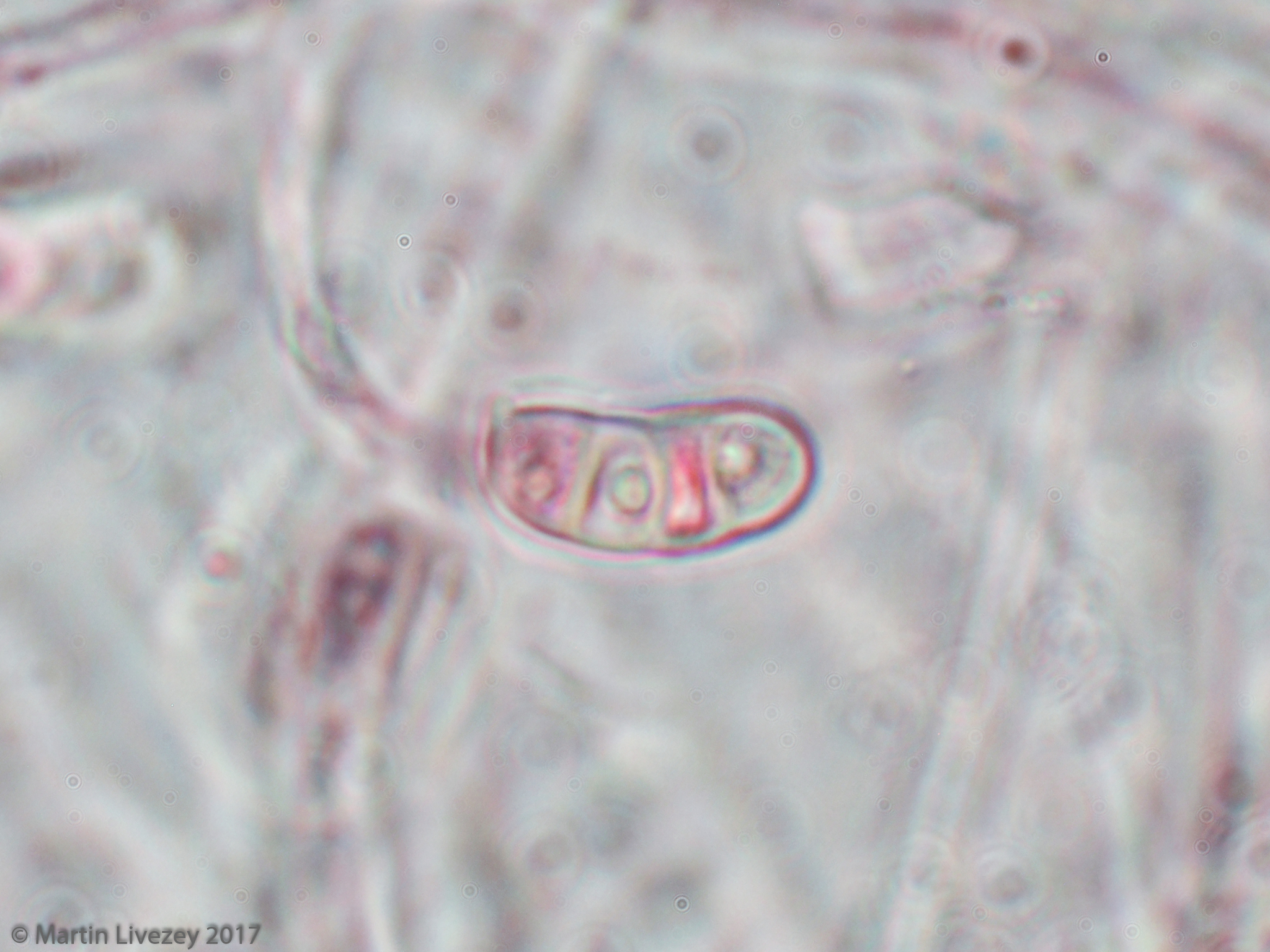
Spores of Dacryopinax elegans in Montgomery Co., Maryland (12/24/2016). (c) martin livezey, some rights reserved (CC BY)
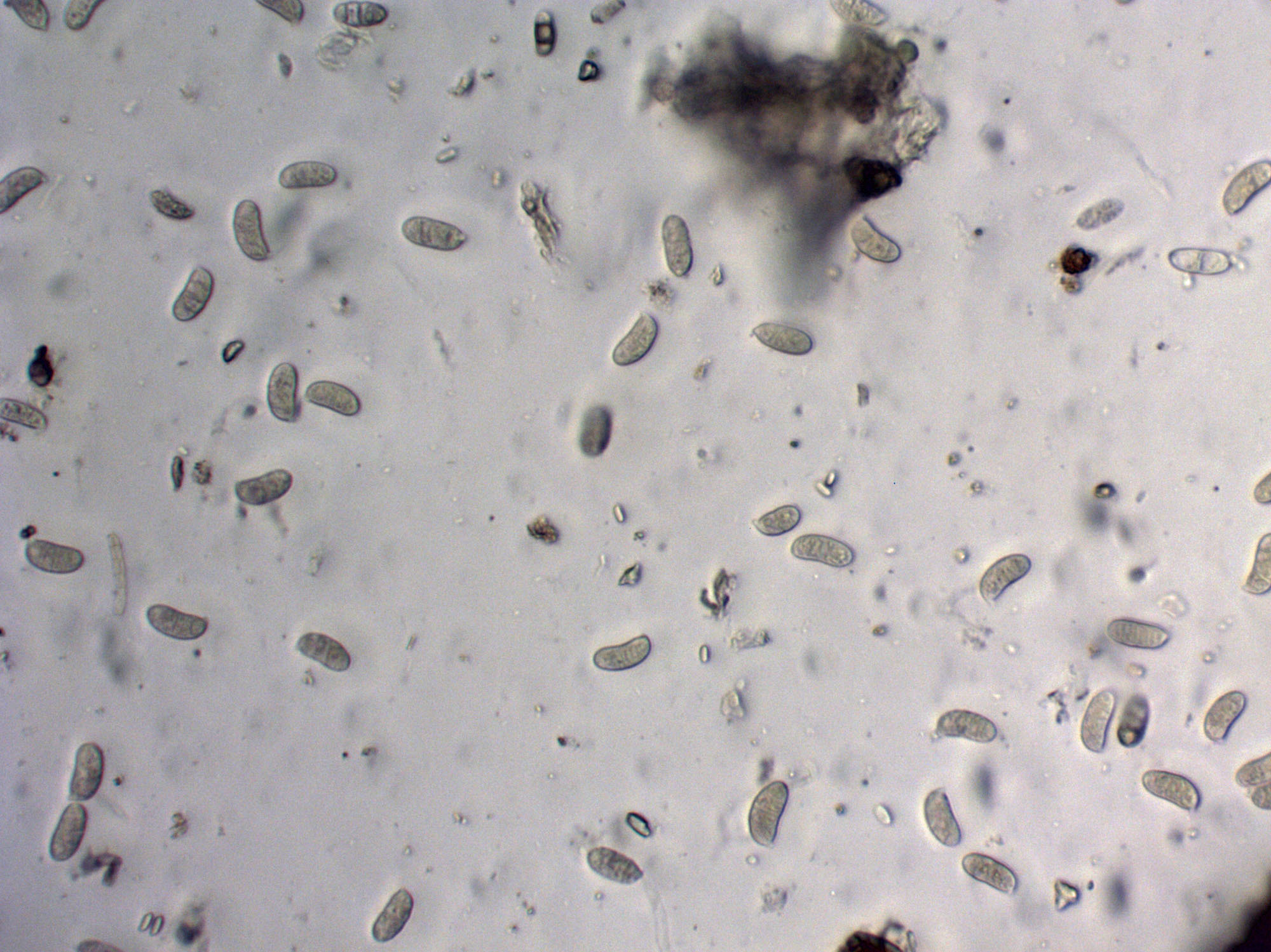
Spores of Dacryopinax elegans in Howard Co., Maryland (10/2/2016). (c) Joanne and Robert Solem, some rights reserved (CC BY-NC).
Map Snapshot


16 Records
Description
Fruiting body: Head may be cup, spoon, or fan-shaped. Dark amber/blackish-brown; rubbery/gelatinous. Fertile surface: smooth. Infertile surface: smooth/slightly scurfy. Stalk: Color of head, darkens with age; round to somewhat flattened (J. Solem, pers. comm.).
Where To Find
Scattered or groups on decaying hardwood.
Citations
No citations linked for this taxon yet.
Eating mushrooms can be dangerous. One should do so only with expert advice and great care. MBP accepts no liability for injury sustained in consuming fungi or other biodiversity. Use of media featured on Maryland
Biodiversity Project is only permitted with express permission of the
photographer.
Dacryopinax elegans (infertile surface of fruiting bodies) in Howard Co., Maryland (10/2/2016). Determined by Michael Kuo/MushroomExpert.
View Record Details
Media by
Joanne Solem.
Dacryopinax elegans (fertile surface of fruiting bodies) in Howard Co., Maryland (10/2/2016). Determined by Michael Kuo/MushroomExpert.
View Record Details
Media by
Joanne Solem.
Dacryopinax elegans in Frederick Co., Maryland (1/3/2021). (c) Emilio Concari, some rights reserved (CC BY-NC).
View Record Details
Media by
Emilio Concari.
Dacryopinax elegans in Frederick Co., Maryland (1/3/2021). (c) Emilio Concari, some rights reserved (CC BY-NC).
View Record Details
Media by
Emilio Concari.
Dacryopinax elegans in Howard Co., Maryland (10/3/2009). Determined by Bob & Jo Solem.
View Record Details
Media by
Richard Orr.
Dacryopinax elegans (fruiting bodies) in Howard Co., Maryland (9/22/2009).
View Record Details
Media by
Joanne Solem.
Dacryopinax elegans (fruiting bodies removed from substrate) in Howard Co., Maryland (9/22/2009).
View Record Details
Media by
Joanne Solem.
Dacryopinax elegans in Howard Co., Maryland (10/2/2016). (c) Joanne and Robert Solem, some rights reserved (CC BY-NC).
View Record Details
Media by
Joanne Solem.
Dacryopinax elegans in Montgomery Co., Maryland (6/9/2021). (c) wearethechampignons, some rights reserved (CC BY).
View Record Details
Media by
wearethechampignons via iNaturalist.
Dacryopinax elegans spores from a specimen collected in Howard Co., Maryland (10/2/2016). Determined by Michael Kuo/MushroomExpert. Sausage-shaped, smooth; measured 13.6-15.1 x 6.1-6.9 microns.
View Record Details
Media by
Robert Solem.
Spores of Dacryopinax elegans in Montgomery Co., Maryland (12/24/2016). (c) martin livezey, some rights reserved (CC BY)
View Record Details
Media by
martin_livezey via iNaturalist.
Spores of Dacryopinax elegans in Montgomery Co., Maryland (12/24/2016). (c) martin livezey, some rights reserved (CC BY)
View Record Details
Media by
martin_livezey via iNaturalist.
Spores of Dacryopinax elegans in Howard Co., Maryland (10/2/2016). (c) Joanne and Robert Solem, some rights reserved (CC BY-NC).
View Record Details
Media by
Joanne Solem.
Source: Wikipedia
| Dacryopinax elegans | |
|---|---|

| |
Scientific classification 
| |
| Kingdom: | Fungi |
| Division: | Basidiomycota |
| Class: | Dacrymycetes |
| Order: | Dacrymycetales |
| Family: | Dacrymycetaceae |
| Genus: | Dacryopinax |
| Species: | D. elegans
|
| Binomial name | |
| Dacryopinax elegans | |
| Synonyms[1] | |
| |
Dacryopinax elegans is a species of jelly fungus in the family Dacrymycetaceae. It was originally formally described as Guepinia elegans by Miles Berkeley and Moses Ashley Curtis in 1849.[2] George Willard Martin transferred it to the genus Dacryopinax in 1948.[3]
The fruit bodies have upside-down cups 3–15 millimetres (1⁄8–5⁄8 in) across. Similar species include Guepiniopsis buccina and some in Auricularia.[4]
It appears from June to October in the eastern United States west of New England.[4]
References
[edit]- ^ "GSD Species Synonymy". Species Fungorum. Retrieved 2 February 2020.
- ^ Berkeley, M.J.; Curtis, M.A. (1849). "Decades of fungi. Decades XXIII and XXIV. North and South Carolina Fungi". Hooker's Journal of Botany and Kew Garden Miscellany. 1: 234–239.
- ^ Martin, G.W. (1948). "New of noteworthy tropical fungi. IV". Lloydia. 11 (2): 111–122.
- ^ a b Audubon (2023). Mushrooms of North America. Knopf. p. 90. ISBN 978-0-593-31998-7.
 | This Basidiomycota-related article is a stub. You can help Wikipedia by adding missing information. |