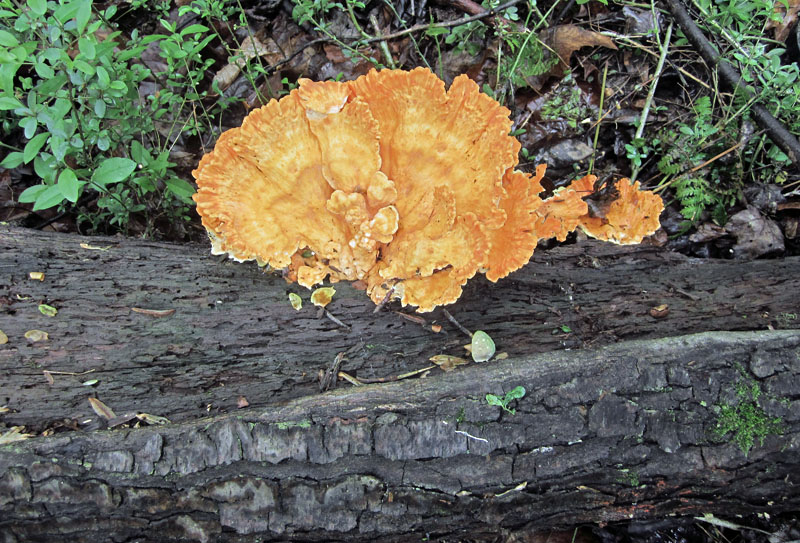
Pine Chicken of the Woods (top of fruiting bodies) in Howard Co., Maryland (4/26/2017).
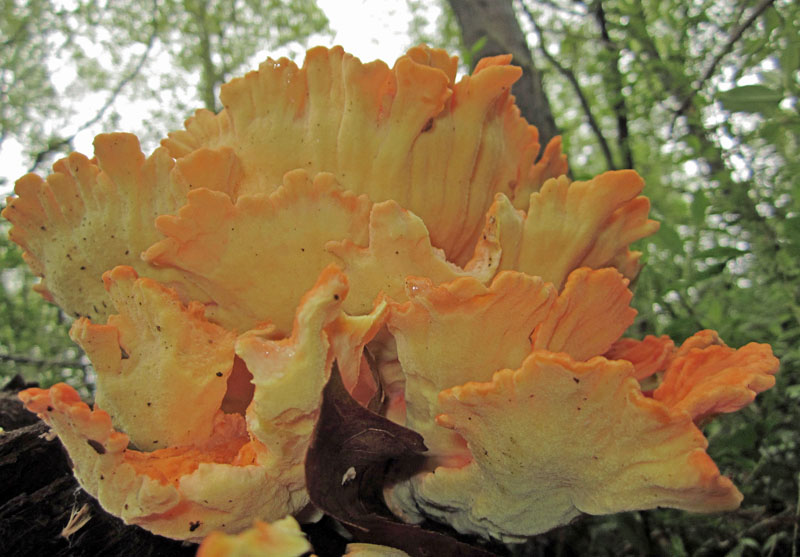
Pine Chicken of the Woods (pores) in Howard Co., Maryland (4/26/2017).

Pine Chicken of the Woods in Howard Co., Maryland (4/26/2017). (c) Joanne and Robert Solem, some rights reserved (CC BY-NC).
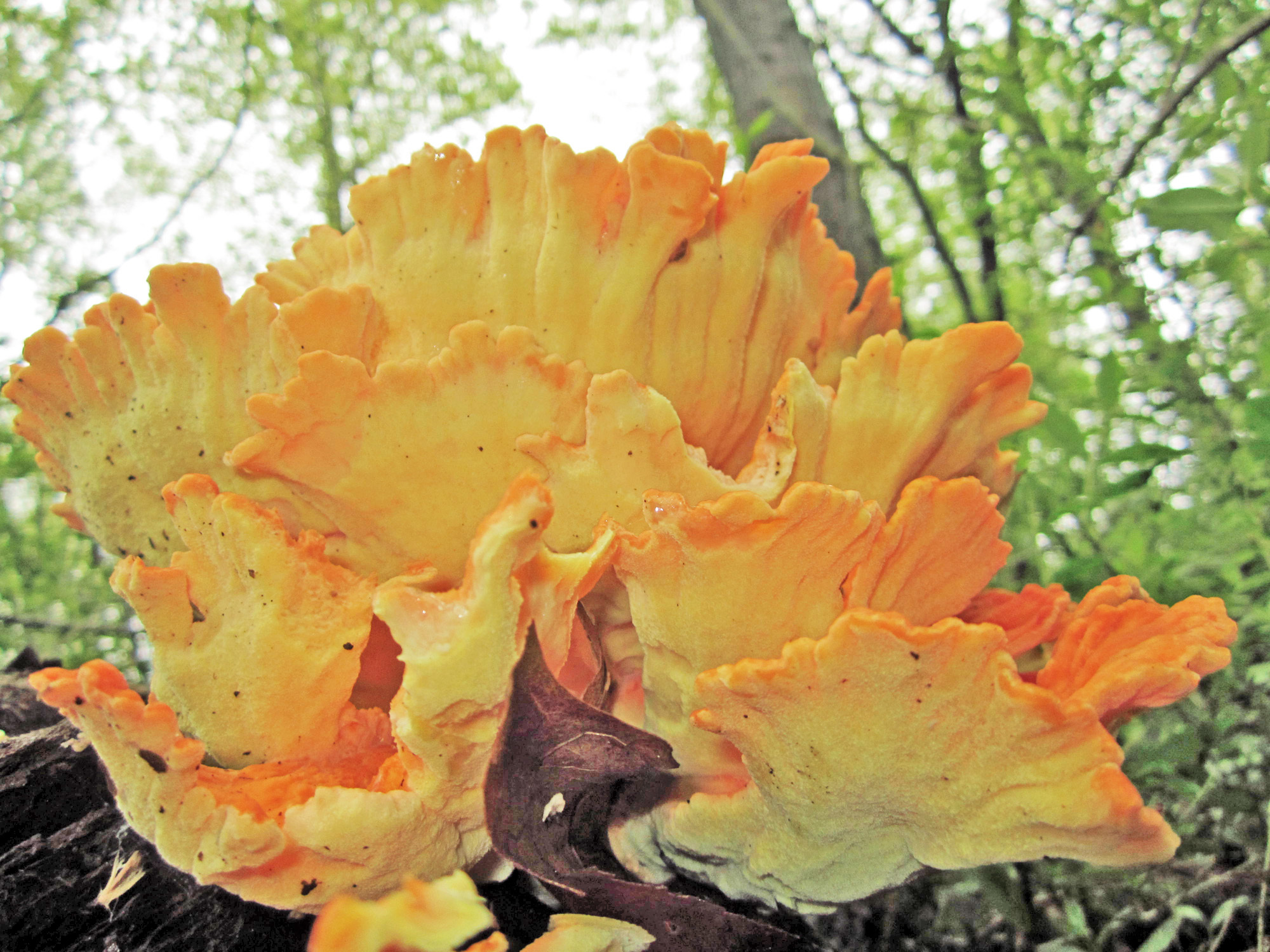
Pine Chicken of the Woods in Howard Co., Maryland (4/26/2017). (c) Joanne and Robert Solem, some rights reserved (CC BY-NC).
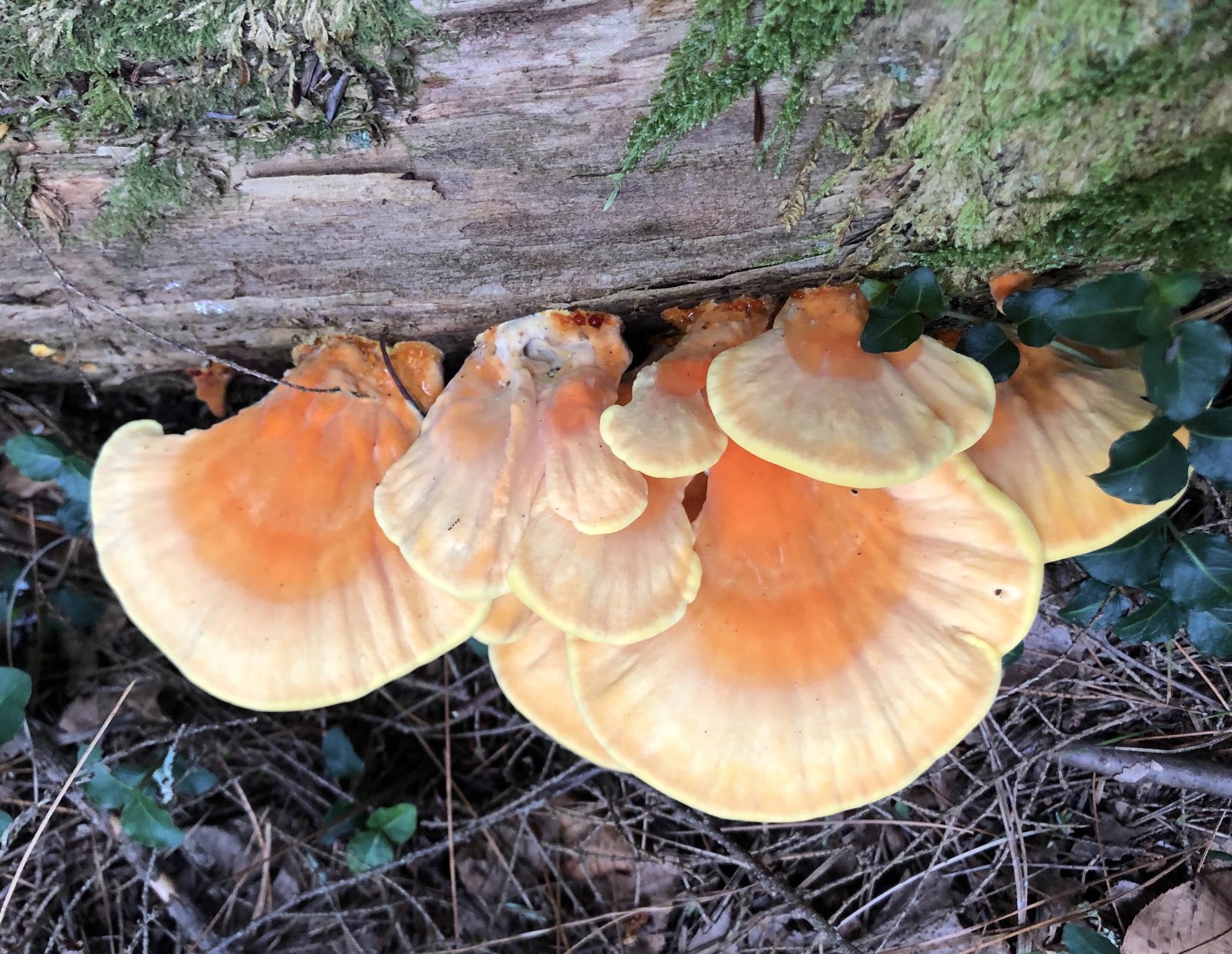
Pine Chicken of the Woods in Garrett Co., Maryland (7/31/2019). (c) catchang, some rights reserved (CC BY-NC).
Map Snapshot


4 Records
Description
Fruiting body: Bright orange, fading to white in age. Dry, radially wrinkled; mostly fan-shaped; blunt margin often lobed. Pores: Yellow; circular to angular (J. Solem, pers. comm.).
Where To Find
Habitat: Solitary or overlapping clusters on dead or living pines. The virtually identical L. sulphureus is found on living or dead deciduous trees.
Citations
No citations linked for this taxon yet.
Eating mushrooms can be dangerous. One should do so only with expert advice and great care. MBP accepts no liability for injury sustained in consuming fungi or other biodiversity. Use of media featured on Maryland
Biodiversity Project is only permitted with express permission of the
photographer.
Pine Chicken of the Woods (top of fruiting bodies) in Howard Co., Maryland (4/26/2017).
View Record Details
Media by
Joanne Solem.
Pine Chicken of the Woods (pores) in Howard Co., Maryland (4/26/2017).
View Record Details
Media by
Joanne Solem.
Pine Chicken of the Woods in Howard Co., Maryland (4/26/2017). (c) Joanne and Robert Solem, some rights reserved (CC BY-NC).
View Record Details
Media by
Joanne Solem.
Pine Chicken of the Woods in Howard Co., Maryland (4/26/2017). (c) Joanne and Robert Solem, some rights reserved (CC BY-NC).
View Record Details
Media by
Joanne Solem.
Pine Chicken of the Woods in Garrett Co., Maryland (7/31/2019). (c) catchang, some rights reserved (CC BY-NC).
View Record Details
Media by
catchang via iNaturalist.
Source: Wikipedia
| Laetiporus huroniensis | |
|---|---|

| |
Scientific classification 
| |
| Kingdom: | Fungi |
| Division: | Basidiomycota |
| Class: | Agaricomycetes |
| Order: | Polyporales |
| Family: | Laetiporaceae |
| Genus: | Laetiporus |
| Species: | L. huroniensis
|
| Binomial name | |
| Laetiporus huroniensis Burds. & Banik (2001)
| |
Laetiporus huroniensis is a species of polypore fungus in the family Fomitopsidaceae. It is found in the Great Lakes region of eastern North America, where it fruits on large logs in old growth conifer forests. The type collection, made in Ottawa National Forest in September 1999, was found fruiting on Tsuga canadensis. It was one of three new Laetiporus species published in 2001, which were distinguished genetically from the widespread Laetiporus sulphureus; the others were L. conifericola and L. gilbertsonii.[1]
References
[edit]- ^ Burdsall, H.H. Jr.; Banik, M.T. (2001). "The genus Laetiporus in North America" (PDF). Harvard Papers in Botany. 6 (1): 43–55. Archived from the original (PDF) on 2017-05-14. Retrieved 2015-11-04.
 | This Polyporales-related article is a stub. You can help Wikipedia by adding missing information. |