Map Snapshot


16 Records
Status
Relationships
Citations
No citations linked for this taxon yet.
Source: Wikipedia
| Rose rosette virus | |
|---|---|

| |
Virus classification 
| |
| (unranked): | Virus |
| Realm: | Riboviria |
| Kingdom: | Orthornavirae |
| Phylum: | Negarnaviricota |
| Class: | Bunyaviricetes |
| Order: | Elliovirales |
| Family: | Fimoviridae |
| Genus: | Emaravirus |
| Species: | Emaravirus rosae
|

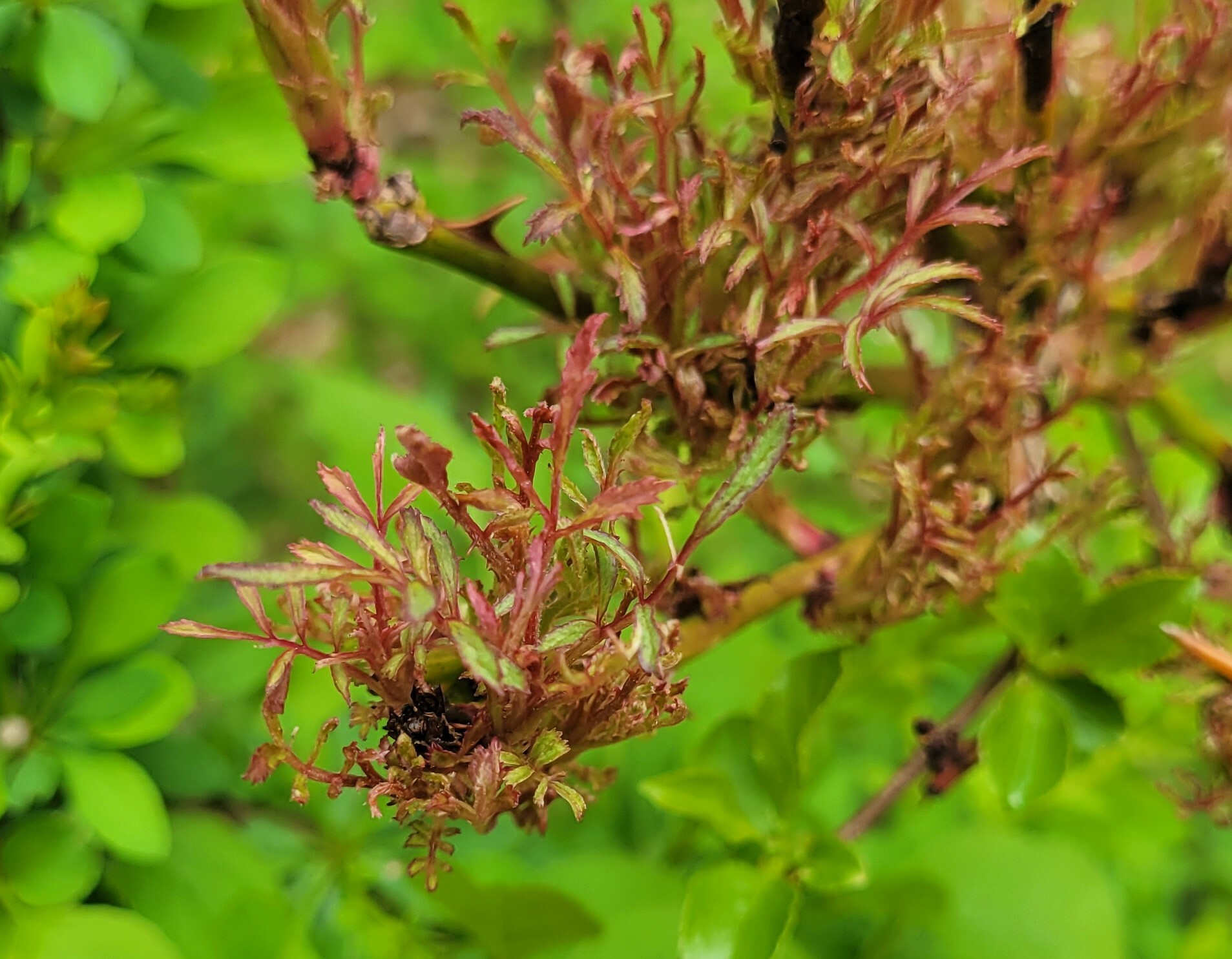
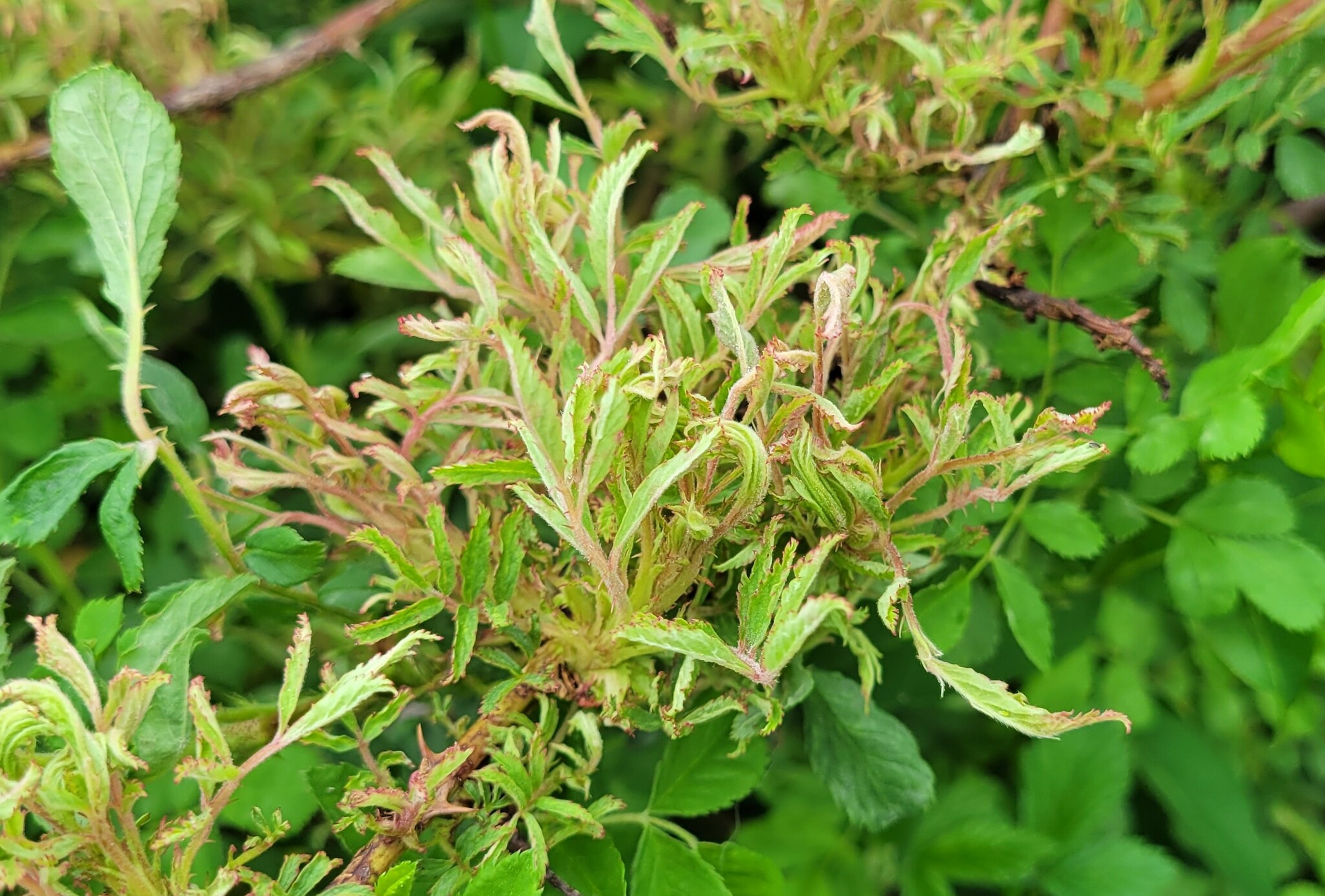
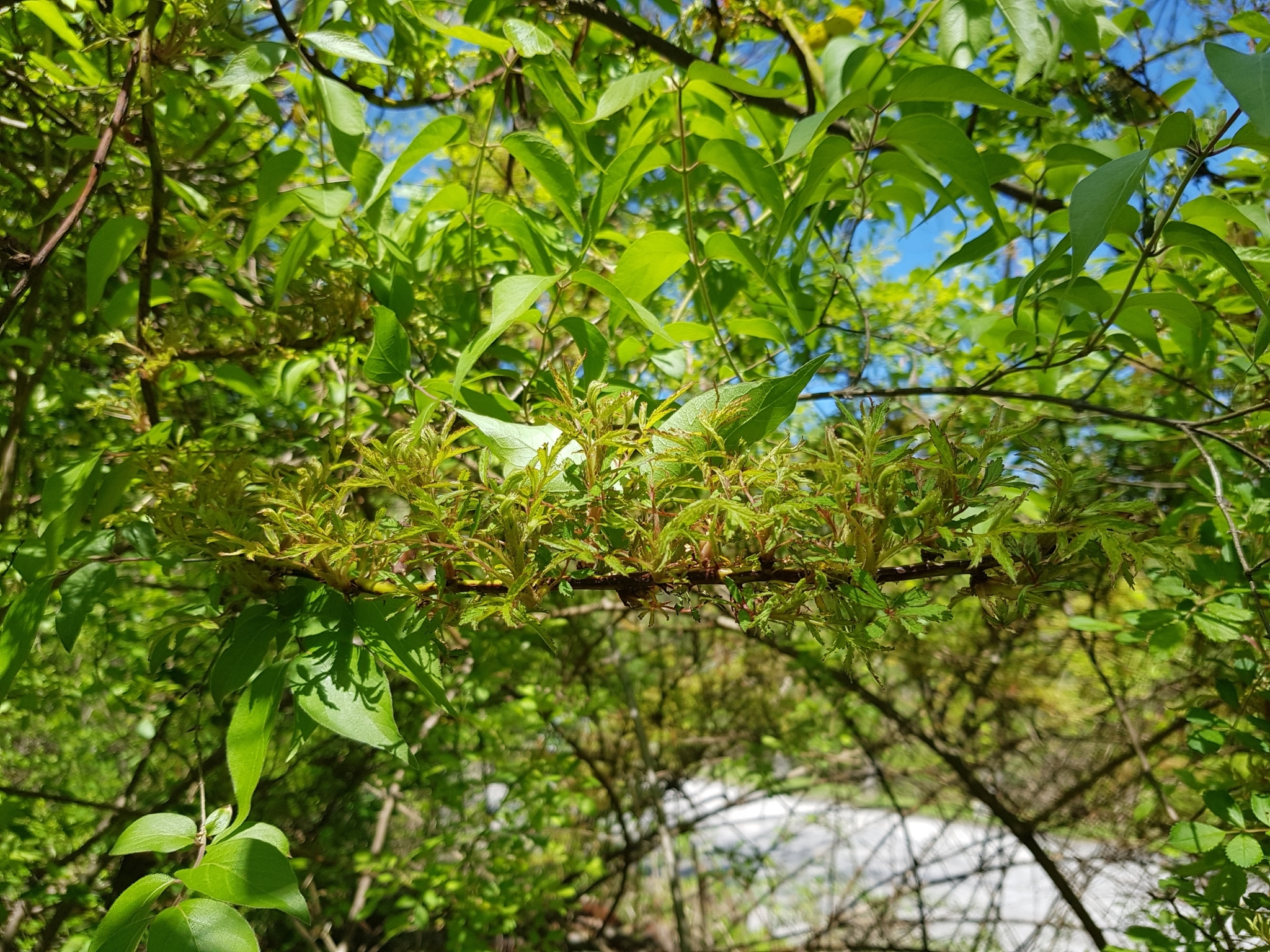
Rose rosette virus (RRV) is a negative sense RNA virus[1] species of virus in the genus Emaravirus.[2] It is known to infect roses (Rosa spp.), in which it causes witch's broom and sometimes excessive growth of prickles. The virus is transmitted by a microscopic Eriophyid mite Phyllocoptes fructiphilus.[3] The disease takes 3–4 years to properly phenotype and thus is a hard disease to breed resistance to the virus.[4] Breeding work began with cultivar resistance trials and then morphed into bi-parental and interconnected populations for mapping disease resistance. Recently there have been the first two studies identifying loci for resistance on both the diploid and tetraploid level using mapping populations developed at Texas A&M University Rose Breeding and Genetics Program.[5] On the diploid level, QTL were found on linkage groups (LGs) 1, 3, 5, and 6 [6] and on the tetraploid level, QTL were found on LGs 5, 6, and 7.[7]
References
[edit]- ^ Laney, Alma G.; Keller, Karen E.; Martin, Robert R.; Tzanetakis, Ioannis E.YR (2011). "A discovery 70 years in the making: characterization of the Rose rosette virus". Journal of General Virology. 92 (7): 1727–1732. doi:10.1099/vir.0.031146-0. ISSN 1465-2099. PMID 21471323.
- ^ "History of the taxon: Species: Emaravirus rosae (2024 Release, MSL #40)". International Committee on Taxonomy of Viruses. Retrieved 17 March 2025.
- ^ Allington, W. B.; Staples, Robert; Viehmeyer, Glenn (1968-10-01). "Transmission of Rose Rosette Virus by the Eriophyid Mite Phyllocoptes fructiphilus1". Journal of Economic Entomology. 61 (5): 1137–1140. doi:10.1093/jee/61.5.1137. ISSN 1938-291X.
- ^ Byrne, David H.; Klein, Patricia; Yan, Muqing; Young, Ellen; Lau, Jeekin; Ong, Kevin; Shires, Madalyn; Olson, Jennifer; Windham, Mark; Evans, Tom; Novick, Danielle (2018-05-01). "Challenges of Breeding Rose Rosette–resistant Roses". HortScience. 53 (5): 604–608. doi:10.21273/HORTSCI12553-17. ISSN 0018-5345.
- ^ https://roses.tamu.edu/
- ^ Young, Ellen L.; Lau, Jeekin; Bentley, Nolan B.; Rawandoozi, Zena; Collins, Sara; Windham, Mark T.; Klein, Patricia E.; Byrne, David H.; Riera-Lizarazu, Oscar (June 2022). "Identification of QTLs for Reduced Susceptibility to Rose Rosette Disease in Diploid Roses". Pathogens. 11 (6): 660. doi:10.3390/pathogens11060660. ISSN 2076-0817. PMC 9227826. PMID 35745514.
- ^ Lau, Jeekin; Young, Ellen L.; Collins, Sara; Windham, Mark T.; Klein, Patricia E.; Byrne, David H.; Riera-Lizarazu, Oscar (2022). "Rose Rosette Disease Resistance Loci Detected in Two Interconnected Tetraploid Garden Rose Populations". Frontiers in Plant Science. 13 916231. doi:10.3389/fpls.2022.916231. ISSN 1664-462X. PMC 9302375. PMID 35873988.
External links
[edit]- iNaturalist – Rose rosette emaravirus
 | This plant virus article is a stub. You can help Wikipedia by adding missing information. |