
Map Snapshot


33 Records
Description
Citations
No citations linked for this taxon yet.
Source: Wikipedia
| Claviceps paspali | |
|---|---|
Scientific classification 
| |
| Kingdom: | Fungi |
| Division: | Ascomycota |
| Class: | Sordariomycetes |
| Order: | Hypocreales |
| Family: | Clavicipitaceae |
| Genus: | Claviceps |
| Species: | C. paspali
|
| Binomial name | |
| Claviceps paspali F. Stevens & J.G. Hall
| |
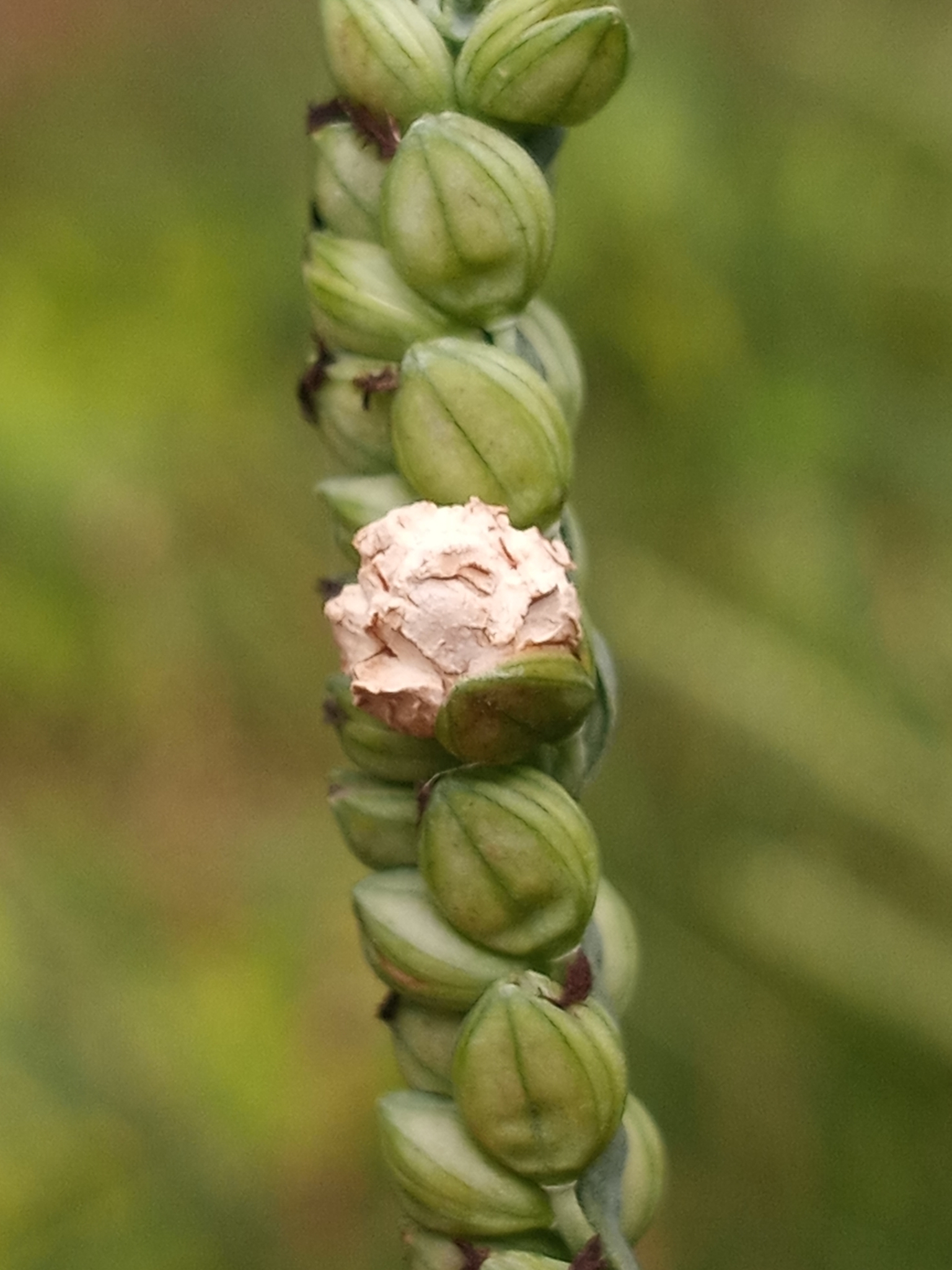
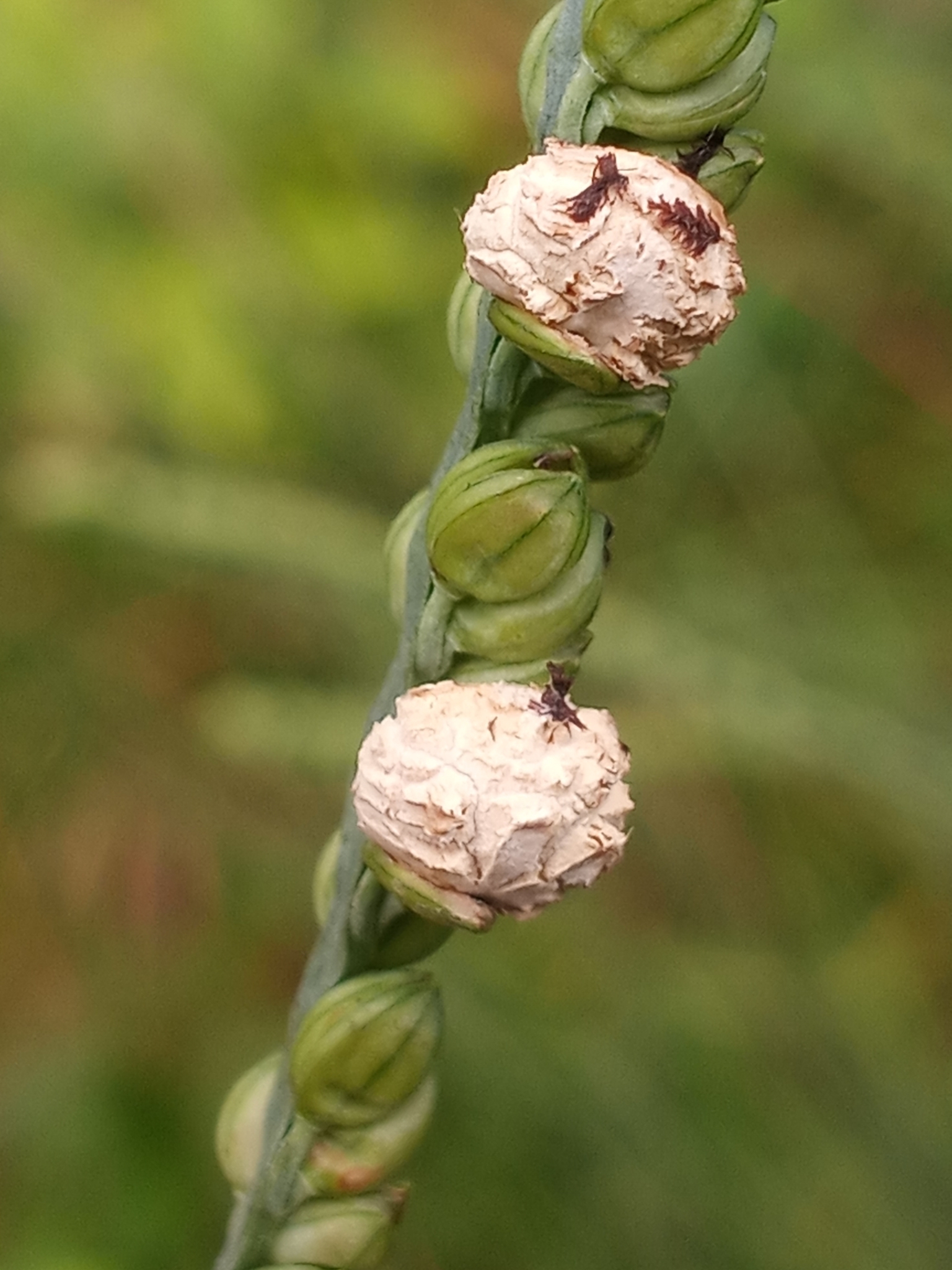
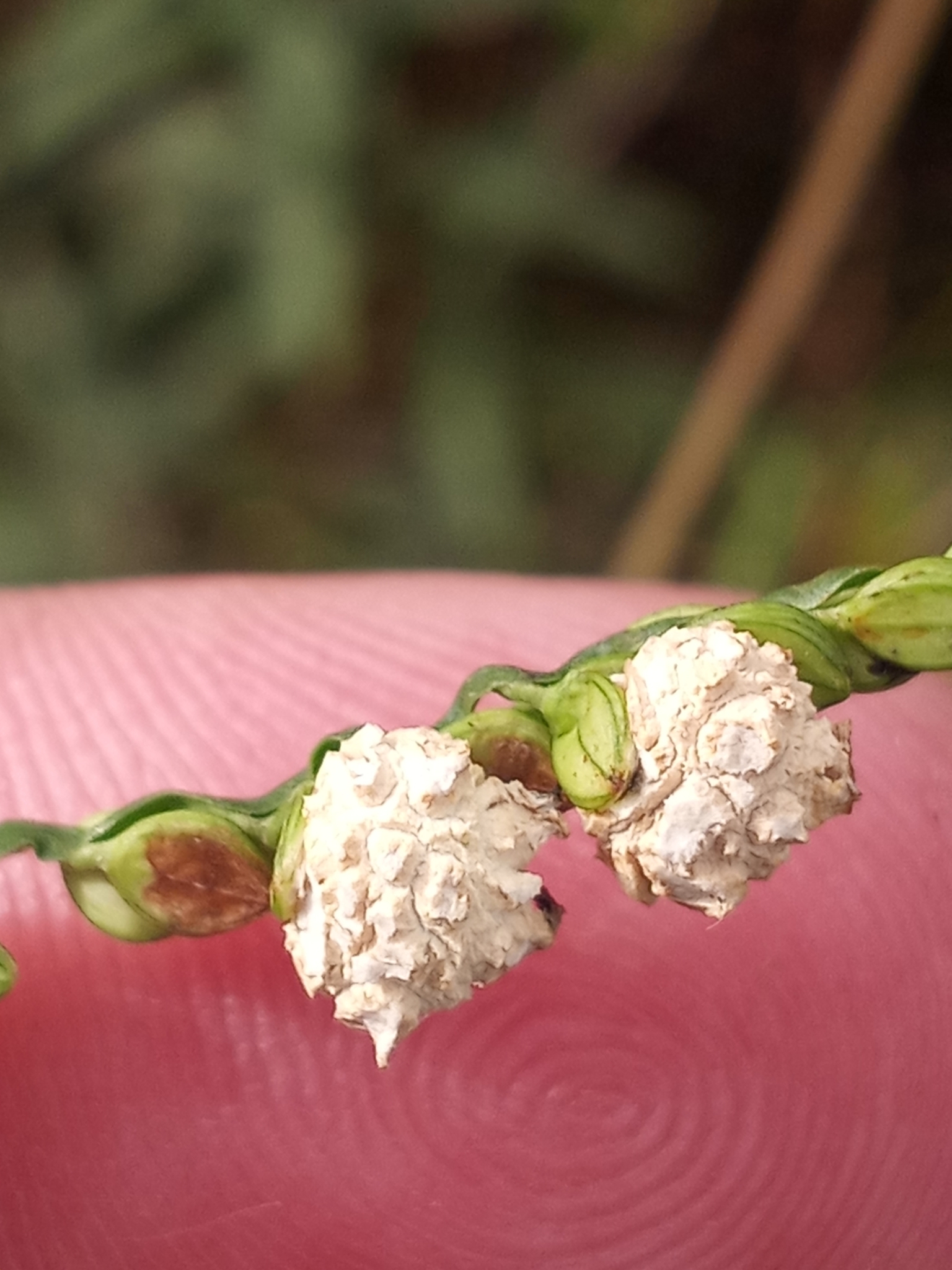
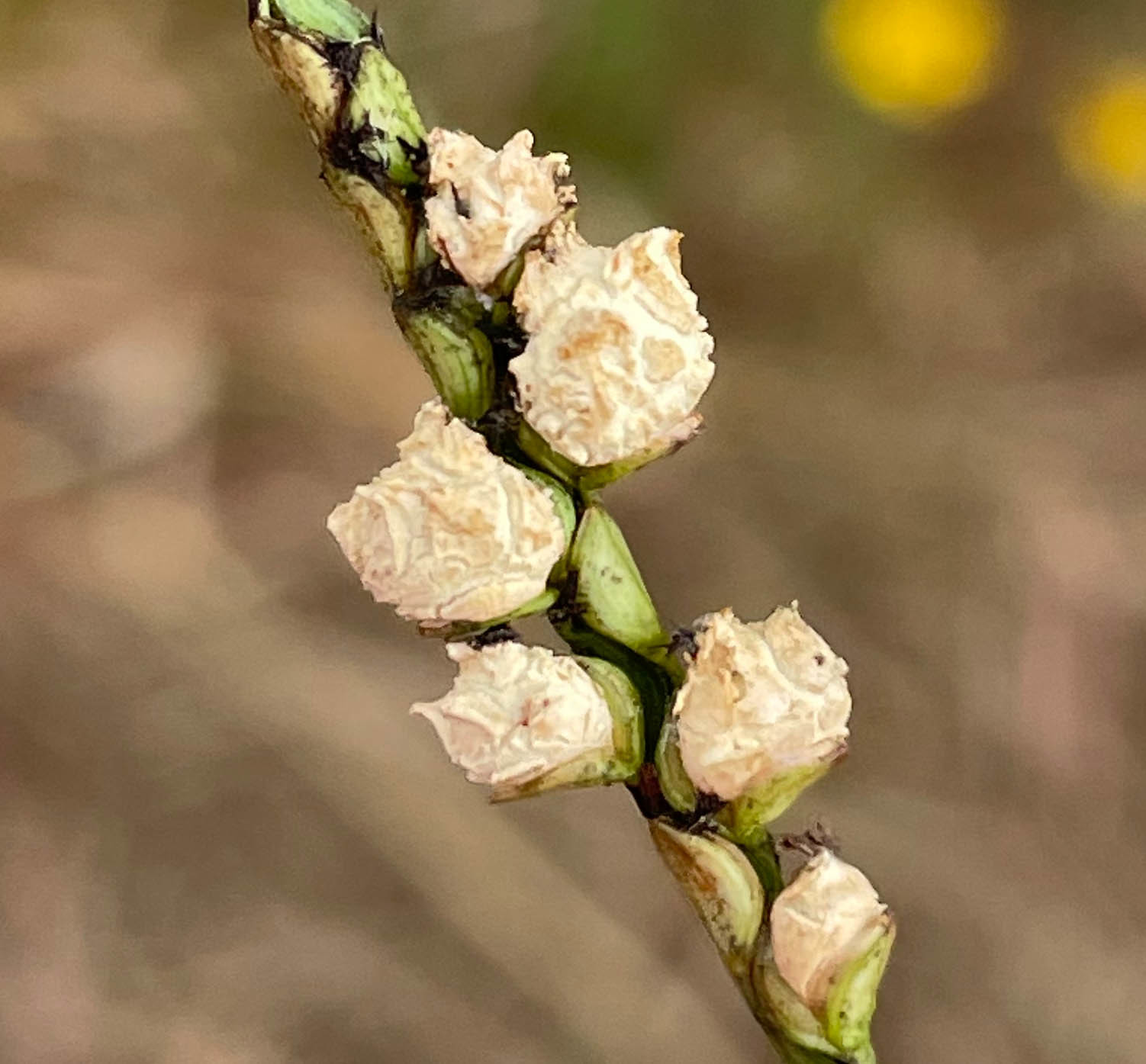
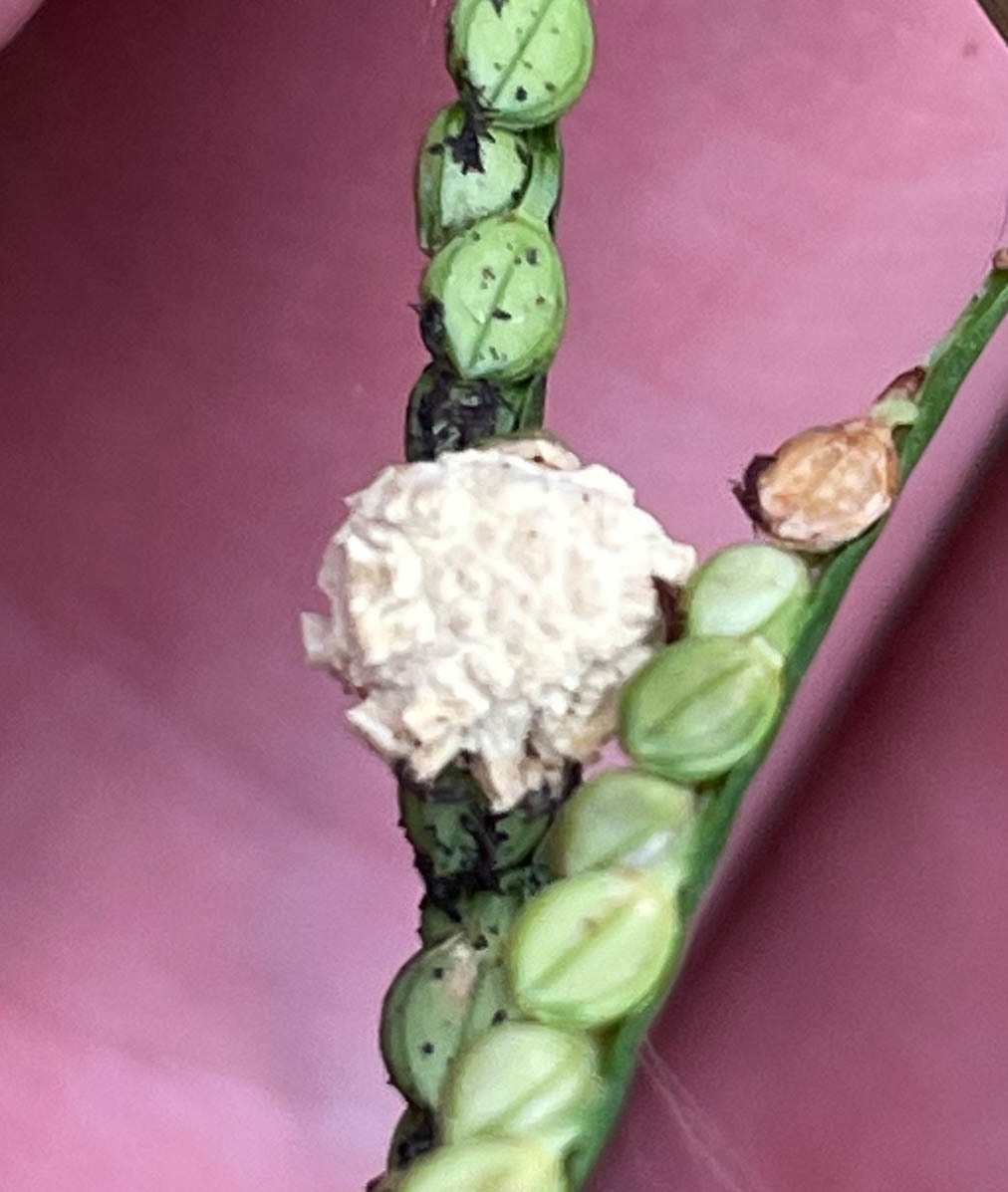
Claviceps paspali is a fungus of the genus Claviceps (ergot) and family Clavicipitaceae.[1] Along with the better-known Claviceps purpurea, it is one of the Claviceps species that has the capacity to produce psychedelic lysergamides such as ergine (lysergic acid amide; LSA) and isoergine.[1]
Claviceps paspali infects wild grasses and could be found on the common grass Paspalum. Like Claviceps africana, Claviceps paspali also secretes honeydew which is consumed by bees. The bees then create a honey called fic'e (Paraguayan Makai Indian language), which is infused with secretions from the plants and has a pungent aroma. If consumed in high amounts, the honey can cause drunkenness, dizziness and even death.[2]
References
[edit]- ^ a b Robinson SL, Panaccione DG (January 2015). "Diversification of ergot alkaloids in natural and modified fungi". Toxins (Basel). 7 (1): 201–118. doi:10.3390/toxins7010201. PMC 4303823. PMID 25609183.
- ^ "Claviceps - The Genera and Species from A to Z - The Encyclopedia of Psychoactive Plants: Ethnopharmacology and Its Applications". doctorlib.info. Retrieved 2020-05-18.
 | This Hypocreales-related article is a stub. You can help Wikipedia by adding missing information. |