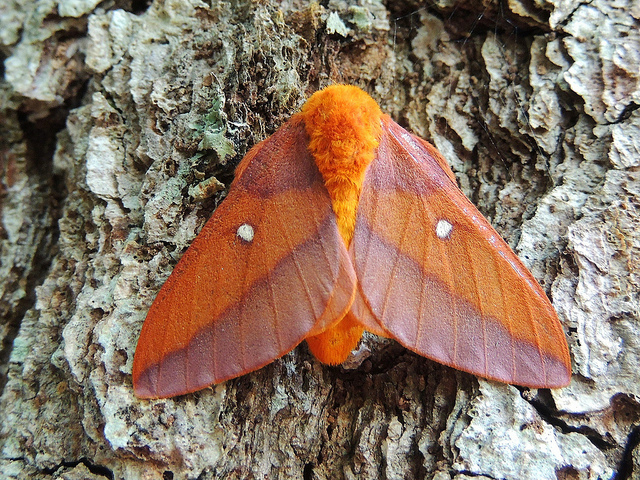
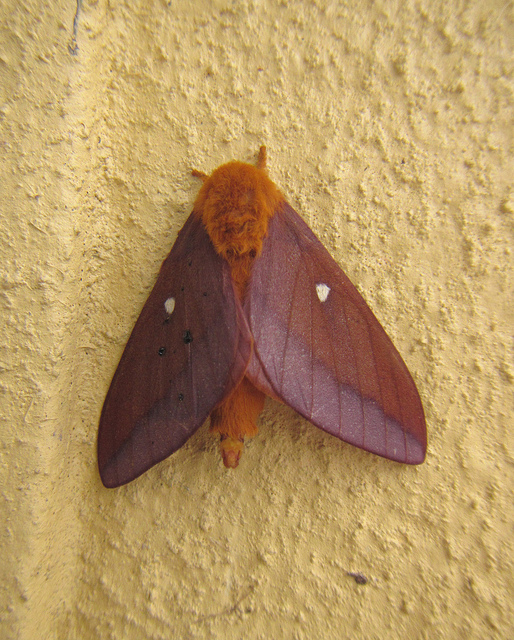
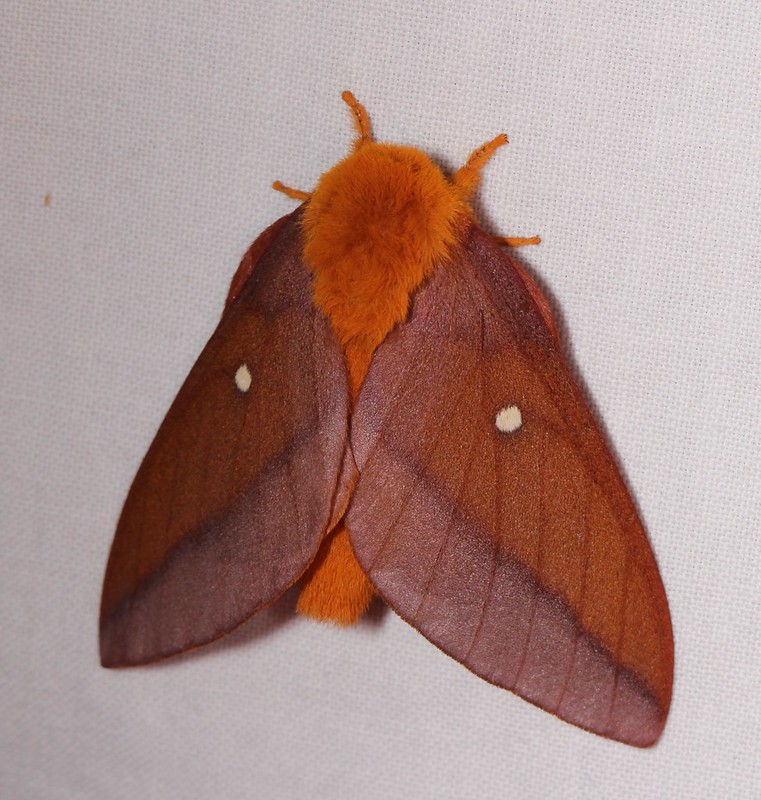
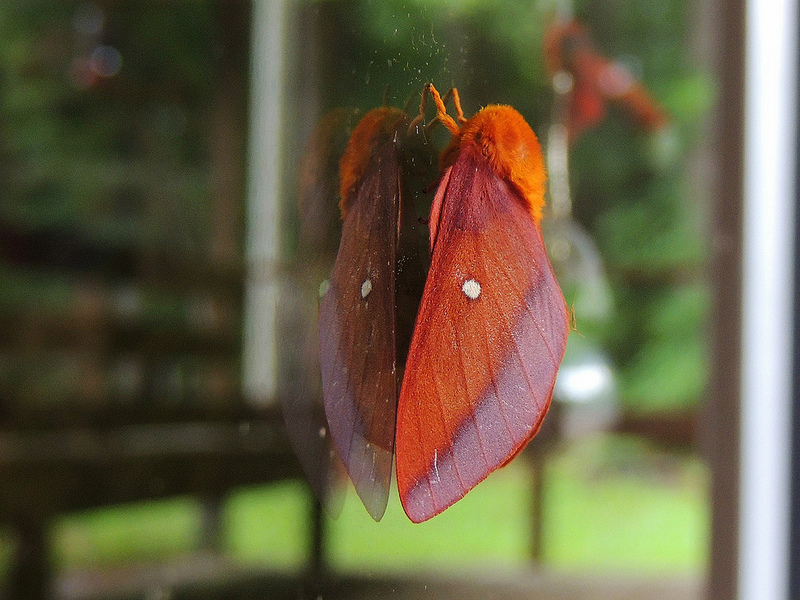
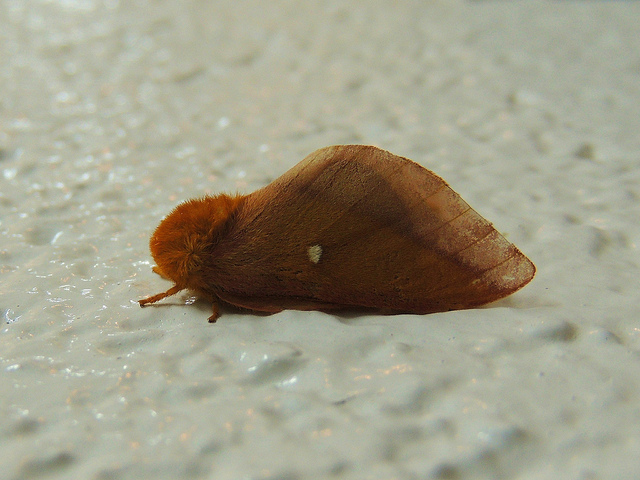
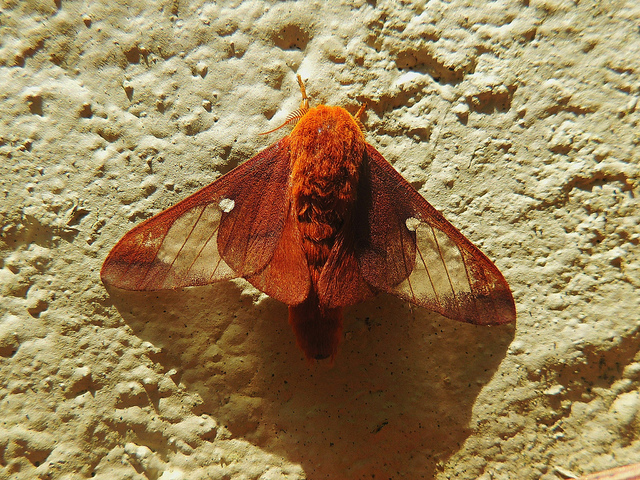
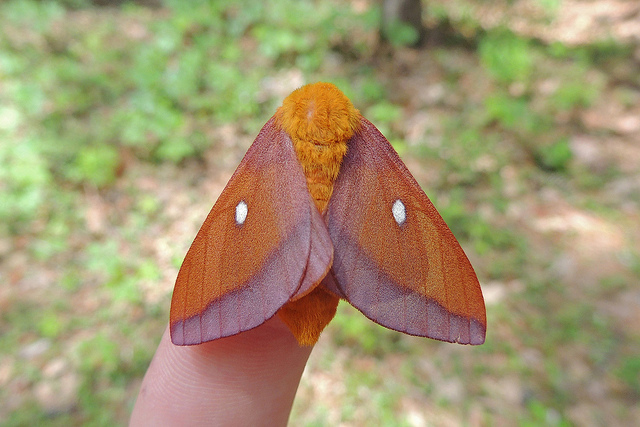
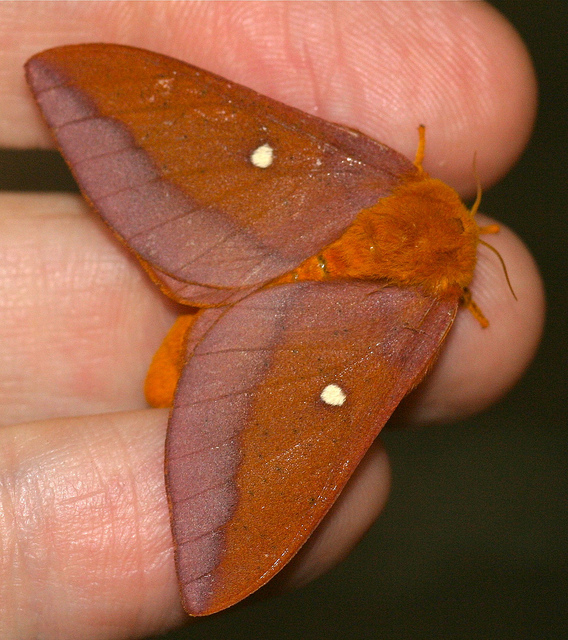
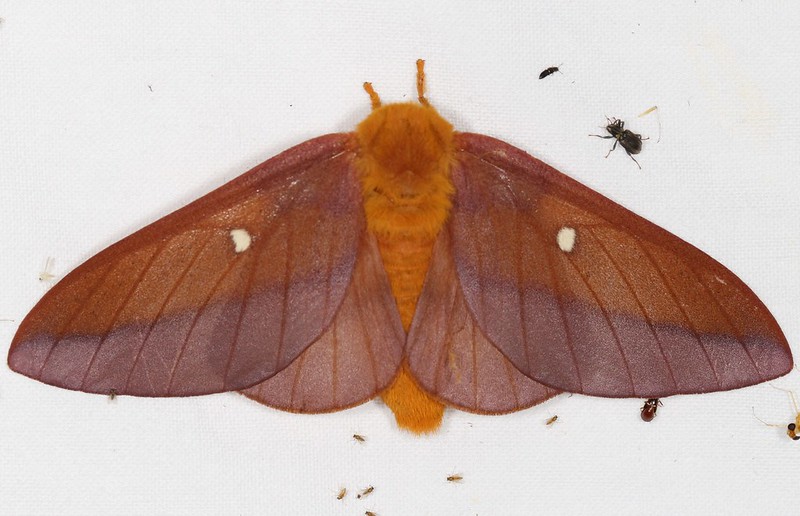
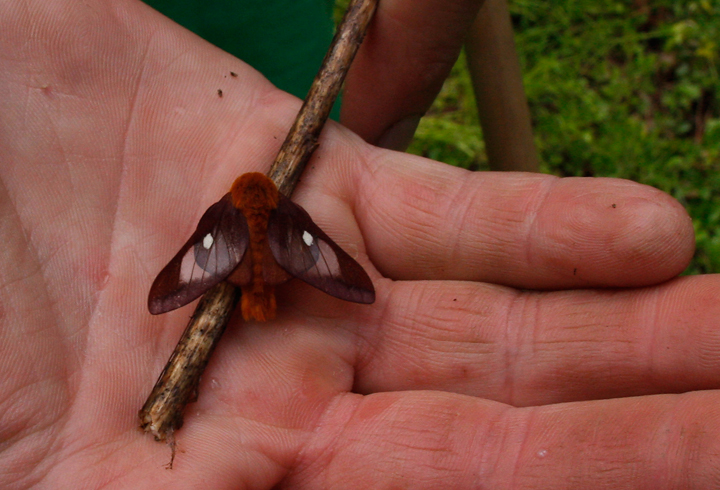
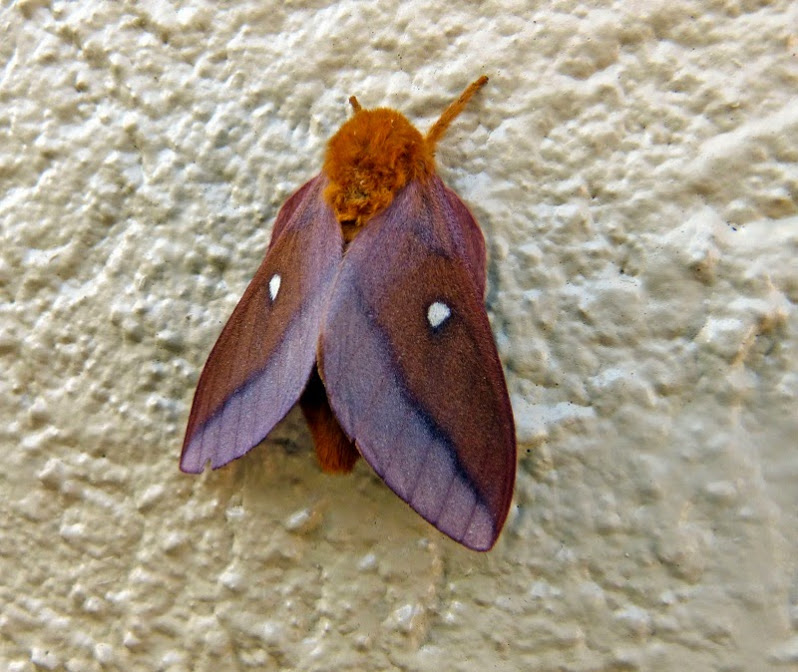
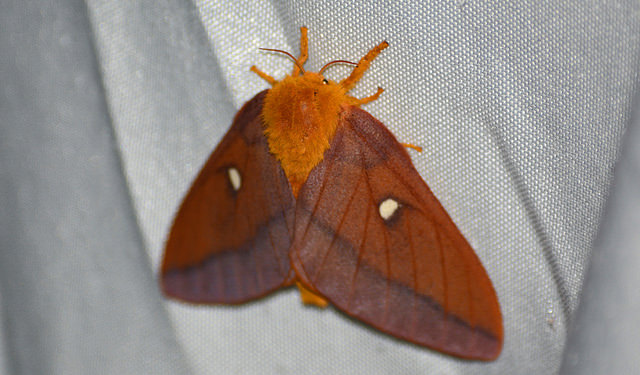
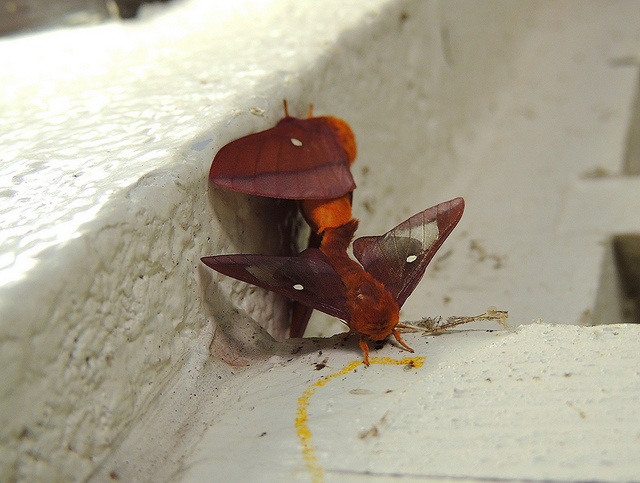

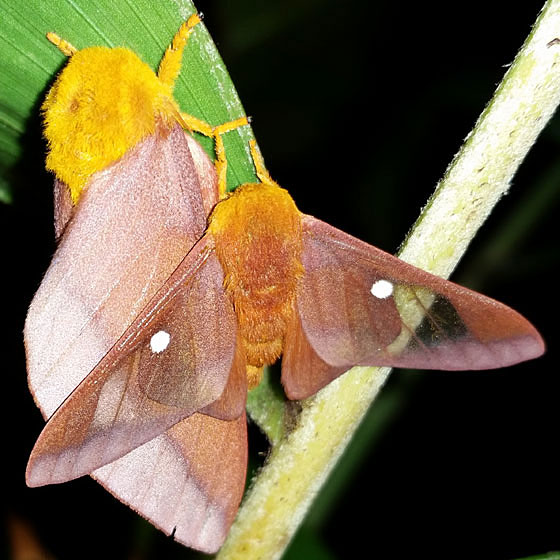
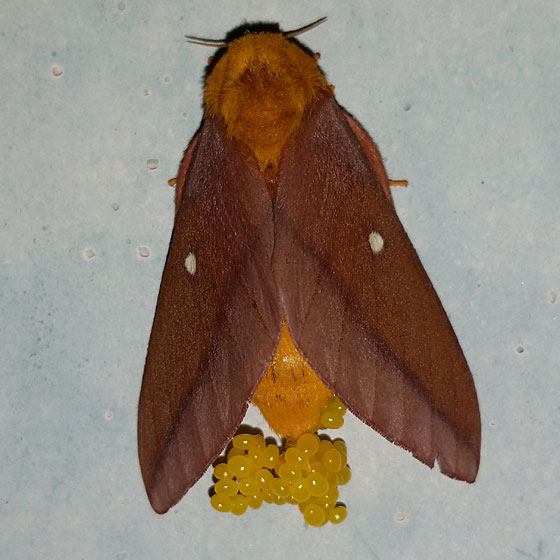
_1.JPG "A Pink-striped Oakworm Moth in Howard Co., Maryland (6/2002). (Photo ID: 69373 - Psn: 100)")
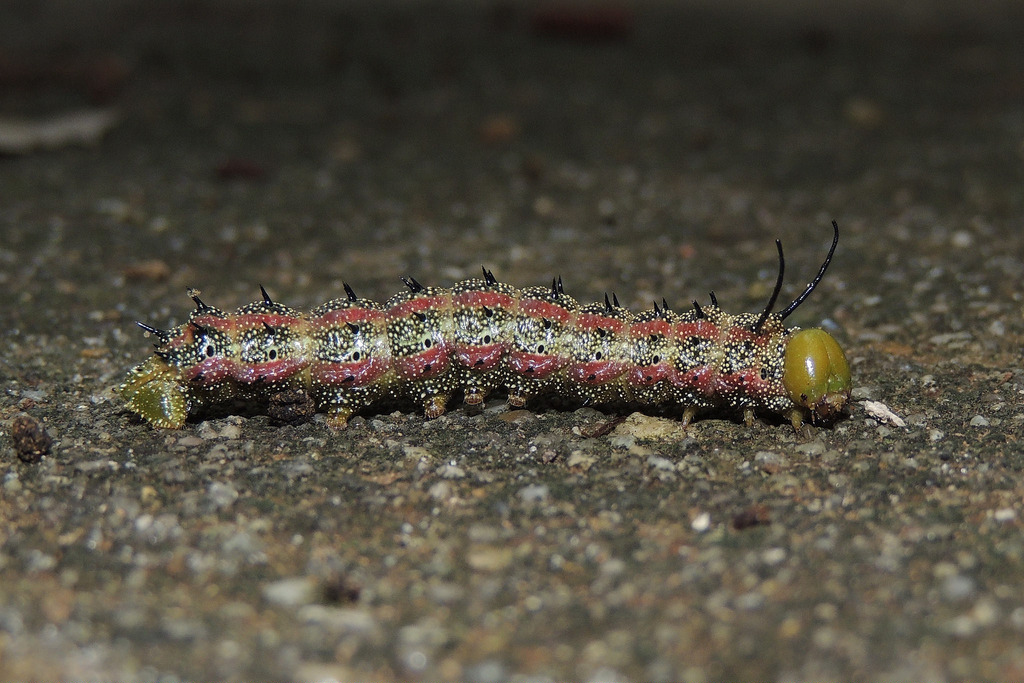

Map Snapshot


158 Records
Citations
No citations linked for this taxon yet.
Source: Wikipedia
| Anisota virginiensis | |
|---|---|

| |
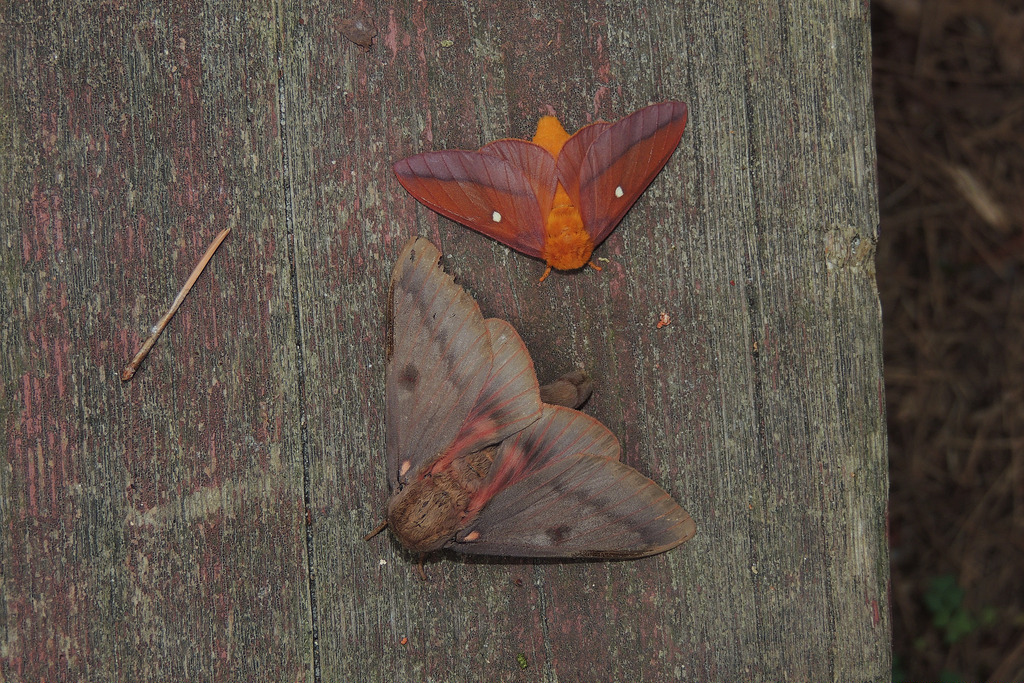
| Southern pink-striped oakworm moth, female (left) and male | |
Scientific classification 
| |
| Kingdom: | Animalia |
| Phylum: | Arthropoda |
| Clade: | Pancrustacea |
| Class: | Insecta |
| Order: | Lepidoptera |
| Family: | Saturniidae |
| Genus: | Anisota |
| Species: | A. virginiensis
|
| Binomial name | |
| Anisota virginiensis (Drury, 1773)
| |
| Synonyms | |


Anisota virginiensis, the pink-striped oakworm moth, is a species of silk moth of the family Saturniidae.
Description
[edit]The female's wings are purplish red with ochre-yellow. They have thin scales and are almost transparent. The male's wings are purplish brown with a large transparent space in the middle.[3] The female is larger than the male. The wing span is 4.2 to 6.6 centimeters.
Habitat
[edit]The moth can be found across Canada from Nova Scotia to southeastern Manitoba,[4] and in the United States. It lives in deciduous woodlands and suburbs.[5]
Biology
[edit]Females release a pheromone which attracts males that swarm around her like bees. Mating occurs during the morning.[4] It is a rapid process. The male and female stay together for the rest of the day and then the female finds a place to lay eggs, usually under oak leaves.[4] Such mating swarms have been observed at carrion, where host plants may be higher quality due to the influx of nutrients associated with decomposition.[6]
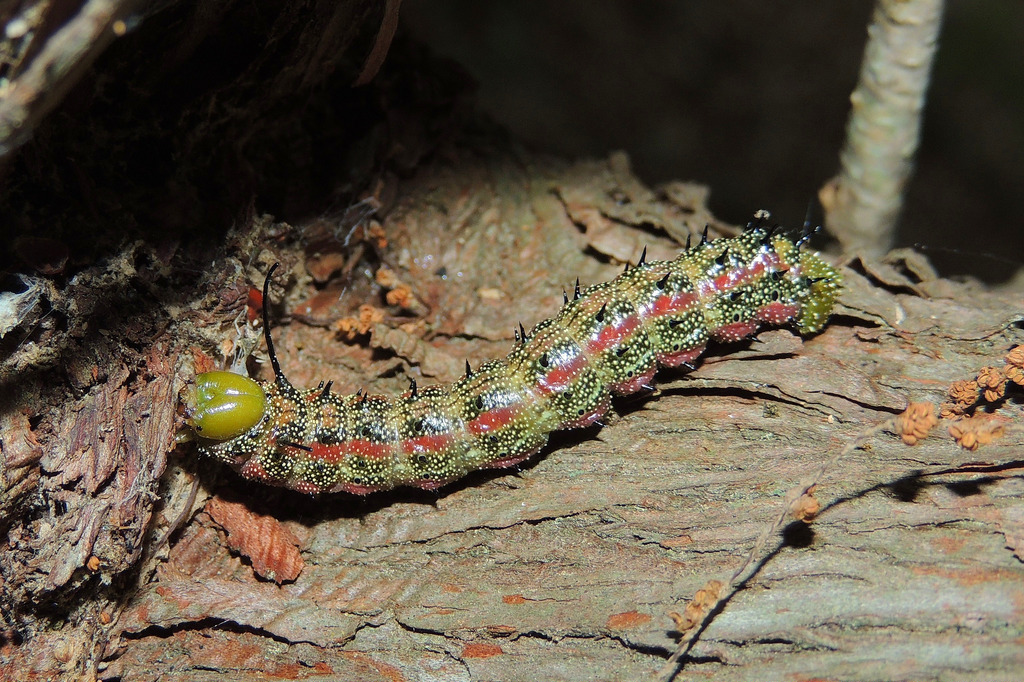
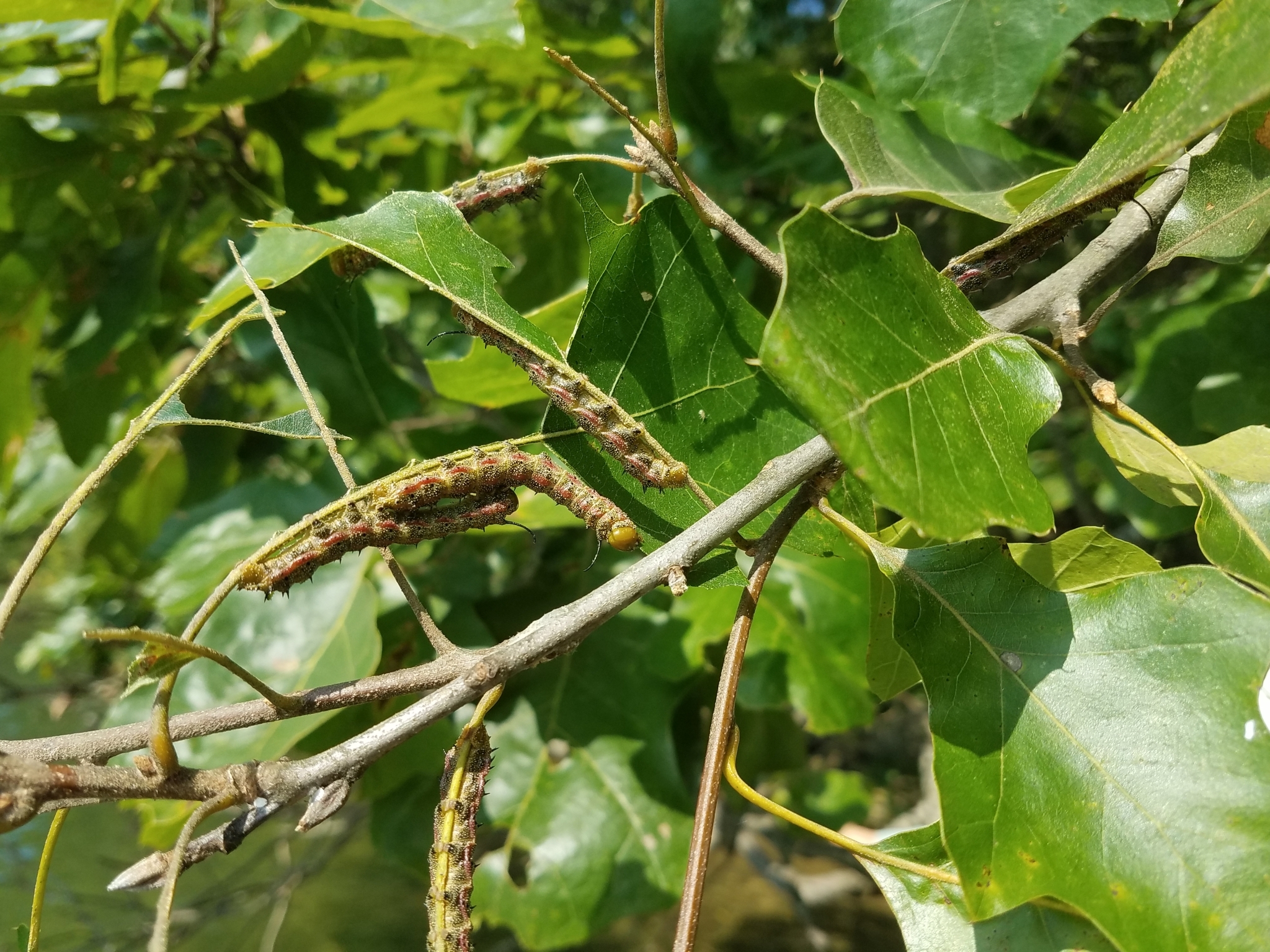
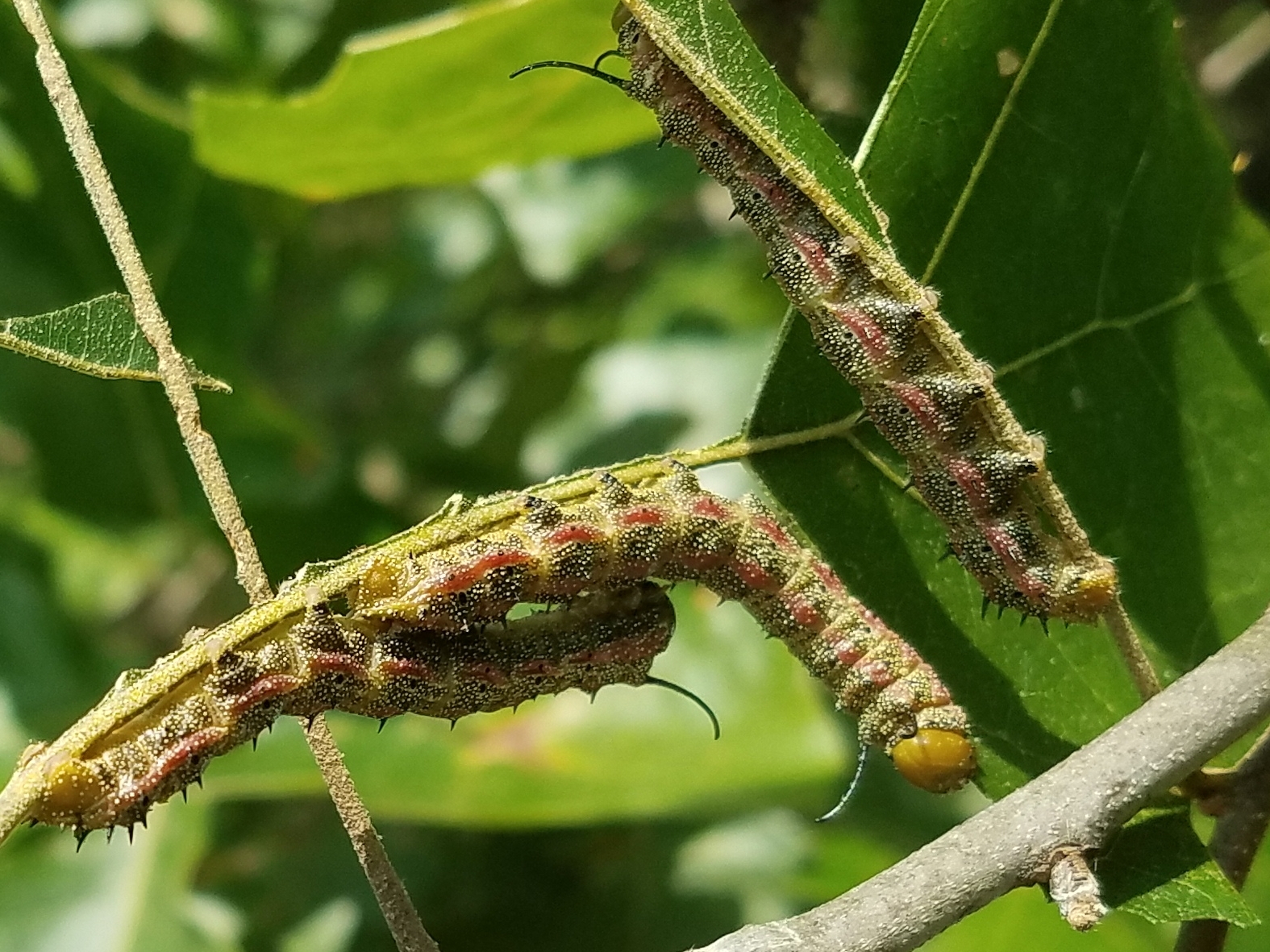
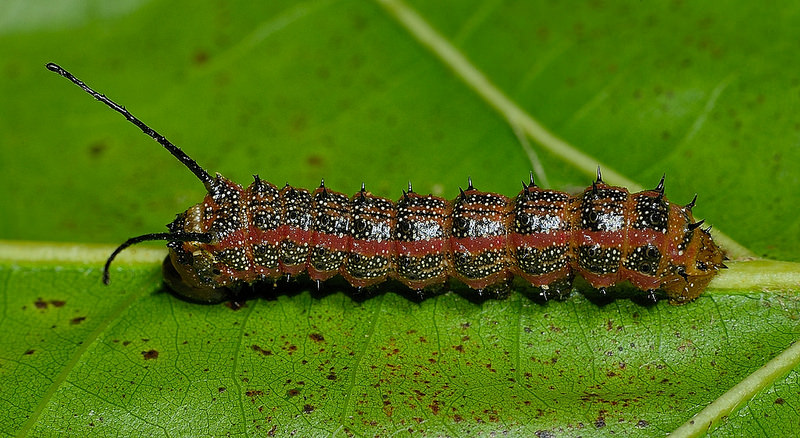
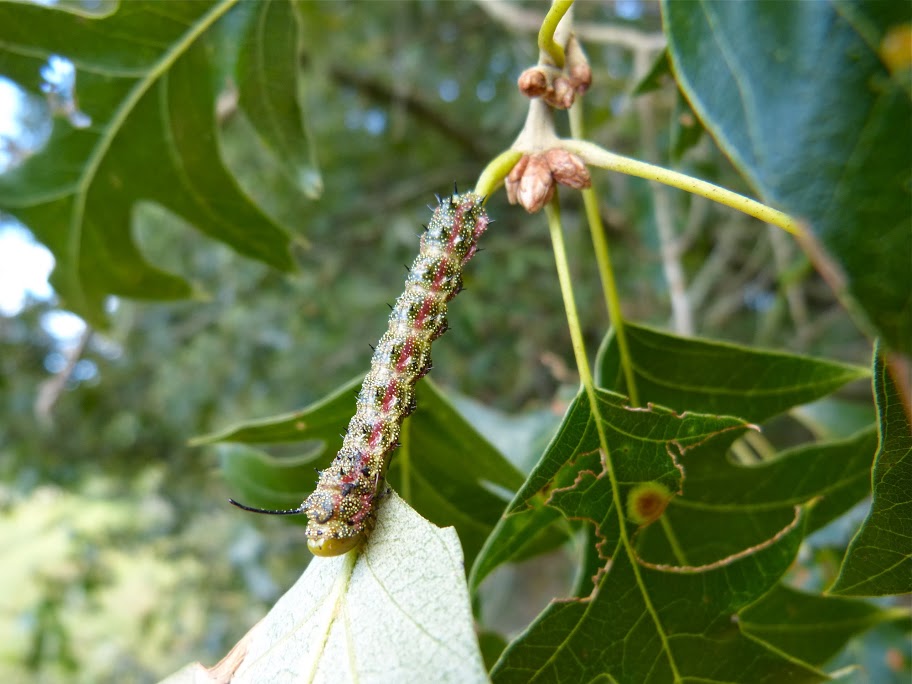
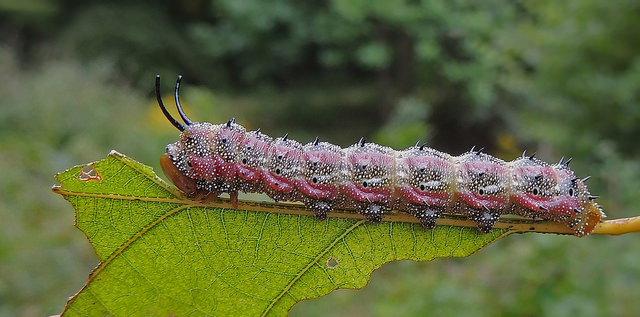
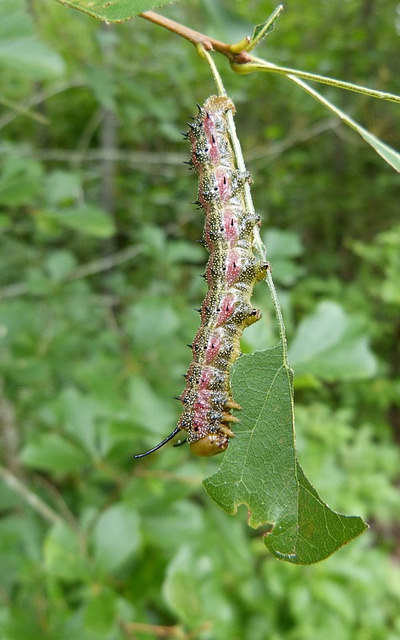
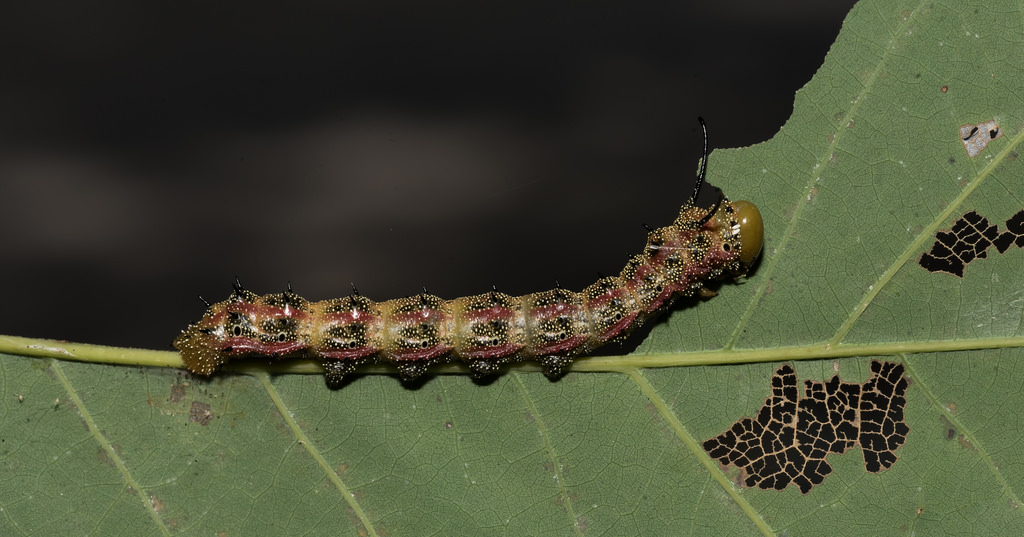
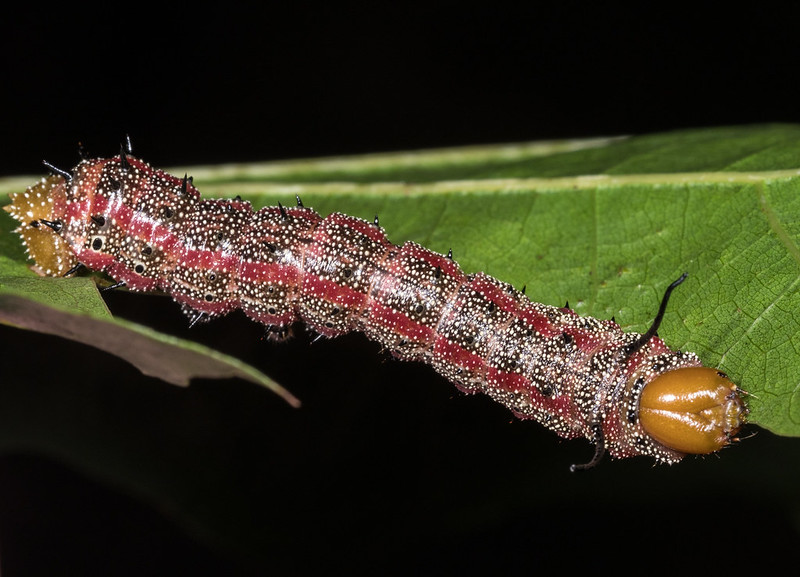
The caterpillars are gray or greenish with dull brownish yellow or rosy stripes. There are scales on each segment and two long spines on the mesothorax.[3] The caterpillars pupate for a short time.[4] They feed on the foliage of oak trees, maples, birches, and hazels. The caterpillar overwinters in the soil as a pupa. Caterpillars that are newly hatched or are in the middle of growing feed in groups while those that are mature or nearly so feed separately.[7] The caterpillar is about an eighth of an inch long. The head is large in proportion to the body. The inside of the mouth is yellow. The legs are semi-translucent.[8]
Ecology
[edit]Conservation regimes are not required for this species.[5] It is considered a pest of forests because it defoliates trees.[7] Outbreaks can be treated with an arsenical spray.[9]
Life cycle gallery
[edit]-
 Mating
 -
 Eggs
Eggs -
 Larvae feeding on Quercus texana
 -
 Larva
Larva -
 Pupa
Pupa


References
[edit]- ^ a b Tuskes, Paul M.; P. Tuttle, James; Collins, Michael M. (1996). The wild silk moths of North America: a natural history of the Saturniidae of the United States and Canada. Cornell University Press. p. 250. ISBN 0801431301.
- ^ Abbott, John C.; Abbott, Kendra K. (2023-04-24). Insects of North America. Princeton University Press. ISBN 978-0-691-23286-7.
- ^ a b Henry Comstock, John; Botsford Comstock, Anna (1899). A manual for the study of insects. Comstock Pub. Co. pp. 348.
Anisota virginiensis.
- ^ a b c d M. Tuskes, Paul; P. Tuttle, James; M. Collins, Michael (1996). The wild silk moths of North America: a natural history of the Saturniidae of the United States and Canada. Cornell University Press. pp. 74–75. ISBN 978-0-8014-3130-2.
- ^ a b "Pink-striped oakworm moth Anisota virginiensis (Drury, 1773)". Butterflies and Moths of North America. Archived from the original on 2008-05-31. Retrieved 2010-05-29.
- ^ Mason, D.; Baruzzi, C. (2019). "Love in strange places". Frontiers in Ecology and the Environment. 17 (3): 184–184. doi:10.1002/fee.2027.
- ^ a b L. Hyche, L. "Pinkstriped Oakworm Anisota virginiensis (Drury) (Saturniidae)". Auburn University. Retrieved 2010-05-29.
- ^ Entomological Society of Ontario; Ontario. Dept. of Agriculture; Ontario. Legislative Assembly (1908). Annual report, Volumes 38-41. The Society. pp. 74.
Anisota virginiensis.
- ^ Massachusetts Agricultural Experiment Station (1914). Bulletin on Forestry, Volume 1, Issues 156-435. p. 32.