Map Snapshot


19 Records
Citations
No citations linked for this taxon yet.
Source: Wikipedia
| Potentilla reptans | |
|---|---|

| |
Scientific classification 
| |
| Kingdom: | Plantae |
| Clade: | Tracheophytes |
| Clade: | Angiosperms |
| Clade: | Eudicots |
| Clade: | Rosids |
| Order: | Rosales |
| Family: | Rosaceae |
| Genus: | Potentilla |
| Species: | P. reptans
|
| Binomial name | |
| Potentilla reptans | |
Potentilla reptans, known as the creeping cinquefoil,[1] European cinquefoil or creeping tormentil, is a flowering plant in the family Rosaceae.[2]
Description
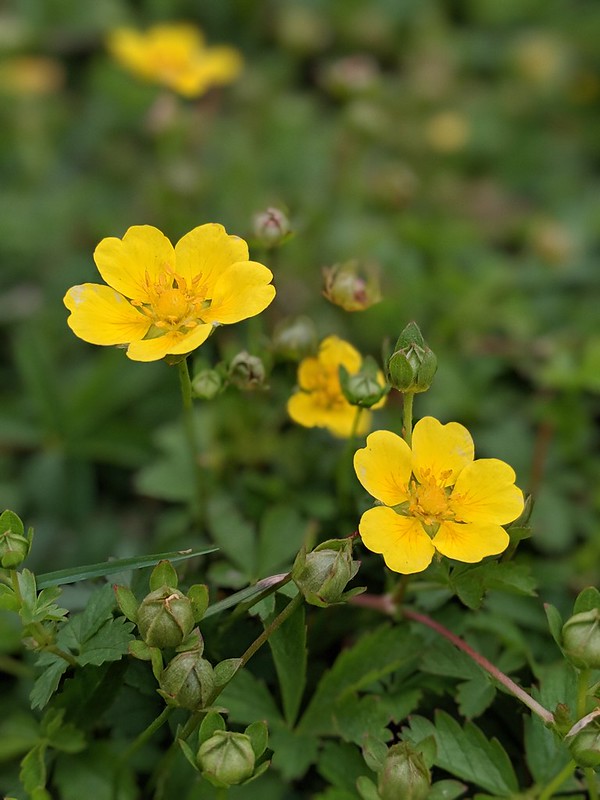
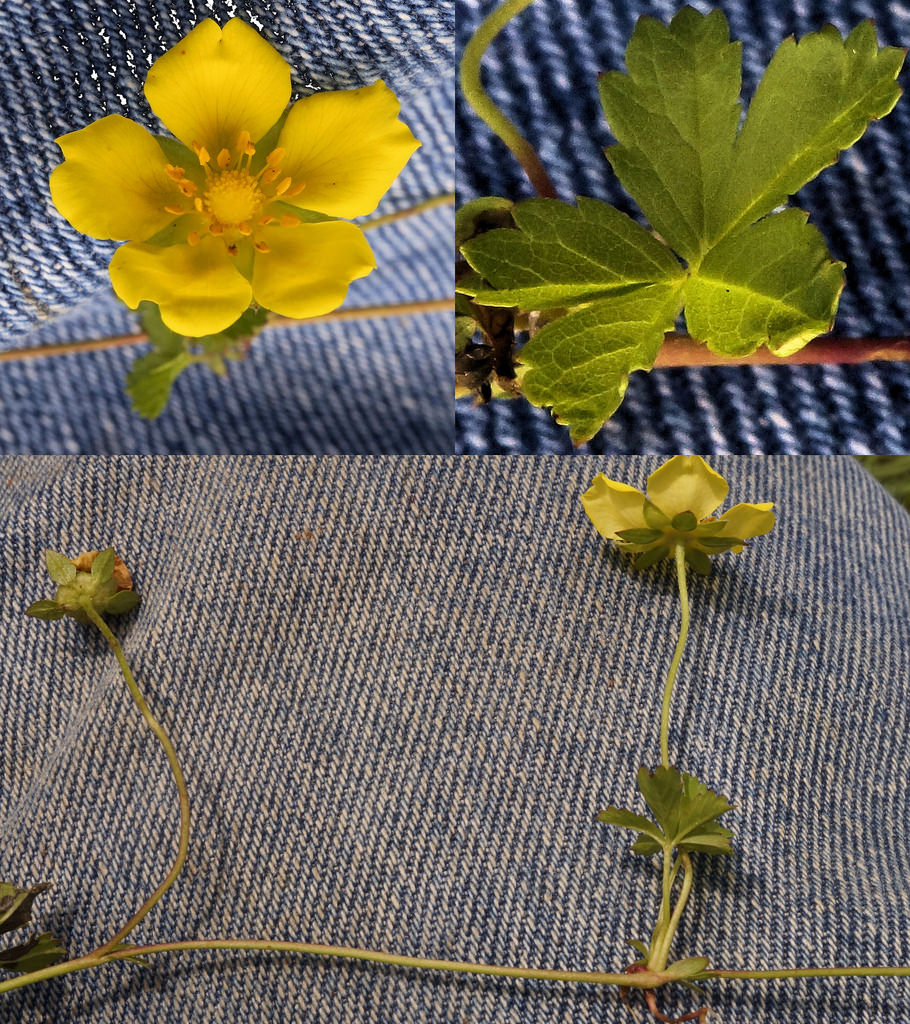
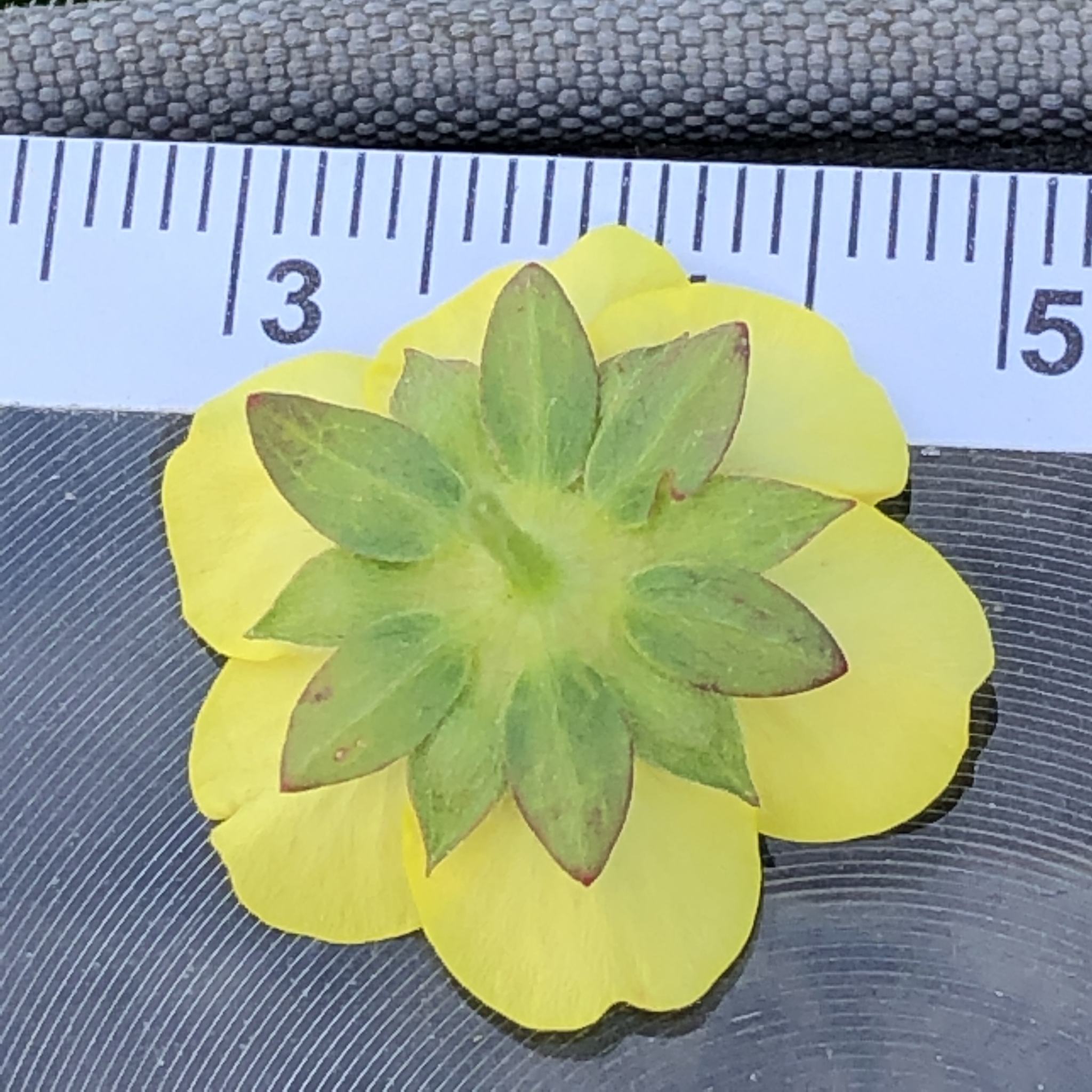
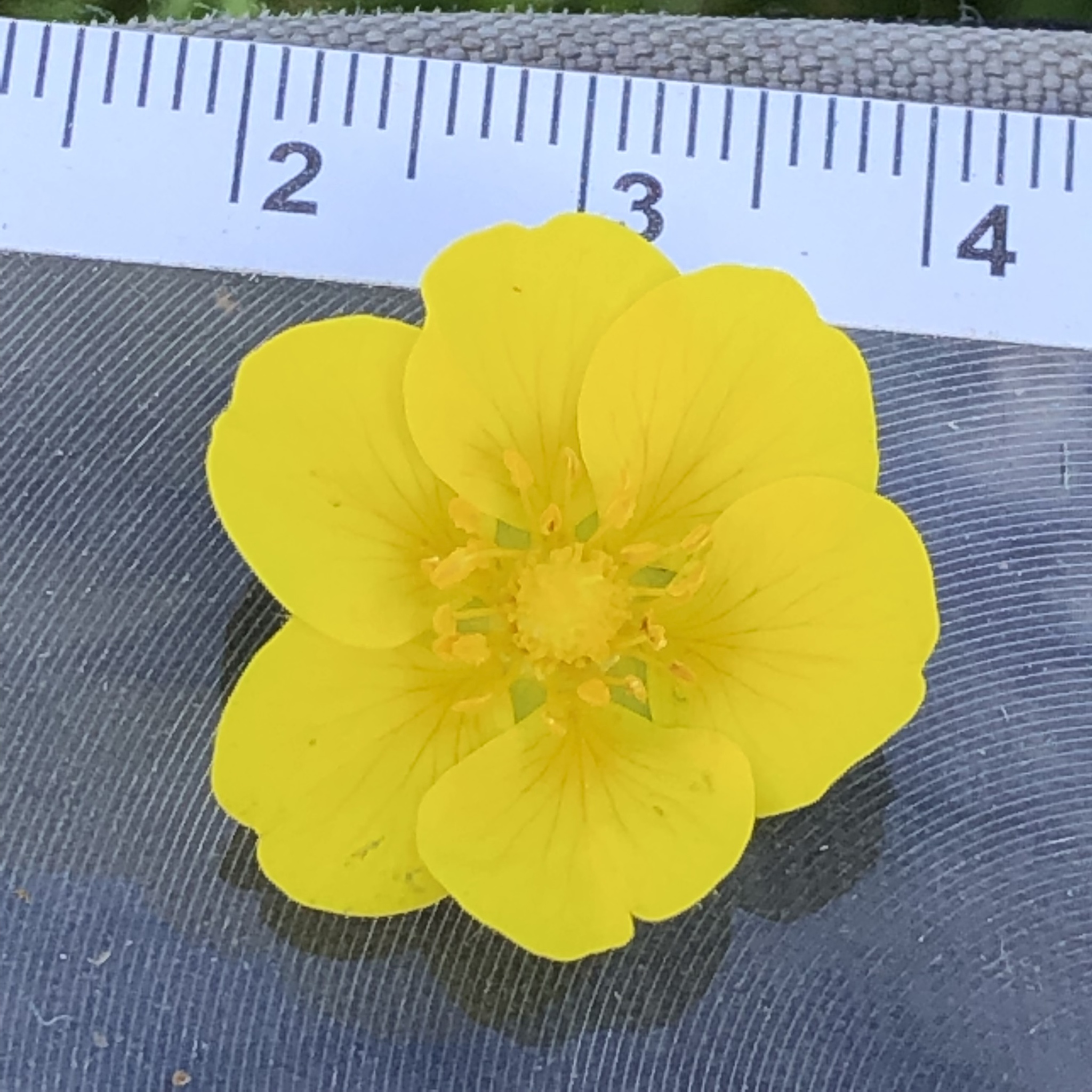
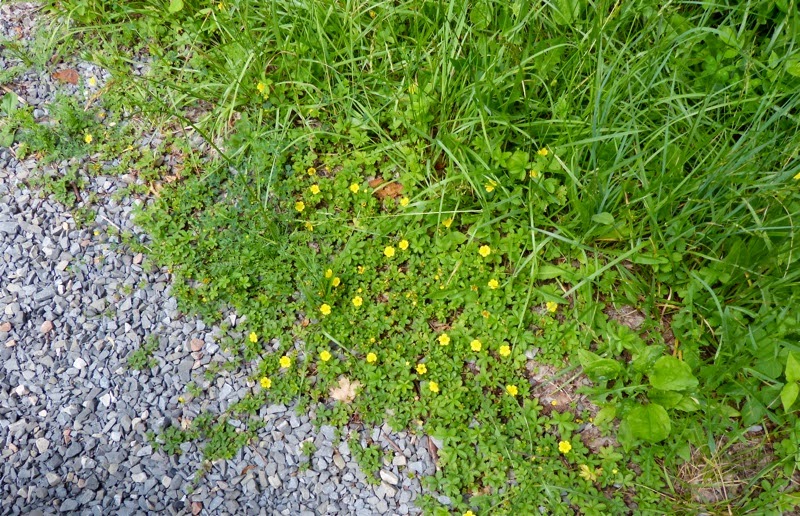
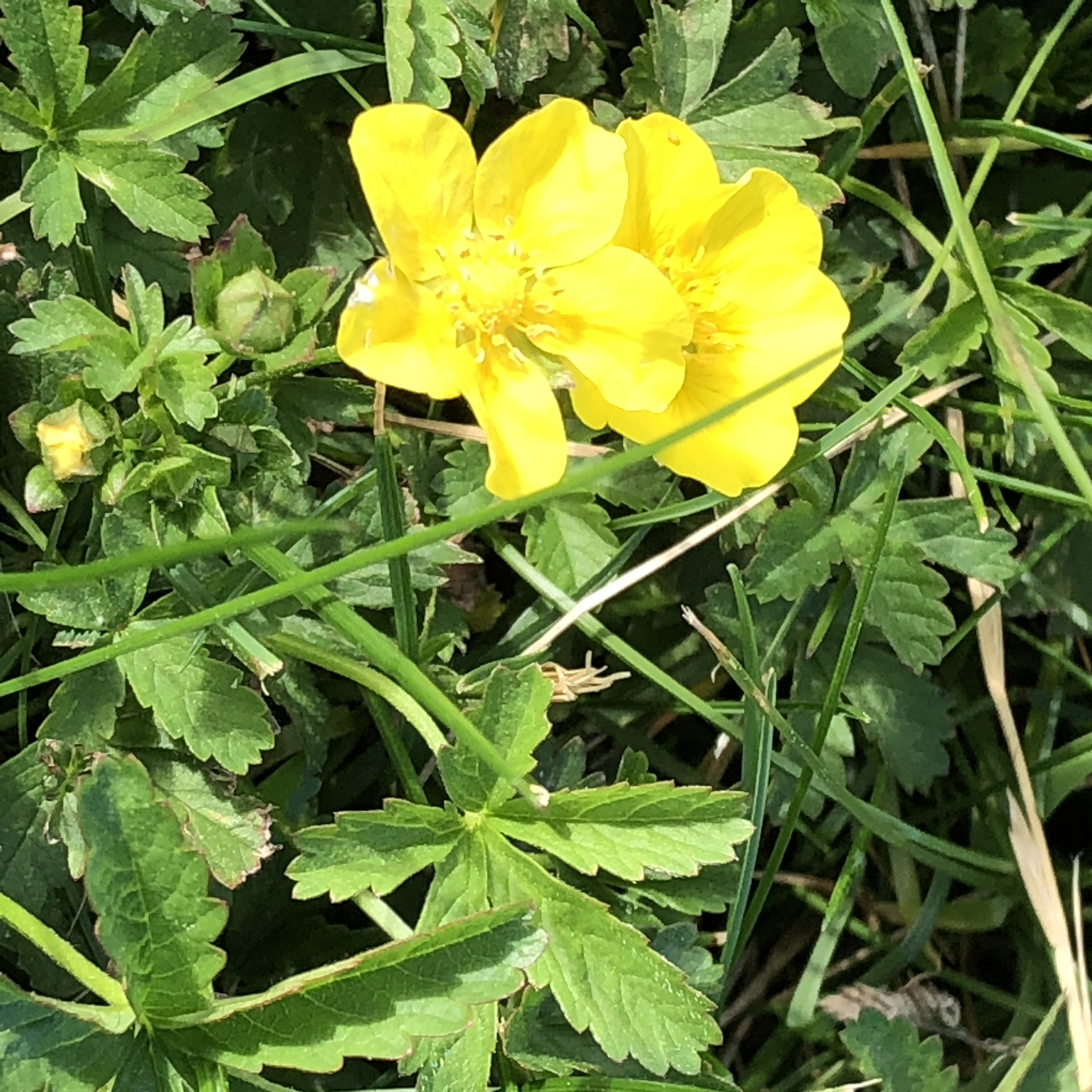
[edit]A creeping perennial plant which can reach heights of up to 20 cm.[3] Its trailing stems can root at the nodes,[3] which allows the species to reproduce via vegetative reproduction.[4] The palmate leaves are hairless, attached to long stalks and are divided into 5 to 7 leaflets, with small green leaf-like stipules at the base.[3] The plant blooms between June and September in Europe with flowers that are about 7 mm to 11 mm in diameter with heart-shaped yellow petals. Long stalks support these solitary yellow flowers consisting of 5 petals and sepals with a large number of stamens and carpels at the centre. There are also 5 epicalyx segments, giving the appearance of 10 sepals.[3]
-
 Flower of Potentilla reptans, Wales, UK

Distribution
[edit]Native Range
[edit]Potentilla reptans has a large native distribution across the continents of Europe, Asia, and Africa. In Europe it can be found in the countries of: Albania, Austria, Belarus, Belgium, Bulgaria, Corsica, Czech Republic, Denmark, Finland, France, Germany, Great Britain, Greece, Hungary, Ireland, Italy, the Netherlands, Poland, Portugal, Romania, Slovakia, Spain, Sweden, Switzerland, Turkey and Ukraine.[5] In Asia it can be found in: Afghanistan, China, Cyprus, Mongolia, Iran, Iraq, Kazakhstan, Kirgizstan, Lebanon, Syria, Pakistan, Israel, Palestine, Tajikistan, Turkmenistan and Uzbekistan.[5] In Africa it can be found in the countries of: Algeria, Eritrea, Ethiopia, Libya, Morocco and Tunisia.[5]
Introduced Range
[edit]P. reptans has been introduced outside its native range into various countries across the globe.[6] The species has been widely distributed across North America, where it can be found in the states and territories of: Bermuda, California, Colorado, Florida, Georgia, Illinois, Kentucky, Louisiana, Maryland, Massachusetts, Michigan, Minnesota, New Jersey, New York, Ohio, Oregon, Pennsylvania, Virginia, Washington and Wisconsin.[5] It has also been introduced in Canada in the provinces of Ontario, Québec and Nova Scotia.[5] In Oceania the species was also introduced into the countries of Australia and New Zealand.[5]
Habitat and ecology
[edit]P. reptans grows in neutral soils, where it utilizes both natural and manmade habitats such as grasslands, hedgerows, roadsides and arable land.[7] The species can also grow in grass lawns and flowerbeds as an unwanted weed.[8] The grizzled skipper butterfly (Pyrgus malvae) utilizes P. reptans as a foodplant for its caterpillars.[9]
Medicinal uses
[edit]Alcoholic extracts from roots of P. reptans showed a moderate antimicrobial activity against common wound pathogens.[10]
References
[edit]- ^ NRCS. "Potentilla reptans". PLANTS Database. United States Department of Agriculture (USDA). Retrieved 13 October 2015.
- ^ "Potentilla reptans L. Creeping Cinquefoil". National Biodiversity Network (NBN Atlas). 2025-02-02. Retrieved 2025-02-02.
- ^ a b c d Sterry, Paul (2006). Collins complete guide to British Wildflowers. HarperCollins Publishers LTD. ISBN 9780007236848.
- ^ Anten, Niels & Stuefer, Josef & During, Heinjo & Vermeulen, Peter. (2012). Oecologia2013. DOI: 10.1007/s00442-012-2504-8
- ^ a b c d e f "Potentilla reptans L." Plants of the World Online Royal Botanic Gardens, Kew. 2025-02-02. Retrieved 2025-02-02.
- ^ "Potentilla reptans". Germplasm Resources Information Network. Agricultural Research Service, United States Department of Agriculture. Retrieved 10 January 2018.
- ^ "Creeping Cinquefoil Potentilla reptans L." Botanical Society of Britain and Ireland Plant Atlas 2020. 2025-02-02. Retrieved 2025-02-02.
- ^ Fisher, Sue (2024-07-10). "Complete guide to creeping cinquefoil: Is it a weed?". Gardeners World BBC. Retrieved 2025-02-02.
- ^ "Butterfly Conservation". 2025-02-02. Retrieved 2025-02-02.
- ^ Watkins F, Pendry B, Sanchez-Medina A, Corcoran O (November 2012). "Antimicrobial assays of three native British plants used in Anglo-Saxon medicine for wound healing formulations in 10th century England" (PDF). J Ethnopharmacol. 144 (2): 408–15. doi:10.1016/j.jep.2012.09.031. PMID 23026307.
.jpg) | This Rosaceae article is a stub. You can help Wikipedia by adding missing information. |
 | This article about alternative medicine is a stub. You can help Wikipedia by adding missing information. |