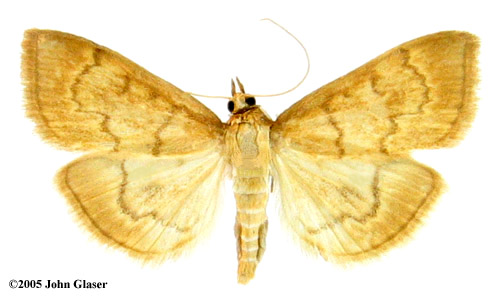
An Anania extricalis collected in Maryland.
Photo by
John Glaser
MBP List
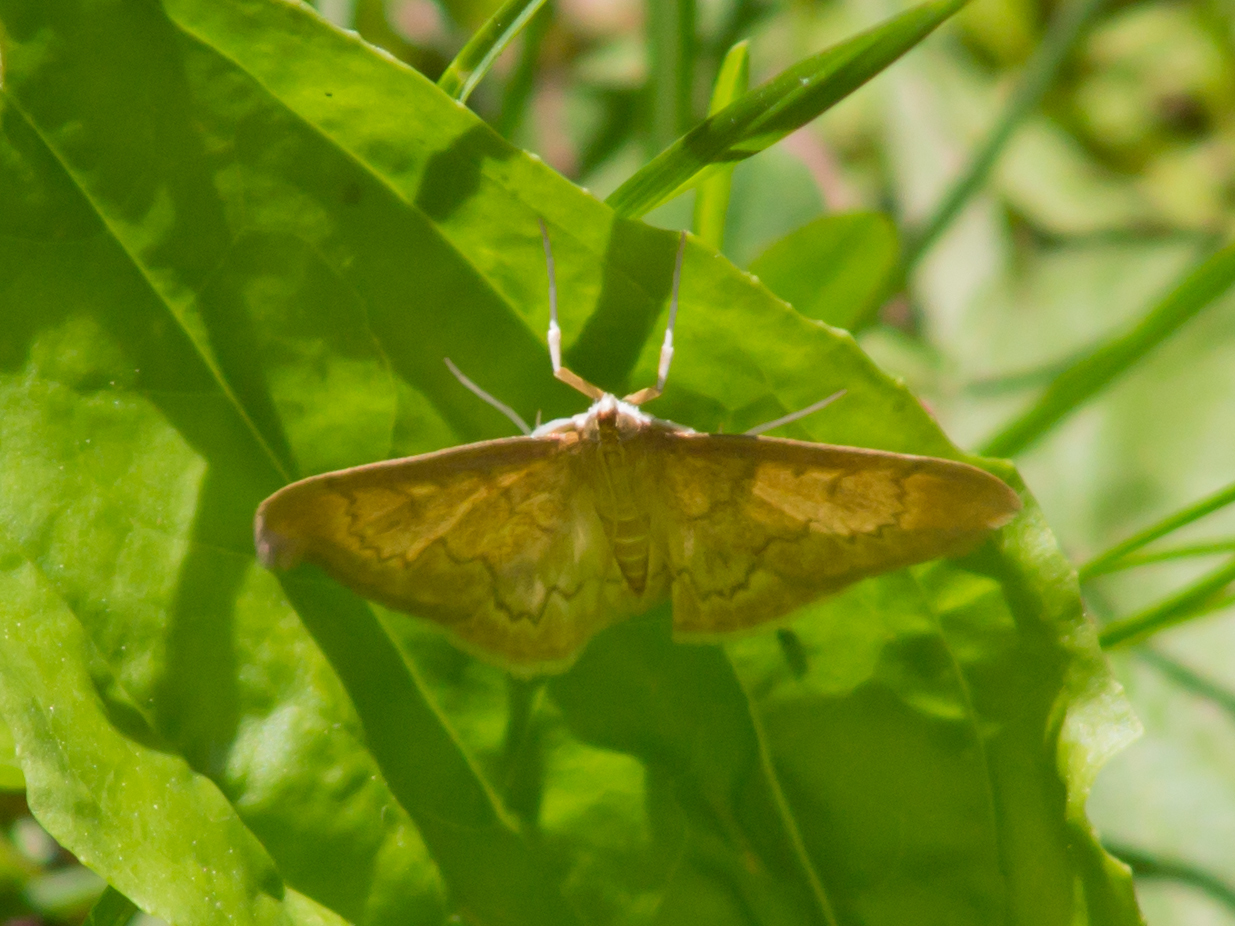
Anania extricalis in Prince George's Co., Maryland (5/31/2014). (c) Timothy Reichard, all rights reserved.
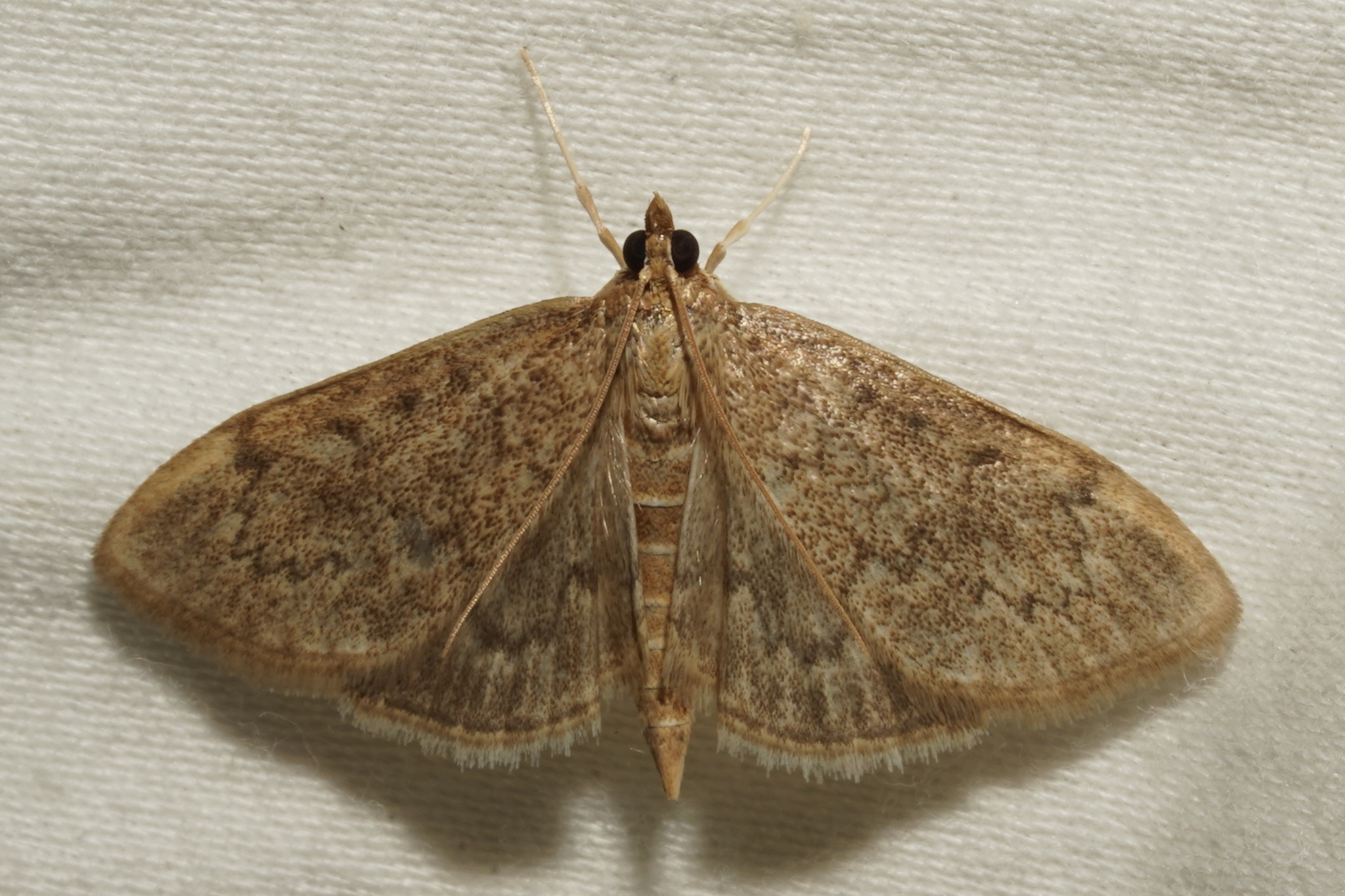
Anania extricalis in Garrett Co., Maryland (Date obscured). (c) Kyle Klotz, all rights reserved.
Map Snapshot


17 Records
Citations
No citations linked for this taxon yet.
Use of media featured on Maryland
Biodiversity Project is only permitted with express permission of the
photographer.
An Anania extricalis collected in Maryland.
Media by
John Glaser.
Anania extricalis in Prince George's Co., Maryland (5/31/2014). (c) Timothy Reichard, all rights reserved.
View Record Details
Media by
Timothy Reichard.
Anania extricalis in Garrett Co., Maryland (Date obscured). (c) Kyle Klotz, all rights reserved.
View Record Details
Media by
Kyle Klotz.
Source: Wikipedia
| Anania extricalis | |
|---|---|
Scientific classification 
| |
| Kingdom: | Animalia |
| Phylum: | Arthropoda |
| Clade: | Pancrustacea |
| Class: | Insecta |
| Order: | Lepidoptera |
| Family: | Crambidae |
| Genus: | Anania |
| Species: | A. extricalis
|
| Binomial name | |
| Anania extricalis (Guenée, 1854)
| |
| Synonyms | |
| |
Anania extricalis is a moth in the family Crambidae. It was described by Achille Guenée in 1854.[1] It is found in North America, where it has been recorded from Newfoundland to Florida, west to Texas and Saskatchewan.[2]
The wingspan is about 25 mm. The forewings are light greyish brown with dark grey lines. The hindwings are pale grey.
The larvae feed on the leaves of Alnus species, Populus balsamifera and Betula papyrifera.[3]
References
[edit]- ^ Nuss, M.; et al. (2003–2014). "GlobIZ search". Global Information System on Pyraloidea. Archived from the original on 26 February 2011. Retrieved 15 July 2014.
- ^ "801432.00 – 4956 – Anania extricalis – (Guenée, 1854)". North American Moth Photographers Group. Mississippi State University. Archived from the original on 3 April 2019. Retrieved 14 August 2018.
- ^ McLeod, Robin (25 March 2016). "Species Anania extricalis – Hodges#4956". BugGuide. Archived from the original on 27 October 2014. Retrieved 14 August 2018.
 | This Anania article is a stub. You can help Wikipedia by adding missing information. |