



Map Snapshot


52 Records
Description
Citations
No citations linked for this taxon yet.
Source: Wikipedia
| White spotted sable | |
|---|---|

| |

| |
Scientific classification 
| |
| Kingdom: | Animalia |
| Phylum: | Arthropoda |
| Clade: | Pancrustacea |
| Class: | Insecta |
| Order: | Lepidoptera |
| Family: | Crambidae |
| Genus: | Anania |
| Species: | A. funebris
|
| Binomial name | |
| Anania funebris (Ström, 1768)
| |
| Synonyms | |
| |
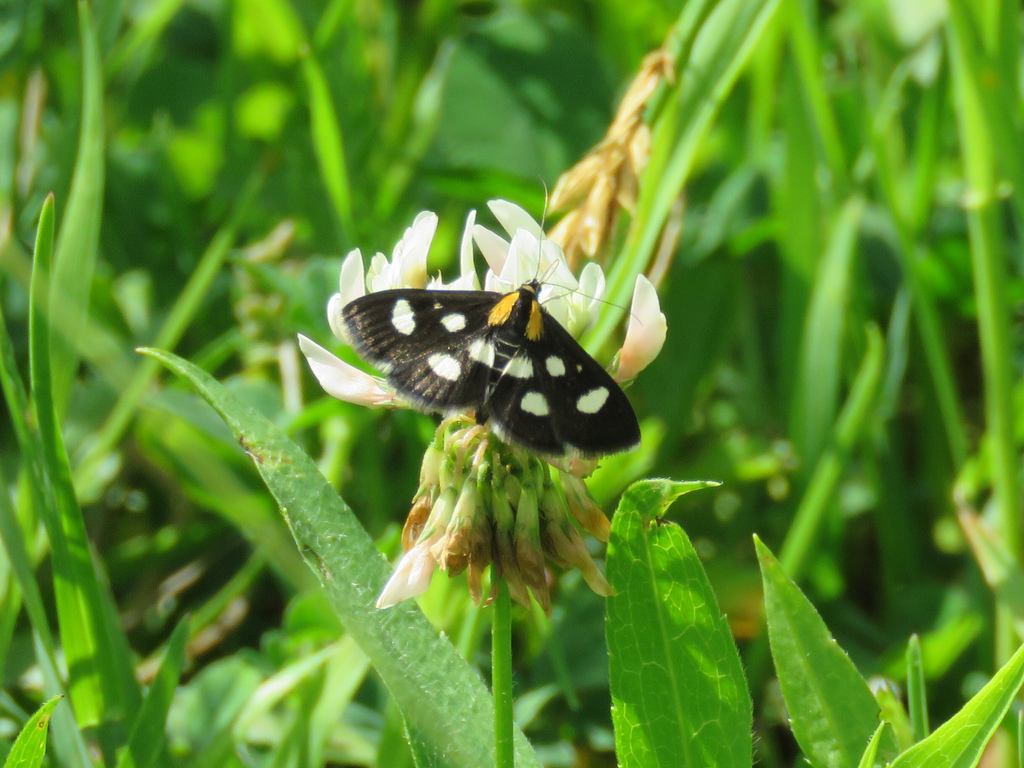
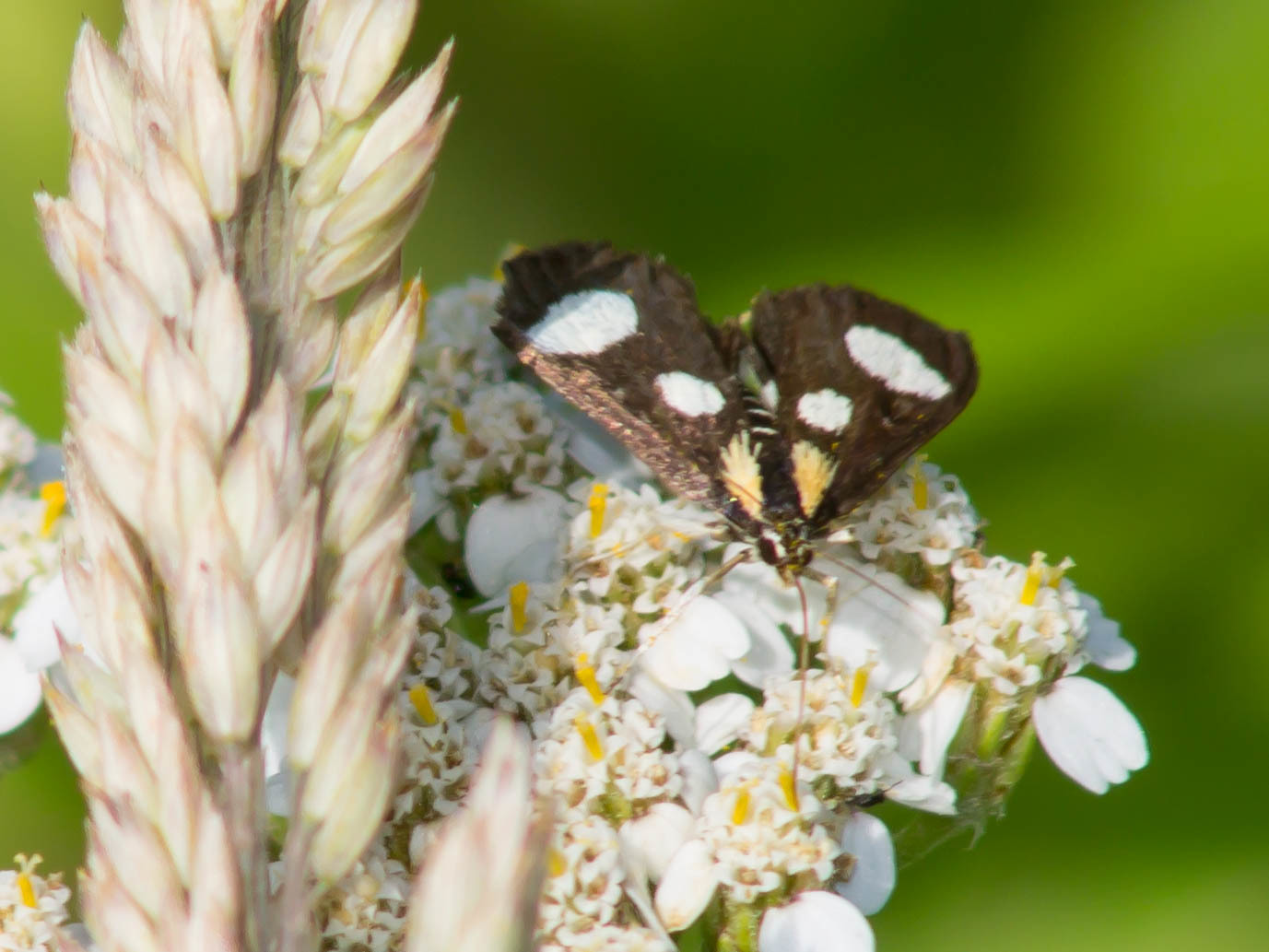
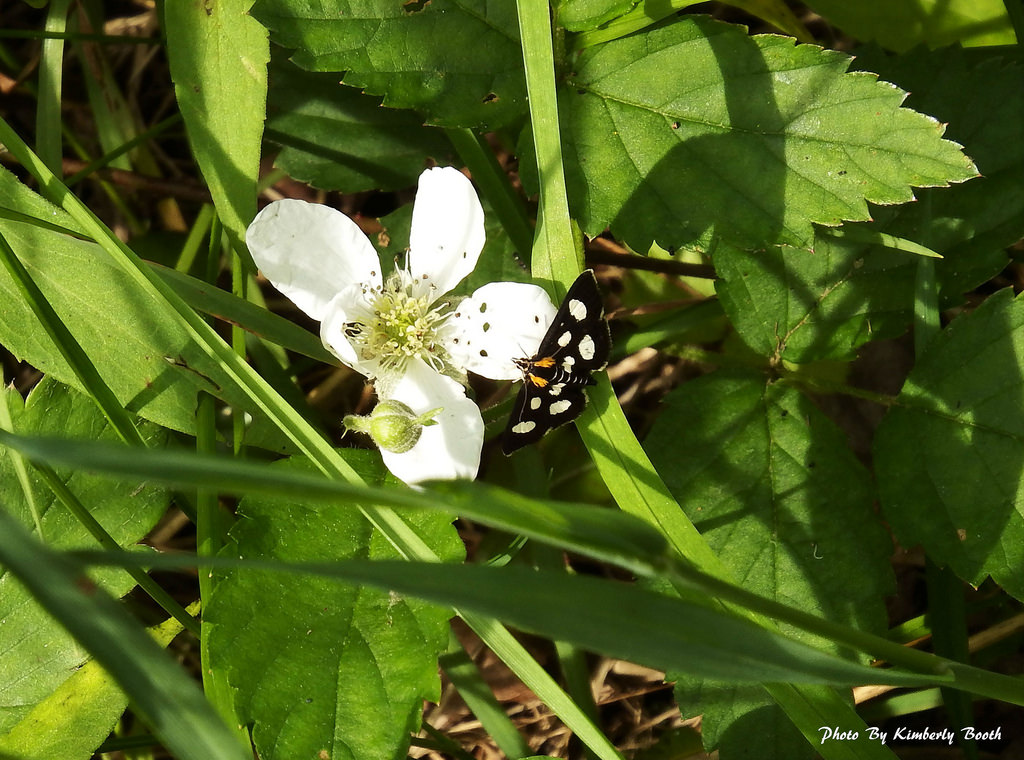
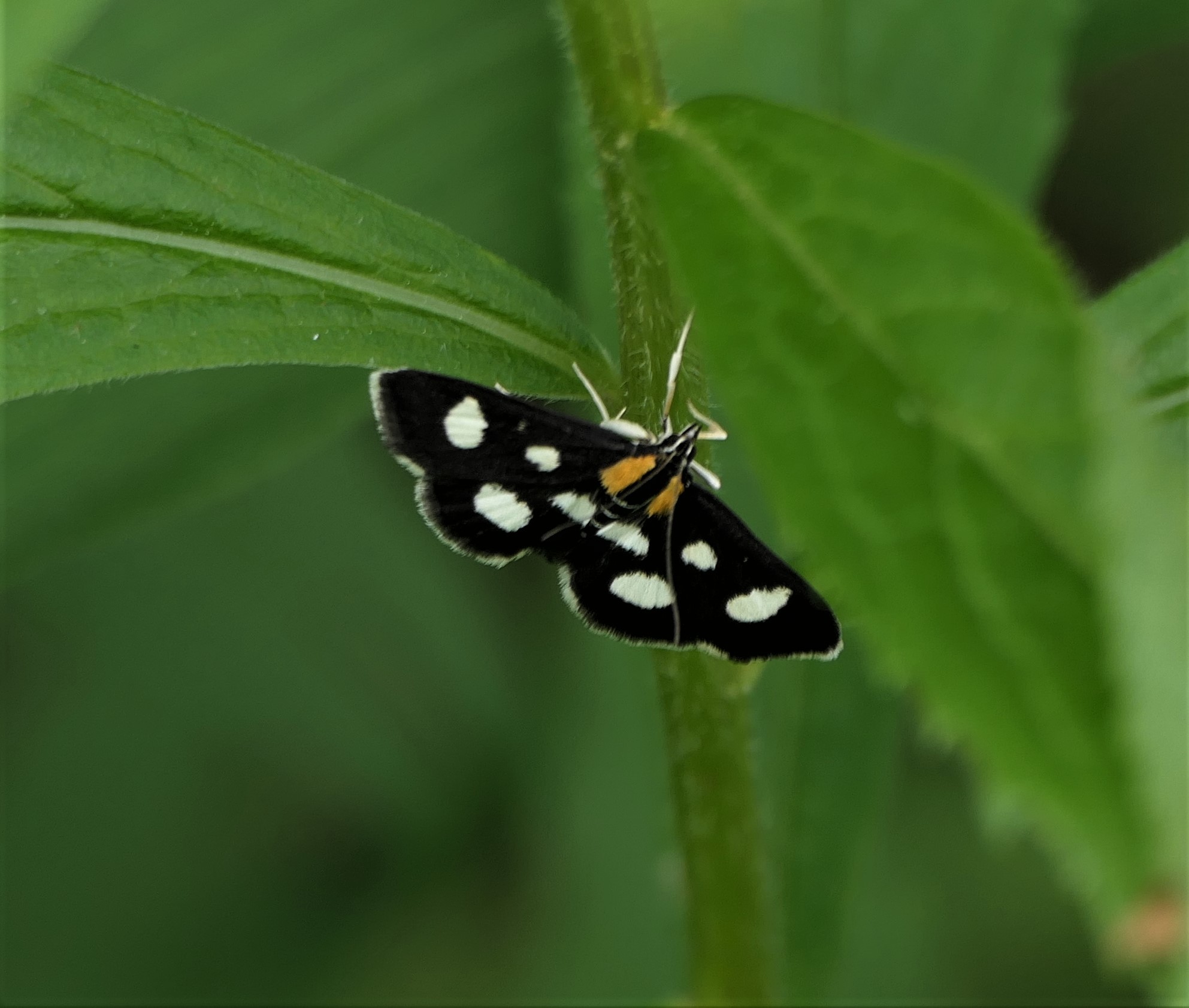
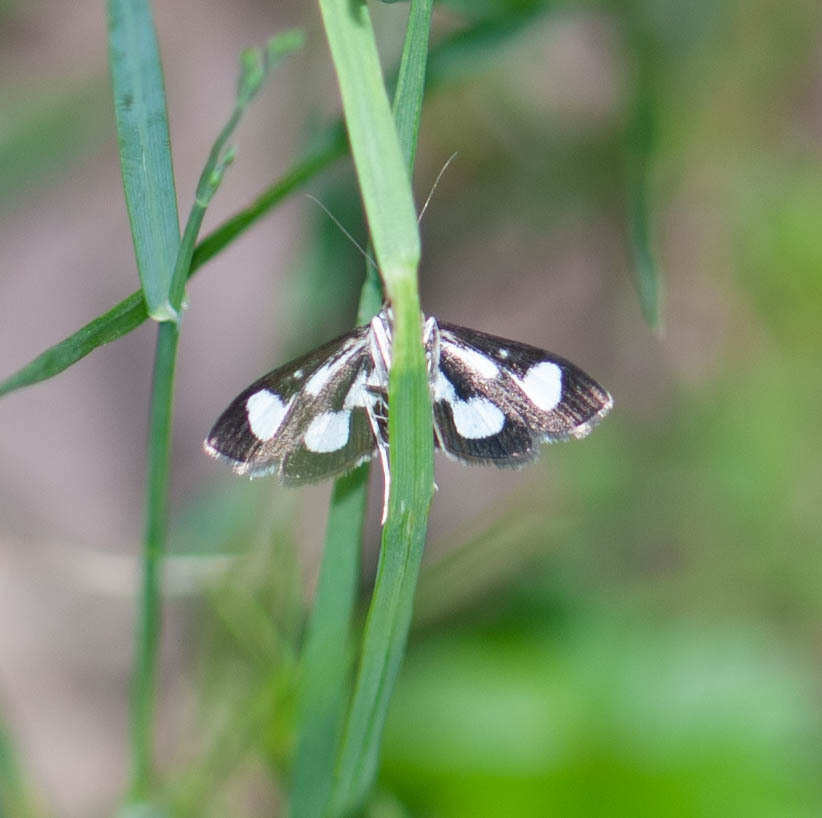
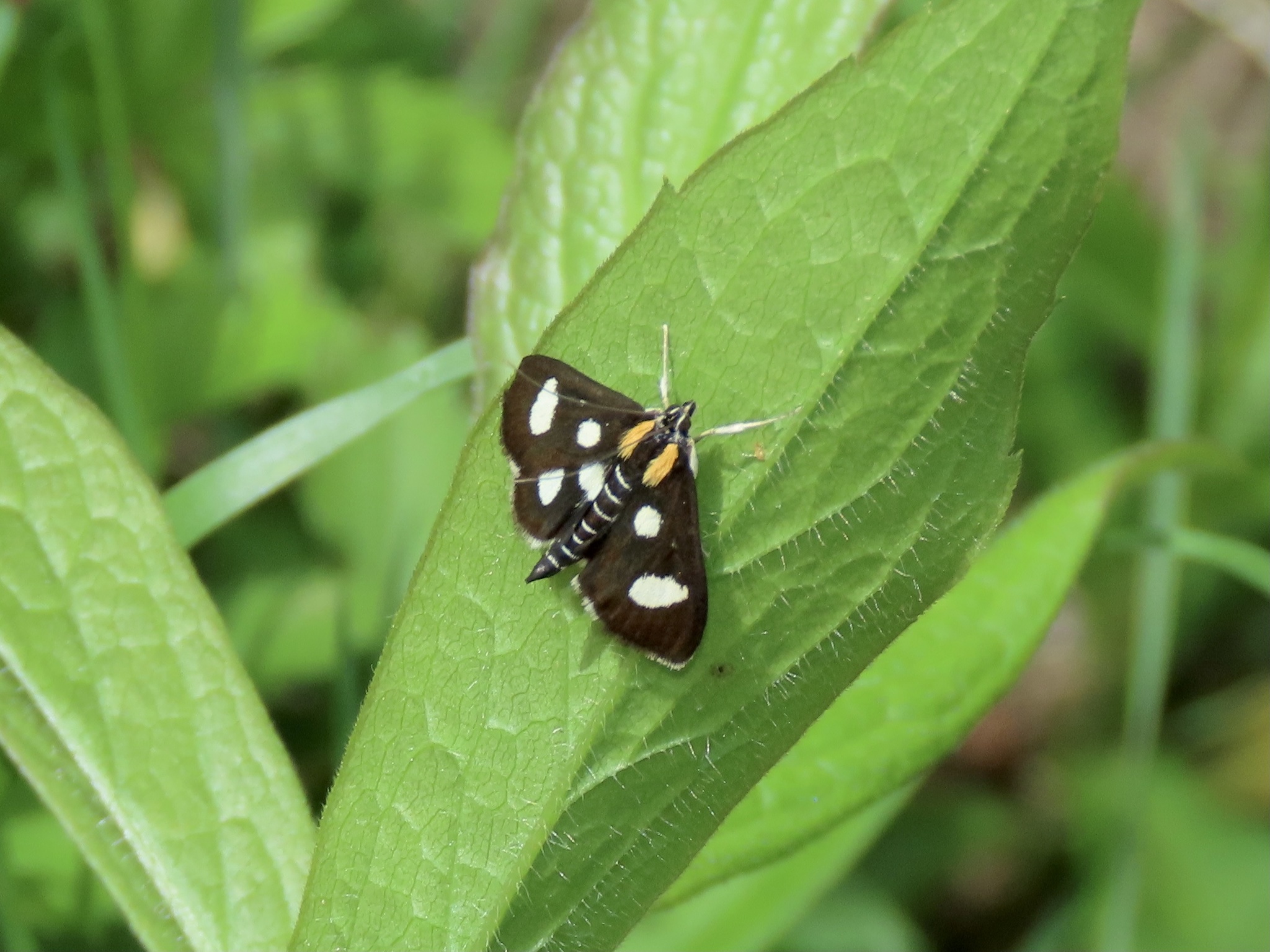
Anania funebris, the white-spotted sable, is a species of diurnal dayflying moth of the family Crambidae.[1][2][3] It is wide-spread in Europe, northern Asia, and North America.[4]
Subspecies
[edit]There are two subspecies:[3][4]
- Anania funebris funebris (Ström, 1768) – Eurasia
- Anania funebris glomeralis (Walker, 1859) – North America
Description
[edit]The wingspan is 20–23 mm (0.79-0.92 in). The forewings are black; a large round white subdorsal spot before middle, and a second in disc beyond middle; sometimes a white dot above first; cilia white towards tips. Hindwings as forewings, but without the white dot. The larva is ochreous-whitish; dorsal line deep green; subdorsal and lateral green; spiracular whitish-green; dots green; head whitish-brown.[5] See also Parsons et al.[6]

Behavior
[edit]The adults have a tendency to quickly hide behind leaves.[7]
The moth flies during the day[8] from late April to August,[9] June and July being the most active in their flight season.
Diet
[edit]The larvae feed on leaves of goldenrod (Solidago) such as Solidago virgaurea. It occasionally feeds on dyer's greenweed (Genista tinctoria).[2][8][10][9]
References
[edit]- ^ "Anania funebris (Ström, 1768)". Fauna Europaea. 2011.
- ^ a b "Species Anania funebris - White-spotted Sable - Hodges#4958". Bug Guide. Retrieved 6 September 2024.
- ^ a b "Anania funebris Ström, 1768". Global Lepidoptera Index 1.1.24.240. 27 August 2024. Retrieved 6 September 2024.
- ^ a b Savela, Markku. "Anania Hübner, 1823". Lepidoptera and some other life forms. Retrieved 6 September 2024.
- ^ Meyrick, E., 1895 A Handbook of British Lepidoptera MacMillan, London pdf
 This article incorporates text from this source, which is in the public domain. Keys and description
- ^ Mark Parsons, Sean Clancy, David Wilson A Guide to the Pyralid and Crambid Moths of Britain and Ireland: Atropos, England. ISBN 9780955108648
- ^ "White-spotted Sable Moth - Anania funebris". North American Insects & Spiders. Retrieved 2023-06-06.
- ^ a b Kimber, Ian. "Anania funebris (Ström, 1768)". UK Moths. Retrieved 6 September 2024.
- ^ a b "Anania funebris (Ström, 1768)". Catalogue of the Lepidoptera of Belgium. Flemish Entomological Society. 18 October 2023. Retrieved 6 September 2024.
- ^ "White-spotted Sable". butterfly-conservation.org. Retrieved 2023-06-06.

External links
[edit]
 | This Anania article is a stub. You can help Wikipedia by adding missing information. |