Map Snapshot


8 Records
Status
Description
There are many species of Euphorbia with the same general growth form and leaf shape so careful observation of the leaves and stipules (at the nodes) should be made. You may need a handlens and dichotomous key to confirm the identity.
Where To Find
Citations
No citations linked for this taxon yet.
Source: Wikipedia
| Euphorbia serpens | |
|---|---|

| |
Scientific classification 
| |
| Kingdom: | Plantae |
| Clade: | Tracheophytes |
| Clade: | Angiosperms |
| Clade: | Eudicots |
| Clade: | Rosids |
| Order: | Malpighiales |
| Family: | Euphorbiaceae |
| Genus: | Euphorbia |
| Species: | E. serpens
|
| Binomial name | |
| Euphorbia serpens | |
| Synonyms | |
|
Chamaesyce serpens | |

Euphorbia serpens is a species of Euphorbia known by the common name matted sandmat. It is native to the Americas but it can be found on most continents as an introduced species and often a weed.[2]
Description
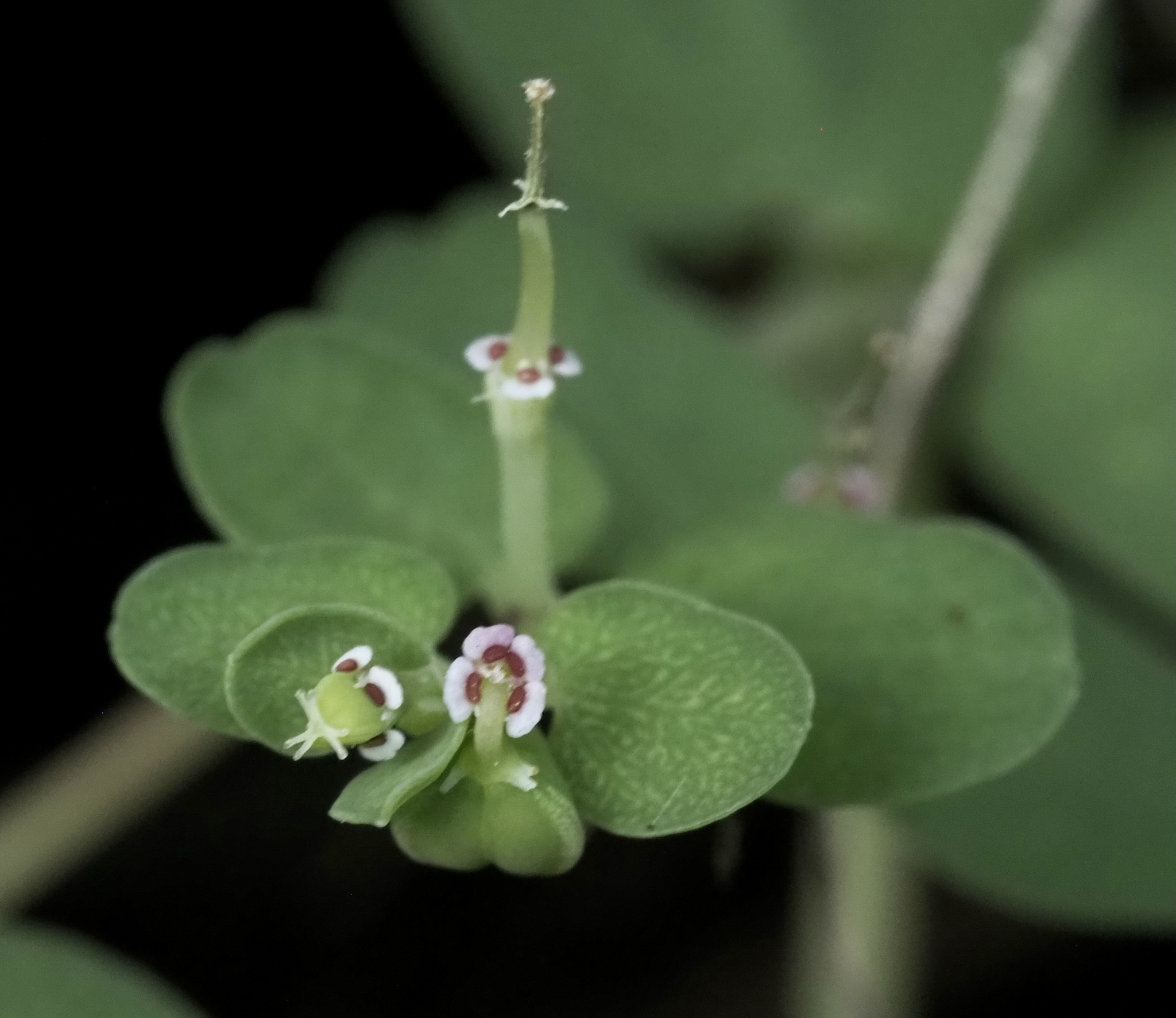
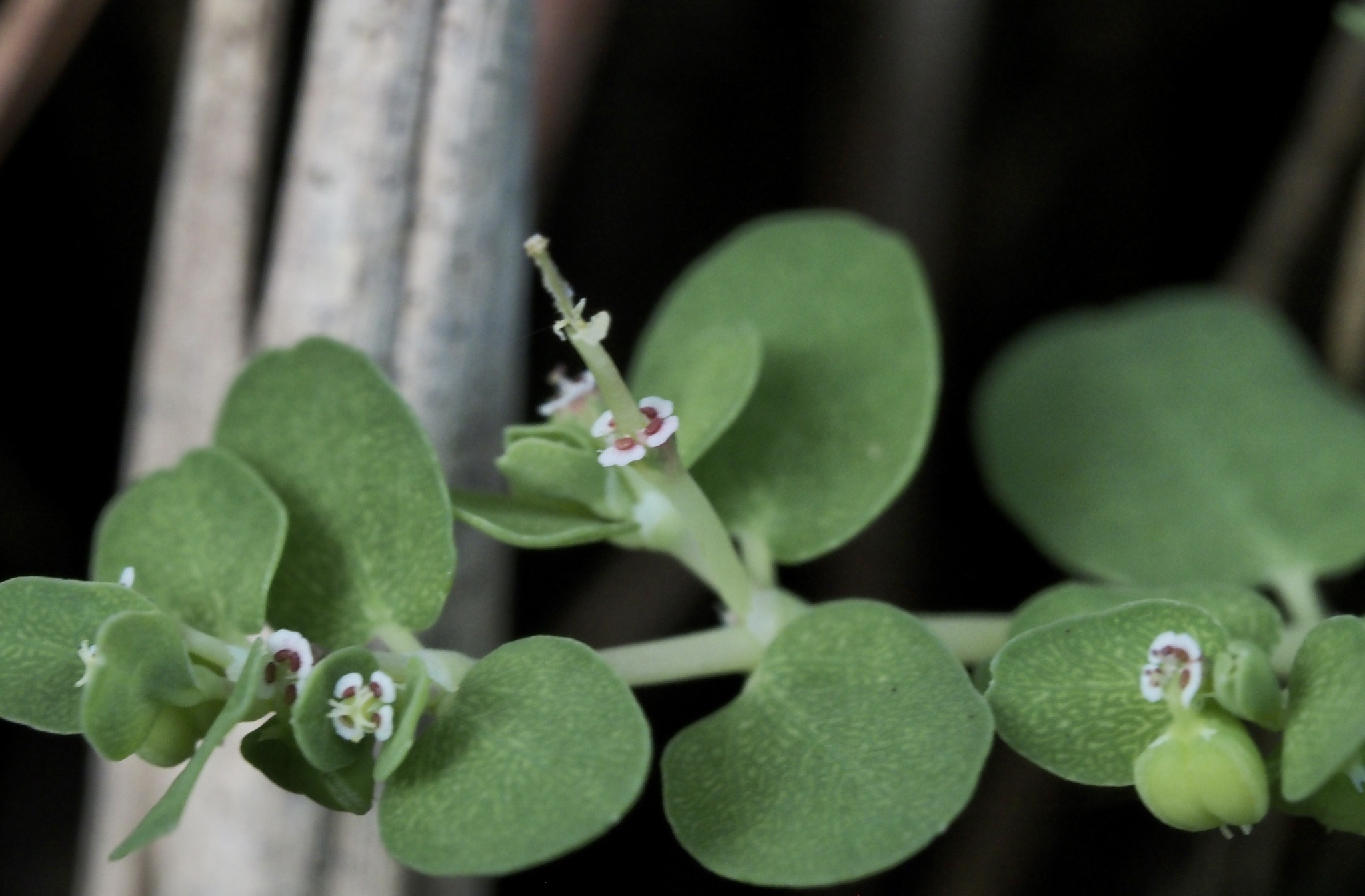
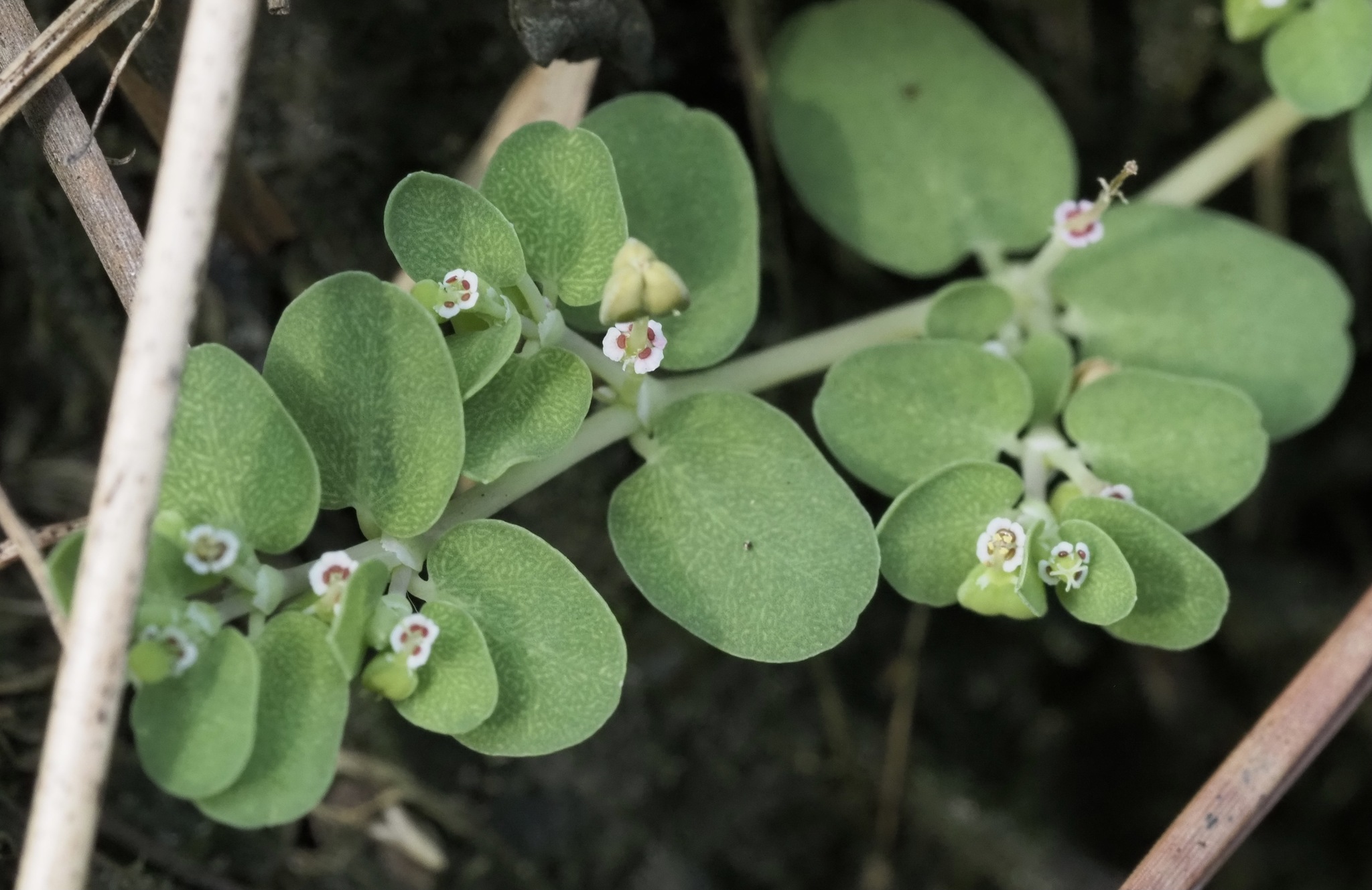
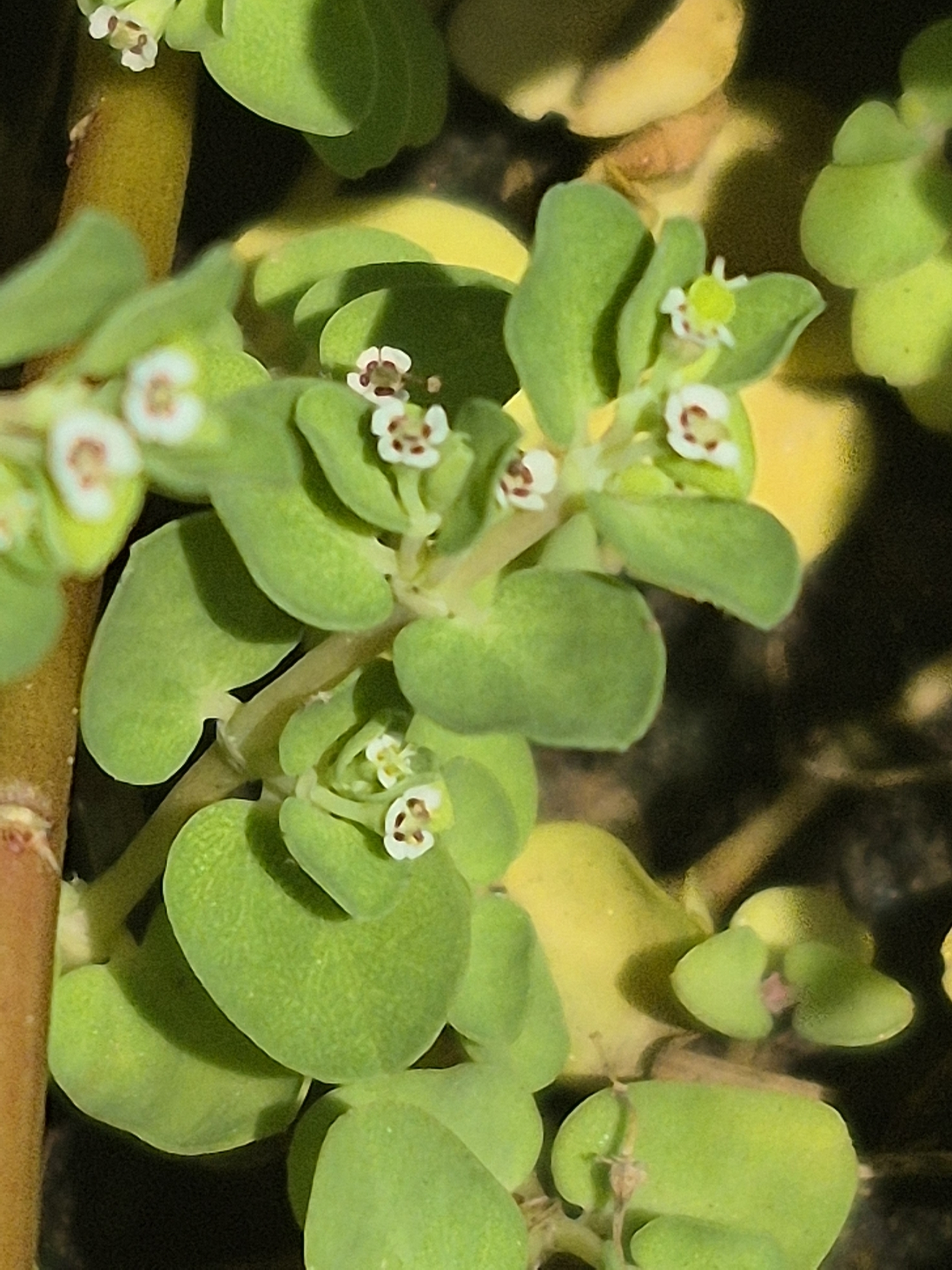
[edit]This is an annual herb forming a mat of prostrate stems which root at nodes where the stem comes in contact with the ground. The oval leaves occur in oppositely arranged pairs, each leaf less than a centimeter long. The inflorescence is a cyathium with scalloped white petal-like appendages surrounding the actual flowers. A red nectar gland is at the base of each appendage, and at the center of the cyathium are several male flowers around one female flower. The fruit is a lobed, spherical capsule.


References
[edit]- ^ NatureServe (2024). "Euphorbia serpens". Arlington, Virginia. Retrieved 10 April 2024.
- ^ Flora of Zimbabwe