Map Snapshot


45 Records
Status
Citations
No citations linked for this taxon yet.
Source: Wikipedia
| Herpetogramma sphingealis | |
|---|---|

| |

| |
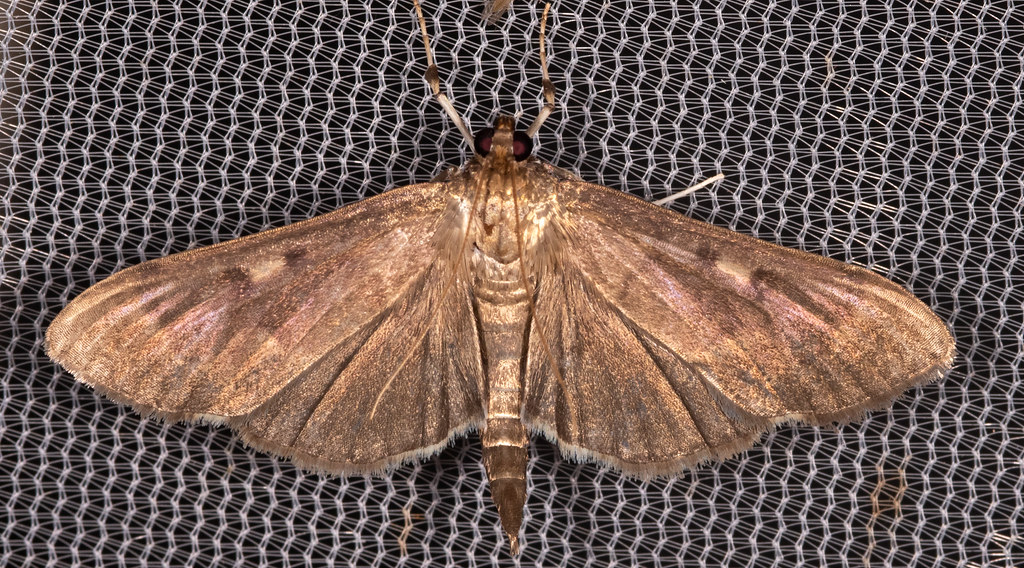
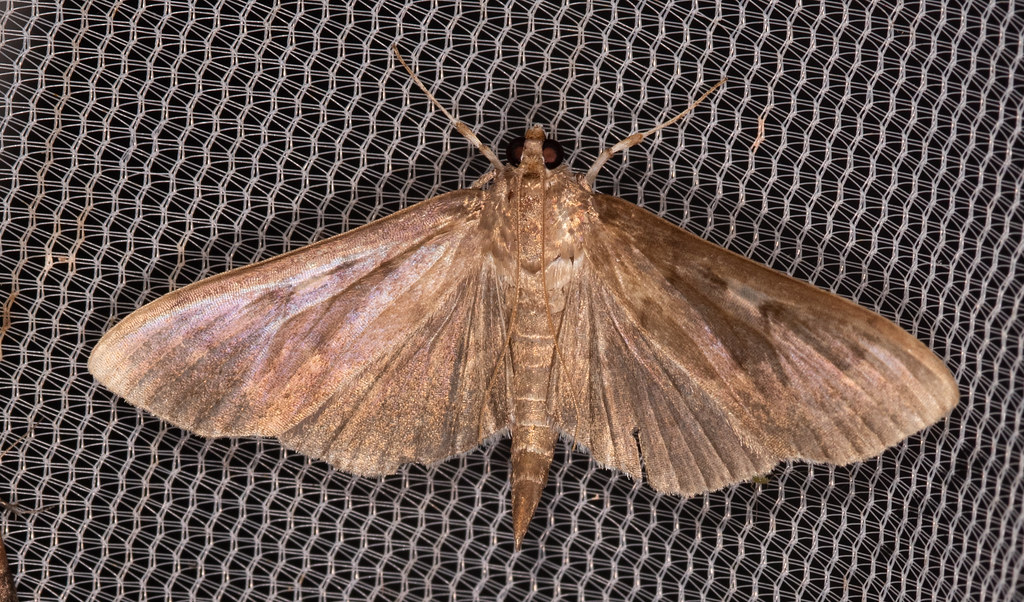
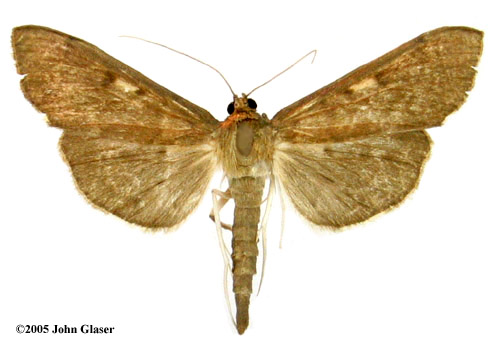
| Male (top) and female (bottom) | |
Scientific classification 
| |
| Kingdom: | Animalia |
| Phylum: | Arthropoda |
| Clade: | Pancrustacea |
| Class: | Insecta |
| Order: | Lepidoptera |
| Family: | Crambidae |
| Genus: | Herpetogramma |
| Species: | H. sphingealis
|
| Binomial name | |
| Herpetogramma sphingealis L. Handfield & D. Handfield, 2011
| |
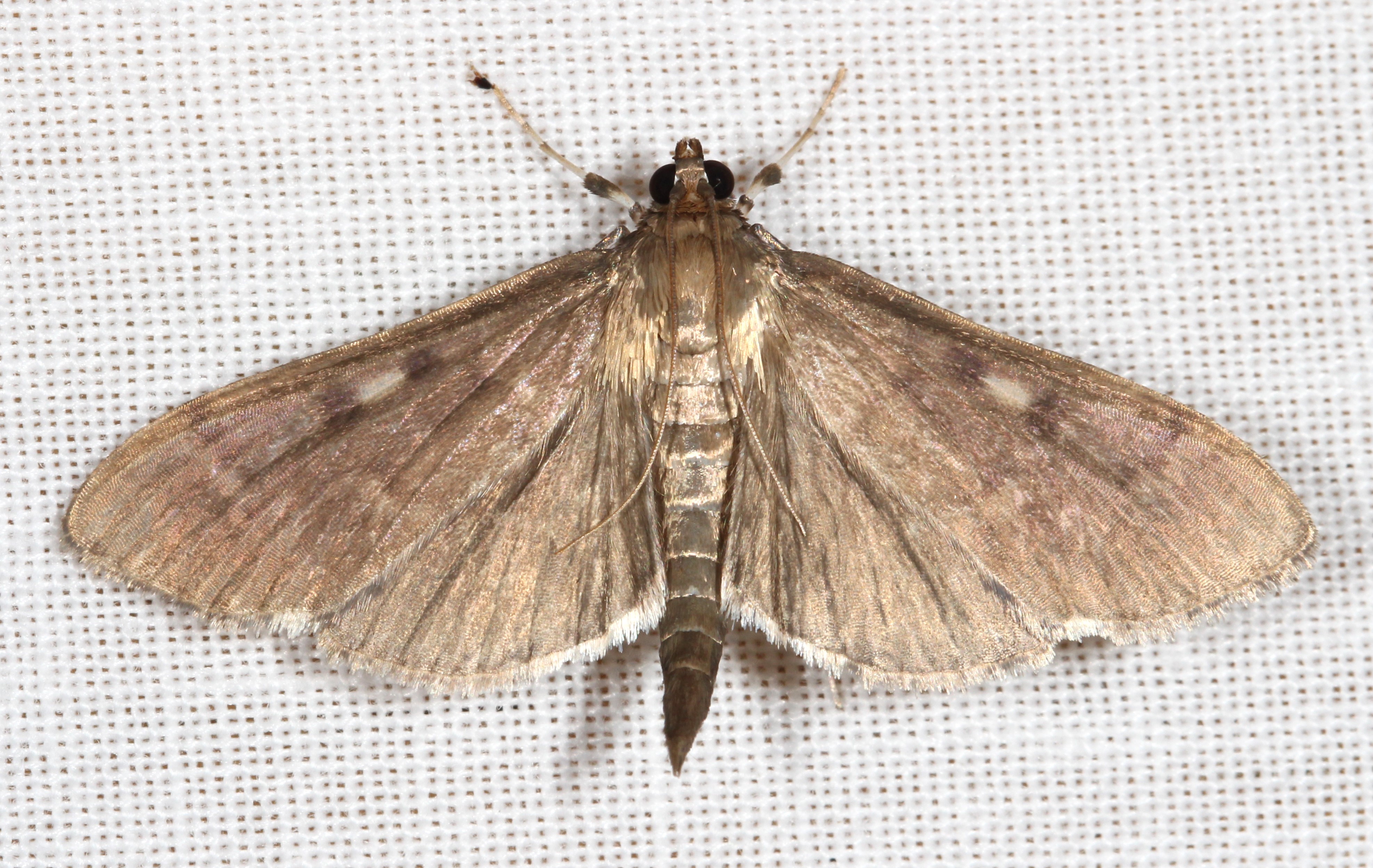
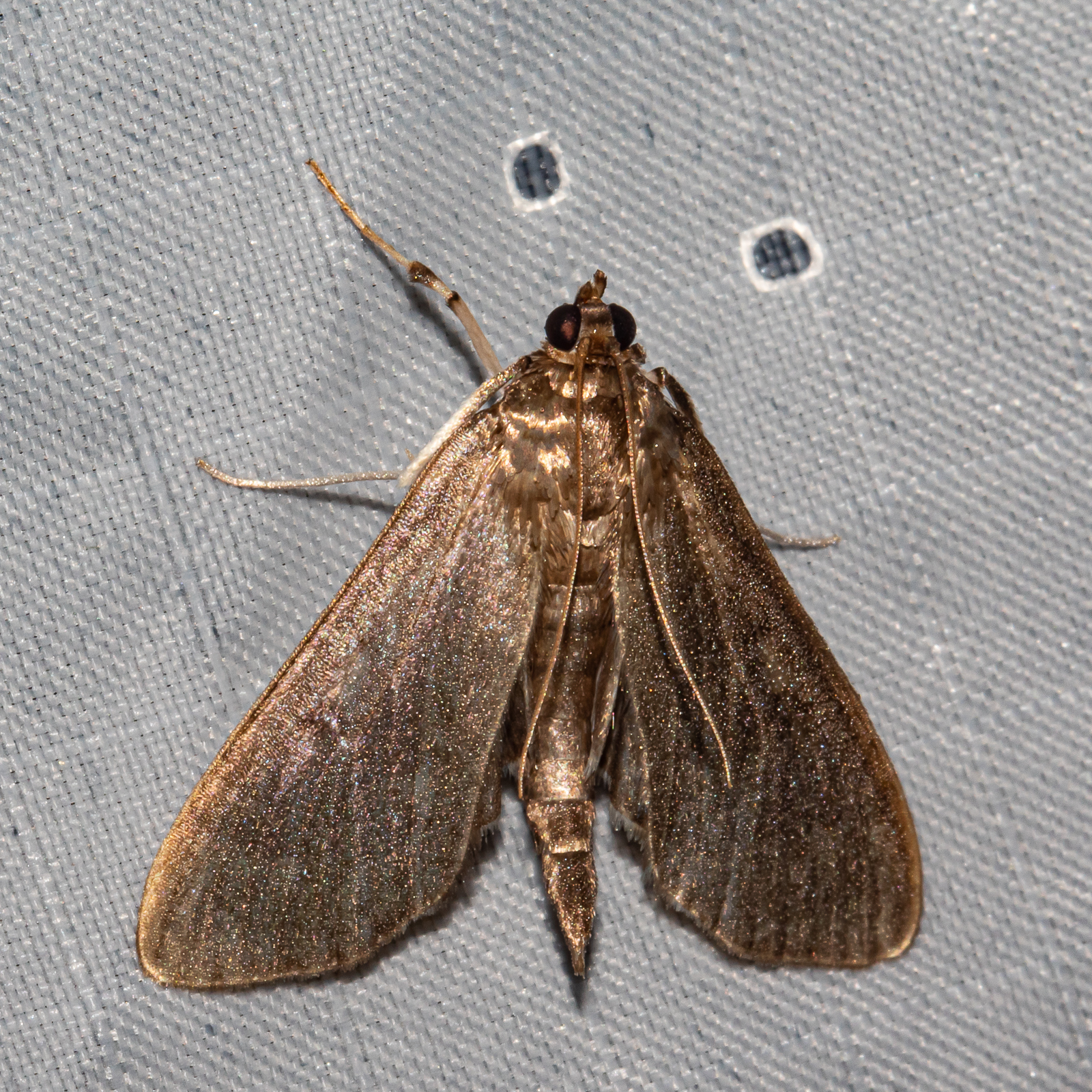
Herpetogramma sphingealis is a small species of moth in the family Crambidae. It was described as a new species in 2011.
Taxonomy
[edit]Herpetogramma sphingealis was described by Louis Handfield and Daniel Handfield in 2011.[1]
The Latin name sphingealis refers to the sphingid-like appearance of the males.[1]
Description
[edit]The underside of the head, thorax and abdomen, including the legs, are pure white, so it is easily spotted when flying towards a light trap.[1]
Imagoes, adult moths, are sexually dimorphic. The wingspan is 34–37 mm for males and 31–34 mm for females. Males are nearly uniform dark brown. The hind-wings are dark brown with a dark discal spot. Females have more apically-squared wings and are less uniformly dark coloured.[1]
Distribution
[edit]It is found from southern Quebec southward in eastern United States to Georgia and Louisiana and as far west as Arkansas.[1]
Ecology
[edit]Behaviour
[edit]The moth is readily attracted to light traps and flies around at the beginning of the night. It is sometimes one of the first species to come to a light trap. Its flight is darting and rapid.[1]
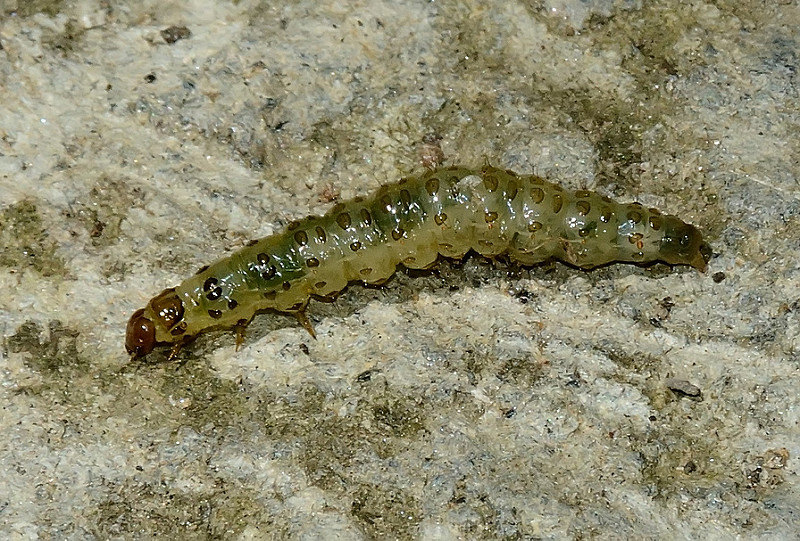
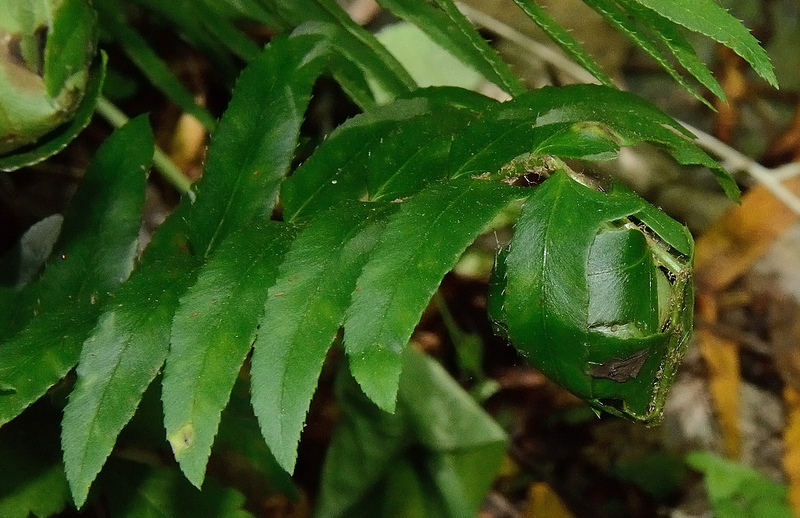
The caterpillars have been recorded feeding primarily on Polystichum acrostichoides, commonly known as Christmas ferns, and occasionally on wood ferns.[2] They are leaftiers that create protective shelters by rolling the fronds of their host plant into distinctive "fern balls".[1][2]
Habitat
[edit]It occurs in the darkest areas of rich xeric forests, with maples and oaks, especially rocky, hilly, maple groves where Christmas ferns commonly occur. With its dark-brown colour the moth is cryptically coloured in its natural habitat and well adapted to hide in the darkest shadows of the woods.[1]
References
[edit]- ^ a b c d e f g h Handfield, Louis; Handfield, Daniel (November 24, 2011). "A new species of Herpetogramma (Lepidoptera, Crambidae, Spilomelinae) from eastern North America". ZooKeys (149): 5–15. doi:10.3897/zookeys.149.2344. PMC 3234405. PMID 22207790.
 This article incorporates text available under the CC BY 4.0 license.
- ^ a b "Herpetogramma sphingealis Handfield & Handfield, 2011 - No Common Name". Moths of North Carolina. North Carolina Biodiversity Project and North Carolina State Parks. Retrieved 21 June 2025.
